Date: 2026.10.14 Click: 20
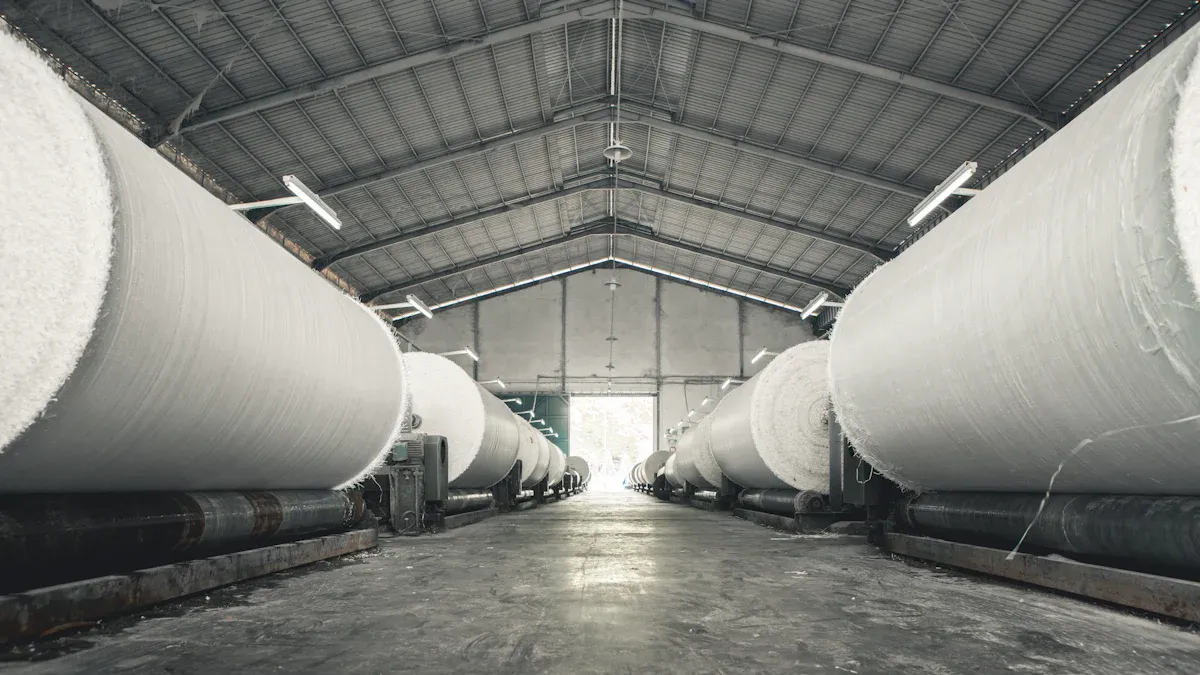
A plastic film rewinding machine unwinds a large parent roll. It cuts the film to narrower widths, then rewinds it onto cores. Many converters face a common problem: rolls come off the line with wrinkles, uneven edges, or uneven tension. Operators then waste hours cutting off bad material and redoing orders.
In most converting plants, this machine also slits film. The terms rewinder and slitter rewinder mean the same type of machine. Both do the key job of turning jumbo rolls into finished rolls ready for shipping or further processing.
This article helps readers choose the right equipment for their film type, roll sizes, and production speed. It gives practical advice on selecting machines without favoring any brand.
Key TakeawaysA plastic film rewinding machine takes big rolls and makes them into smaller, finished rolls.
Keeping the tension steady stops wrinkles and gives you a high-quality roll.
Pick manual, semi-automatic, or automatic machines based on how much you produce.
Duplex and turret winders give different benefits for multi-lane or continuous output.
Choose the right slitting method for your film type so you get clean cuts and waste less.
Switching to an automatic rewinder increases output and cuts down on stopped time.
Automatic systems make rolls better and reduce wasted material by a lot.
Always ask for a trial with your own film before you buy a machine.
A plastic film rewinding machine is a type of converting equipment. It unwinds a big parent roll, slits the film into narrower widths, and rewinds it onto cores. The machine turns one wide master (jumbo) roll into several finished rolls. This gives converters the roll sizes their customers need.
The machine follows a clear order of steps. First, the unwinder unit holds the master roll and feeds material into the machine. Second, the slitting unit uses adjustable blades or circular knives to cut the film into narrower strips. Third, the tension control system keeps the web flat and free of wrinkles. Fourth, the rewinder winds the slit material onto individual cores. This order defines the core function of every film rewinding machine.
Tension control has a direct effect on roll quality. Loose tension causes wrinkles and telescoping. Tight tension stretches the film and creates defects. The machine must hold steady tension from the unwind stand to the rewind shaft. Speed also matters. High speed raises output, but it requires precise tension regulation. A skilled operator balances these two factors to make clean, tight rolls.
Slitting and rewinding take place downstream from extrusion, coating, or lamination. The extruder or coater makes a wide parent roll. That roll then goes to the slitter rewinder machine for final sizing. This step gets the film ready for its next use. Without proper rewinding, the film cannot move smoothly through printing or packaging equipment.
Finished rolls must meet strict requirements. Printing presses need rolls with even tension and straight edges. Lamination lines need clean, dust-free surfaces. Shipping demands stable rolls that resist damage in transit. A good slitter rewinder delivers all three. It makes rolls that run without breaks on high-speed converting equipment.
This slitter rewinder machine guide serves production managers, process engineers, and purchasing teams. It also helps business owners who want to upgrade their converting line. The guide covers plastic film applications. It does not cover paper, film, foil, nonwoven, label and insulation materials in detail. Those materials have different handling needs.
The guide answers several practical questions. What film types does the machine process? Common films include BOPP, PVC, PE, PET, and CPP. What roll widths and diameters does the converter need? How much automation fits the production volume? What budget range makes sense? The guide addresses these questions with clear, brand-neutral advice.
Key Components of a Slitter Rewinder MachineThis technology also lets the device work with a wide range of materials, including BOPP, PVC, OPP, PE, PET, CPP, and many more.
Load cells measure how much force the film puts on a sensing roller. The controller compares this live reading to the recipe setpoint. Then it adjusts an unwind brake, clutch, motor torque, or driven-roll speed to fix any difference. Operators can see, alarm, and record real tension instead of guessing it from mechanical position. Accuracy depends on picking the right load-cell capacity, keeping wrap angle steady, roller weight, bearing condition, alignment, cable routing, electrical noise filtering, and calibration.
Dancer rolls work on a different closed-loop idea. A movable idler roller is loaded by air pressure, springs, or weights. Web tension pushes back against that load. A position sensor tracks the dancer's movement, and the controller adjusts brake torque or drive speed to bring the dancer back to its reference point. The moving part stores a short length of web. This soaks up short-term speed differences between upstream and downstream and softens shocks from out-of-round rolls. Hybrid systems can use both: dancer-position feedback gives buffering while load cells give direct tension readings.
Steady tension stops wrinkles, telescoping, and stretched film. Loose tension causes slack and overlap. Tight tension creates defects and lowers roll quality. A well-tuned tension control system keeps the web flat from the unwind stand to the rewind shaft. The actuator and control tuning may matter as much as the feedback device. A load cell hooked to a slow brake will not give fast control. A light dancer with stable loading can beat a badly installed force sensor.
Center winding puts torque through the roll core using a driven rewind shaft. Surface winding drives the roll by touching it against a powered drum or roller. Center winding controls tension well for each slit roll, which is key for stretchy or delicate films. Surface winding fits materials that can take surface pressure. A center-surface combo uses both methods at once. Buyers should check torque, contact pressure, material sensitivity, and finished-roll needs.
Differential shafts use separate slipping friction rings to keep winding tension even across multiple slit rolls. Small thickness changes can add up over hundreds or thousands of winding layers. One roll gets a bit larger than the roll next to it. If both rolls turn under the exact same winding relationship, their tension can start to differ. This leads to different finished-roll hardness, loose or over-tight rolls, wrinkles, and uneven finished diameters. A good differential system helps make up for these differences, especially for narrow flexible film and adhesive materials. Rewind shafts, chucks, and differential shafts must hold finished rolls securely through the whole rewinding cycle.
Razor slitting uses very sharp and stable blades. It makes little dust and few burrs and fits high-speed film processing. Thin films like BOPP, CPP, PET, PVC, PE shrink film, coated laminates, and optical protective films work well with razor slitting. Shear slitting gives precise and clean edges with high cutting stability and long blade life. It handles thicker or harder materials such as kraft paper, coated paper, label material, aluminum foil, and industrial film. Crush slitting fits pressure-sensitive substrates and works well when razor and shear slitting do not apply.
Edge trim is removed as part of the slitting and rewinding process. The trim removal system uses air suction or blow-off. Edge strips are pulled out by a blower or suction system. This keeps the production area clean and stops trim from wrapping around rollers or getting in the way of the web. Proper trim handling cuts downtime and keeps roll quality steady.
Types of Plastic Film Rewinding MachinesManual rewinders work best for very small or occasional runs. An operator loads cores, adjusts tension, and removes rolls by hand. This keeps output low and labor needs high, but these machines cost the least upfront. A small converter with few orders can make the cost worth it. The downside is slower output and more hands-on work per cycle.
Semi-automatic rewinders need more manual work than fully automatic models but stay affordable for small operations. An operator still runs part of each cycle, but the machine controls tension and winding more evenly. These units work for small to mid-size runs and mini-roll production. Roll consistency is high, but coreless capability is limited.
Fully automatic rewinders have programmable control systems, automatic roll changes, and tension adjustment. Speed can reach 800 m/min, and one operator can run the machine, so labor needs stay small. Upfront cost is higher, but roll consistency is very high. Coreless capability is common, and these machines fit high-volume production lines.
|
Factor |
Fully Automatic Rewinder |
Semi-Automatic Rewinder |
|---|---|---|
|
Speed |
Up to 800 m/min |
Moderate to high |
|
Labor required |
Minimal (1 operator) |
Higher (hands-on per cycle) |
|
Upfront cost |
Higher |
Lower |
|
Best for |
High-volume production |
Small to mid-volume runs |
|
Roll consistency |
Very high |
High |
|
Coreless capability |
Common |
Limited |
A duplex winding slitter rewinder has two rewind shafts, so it can process many rolls at once. This design handles most paper and film jobs. Each shaft can control tension on its own, keeping tension even across lanes. A duplex shaft center winding slitter rewinder works well with stretchy or delicate films. Converters pick this setup when they need multi-lane output from one pass.
A turret slitter rewinder carries many winding shafts on a rotating turret. One shaft winds while the others get ready, and this design fits high-speed lines with little downtime. The turret greatly cuts downtime and boosts productivity, and a four-shaft turret slitter rewinder keeps film processing continuous. Operators do not need to stop the line for every roll change.
A surface winding slitter rewinder winds material from the outside. A driven drum touches the roll surface and gives tension and control. This method works for small rolls made quickly and for large-scale rolls like papers and nonwovens. A single shaft / shaftless surface winding slitter rewinder gives roll stability and alignment. Tension-sensitive films do well because the surface drive limits stress on the web.
Center rewind machines wind material onto a core from the inside of the roll. Torque goes through the core, so each roll gets tight from the center outward and has even core tightness. An individual arm slitter rewinder for films uses separate winders on a linear rail. Each winder has its own rewind motor for precise tension control. Film producers often use this design for primary slitting of mother rolls.
Converters also come across duplex, surface, turret, two-drum, and spooling setups. A two-drum machine uses two driven drums for surface winding at high speed. A narrow-web machine handles small master rolls. A spooling machine winds very narrow strips into long lengths. Each setup fits a different production need. Buyers should compare types, specs, and range before choosing. Rotary slitting machines use round blades for medium- to high-speed work. Shear slitting machines use two blades that pass each other like scissors. Razor slitting machines use a sharp blade for delicate films. These cutting methods work with the winding styles above and define the plastic film rewinding machine choices on the market. Most slitter rewinders combine slitting and rewinding in one unit. The right choice depends on film type, roll size, and output goals. Many slitter rewinder machines also have recipe storage for fast changeovers. A well-matched slitter rewinder machine cuts waste and keeps roll quality steady.
Common Uses for Plastic Film Slitting RewindingFlexible packaging uses lots of plastic films. BOPP, PE, PET, and CPP are the most common ones. Each film has different qualities. BOPP gives high clarity and stiffness. PE offers flexibility and seal strength. PET provides strength and heat resistance. CPP gives good heat sealability. A slitter rewinder must handle all these materials without making wrinkles or tension problems. Converters run these films through slitter rewinders to make rolls for bag making, pouching, and wrapping.
Lamination and printing need tight roll quality. Printing presses need smooth, even rolls. Any slack or telescoping causes misregistration and print defects. Lamination lines require clean surfaces free of dust and trim. The rewinding process must deliver rolls with steady tension from core to surface. Slitter rewinders with closed-loop tension control meet these needs. They make rolls that run without breaks at high press speeds.
Stretch film slitting rewinding needs special care. This material stretches easily under tension. A surface winding slitter rewinder drives the roll from the outside. A powered drum touches the roll surface and controls speed and density. This method builds stable rolls with minimal core tension. The basics of stretch film slitting rewinding start with gentle handling. A stretch film slitter machine must avoid over-stretching the web. A stretch film rewinding machine with surface winding keeps the film relaxed during roll build.
On the rewind side, getting good roll structure without stretching the film requires sensitive control, often using minimal gap winding or light-touch surface winding techniques combined with differential shafts.
Cling film and food wrap need tight cores and even roll density. Center winding applies torque through the core. This creates rolls that hold their shape during shipping and dispensing. A stretch film slitting rewinding line for cling film uses low-tension winding to prevent distortion. A stretch film slitter machine with differential shafts allows individual roll speed variation. This prevents inter-roll tightening. An automatic stretch film slitter machine combines these techniques for high output. A stretch film rewinding and slitting machine must balance tension isolation nips, low tension winding, and surface or center-surface control.
|
Technology |
Function for Stretchable Films |
Benefit |
|---|---|---|
|
Tension Isolation Nips |
Separate tension zones (unwind, slit, rewind) |
Prevents tension transmission, allows low slit tension |
|
Low Tension Winding |
Avoids stretching film as roll builds |
Prevents distortion, maintains film properties |
|
Differential Shafts |
Allows individual roll speed variation |
Prevents inter-roll tightening and distortion |
|
Surface/Center-Surface |
Driven drum controls speed/density at outer layers |
Builds stable rolls with minimal core tension |
Release liners and label stock need precise slitting and rewinding. PSA labelstock requires a shaftless unwind with an anti-telescoping device. A knife clean device removes adhesive residue. Static control prevents dust attraction. A surface winding slitter rewinder handles these materials well. High-volume release liner production uses duplex center winding for large finished diameters. Narrow-web release liner and specialty labels need cantilevered unwind and rewind for fast roll changes. Converters should confirm minimum slit width and maximum rewind diameter before purchase.
|
Application |
Required features / model recommendation |
|---|---|
|
PSA labelstock and release liner |
Shaftless unwind with anti-telescoping device; knife clean device to remove adhesive residue; static control; rewind diameter up to 800 mm |
|
High-volume release liner and large-format labelstock |
Duplex center winding for single/double-sided release paper; controlled center-winding tension for large finished diameters; handles laminates; rewind diameter up to 1,200 mm |
|
Narrow-web release liner, specialty labels, secondary slitting |
Cantilevered unwind and rewind for fast roll changes; suitable for narrow-width specialty formats; rewind diameter up to 800 mm |
Adhesive tapes need anti-adhesive knife systems. Adhesive-compatible trim removal keeps the line clean. Differential rewinding balances narrow-roll hardness. Film labels and protective films require low-tension transport and automatic web guiding. Surface-protection rollers prevent scratches. Static elimination stops contamination. Release paper and PET liners need precision tension control and low-friction rollers. These slitter rewinders protect silicone-coated surfaces. Specialty pressure-sensitive materials use application-specific knife systems and controlled compression. The same equipment also serves paper, film, foil, nonwoven, label and insulation materials with the right configuration.
Selecting the Best Slitter Rewinder for Your Converting LineChoosing the best slitter rewinder for your converting line begins with a clear plan. Film type, roll width, roll diameter, production volume, and budget all shape the final pick. A small label converter running self-adhesive stock on a 330 mm web with single-shift output needs a different machine than a large plant running three shifts on a 520 mm mixed-substrate calendar. The table below links common situations to suggested setups.
|
Scenario |
Film/Substrate Type |
Roll Width |
Production Volume |
Recommended Machine Configuration |
Budget Range |
|---|---|---|---|---|---|
|
Small label converter |
Self-adhesive label stock on paper liner, 80–100 gsm face paper |
330 mm |
~2 million labels/month, single shift |
Domestic centre-rewind slitter rewinder with load-cell tension control, rotary shear knives, semi-automatic knife positioning |
₹14–18 lakh (ex-GST) |
|
Mid-size flexible packaging converter |
BOPP, PET, and CPP films for snack packaging |
450 mm |
Two-shift operation, 5 days/week |
Full-servo tension system, automatic knife positioning, integrated anti-static system, turret rewind |
₹28–38 lakh (ex-GST) |
|
Integrated label & flexible packaging plant |
Mixed substrate calendar (labels + flexible pouches) |
520 mm |
Three shifts, continuous |
Imported European/Taiwanese machine with full MES integration, remote diagnostics, recipe storage (200+ jobs) |
₹55–75 lakh landed (incl. customs & GST) |
Maximum web width must fit the largest parent roll. Running narrow rolls on a wider machine wastes capacity. Wider rolls on a narrower machine simply will not work. Minimum slit width goes from 10 mm to 40 mm based on the model. Maximum unwind diameter runs from 1200 mm to 1800 mm. Bigger unwind diameters let you run longer between roll changes. Maximum rewind diameter reaches up to 800 mm on some models. Core diameter usually uses 3-inch (76 mm) or 6-inch (152 mm) sizes. These must match equipment further down the line.
Different substrates act differently during cutting and rewinding. BOPP, CPP, and PET films need anti-static and low-tension control. Thicker materials need more cutting force and a different blade shape. Thinner materials need more exact tension control. Surface sensitivity matters too. Center winding avoids surface pressure and suits thin films. Surface winding suits non-sensitive materials that can handle roller pressure. A plastic film rewinding machine must match its winding style to the film's surface traits.
Stable production speed with the real material decides drives, tension control, and true output. A buyer should state the stable speed needed, not the highest rated speed. Higher rated speed demands more tension, guiding, cutting, drive, and rewinding control. Labor needs drop as automation goes up. A fully automatic rewinder needs one operator and reaches up to 800 m/min. A semi-automatic model needs more hands-on work per cycle but costs less upfront.
Auto knife positioning costs $15,000–$40,000 and pays off when you change slit widths more than three times per shift. Recipe storage lets operators recall settings for repeat jobs. A machine with 200+ job recipes suits a plant running a mixed substrate calendar. Automatic roll unloading costs $8,000–$20,000 and makes sense when making 200+ finished rolls per day. Daily output under 100 rolls does not justify that feature.
Frame rigidity decides whether vibration issues stay even after new electronics are added. Entry-level machines at $3,000–$15,000 use magnetic particle clutch tension that drifts 8–12% after 3–4 hours. Blade life runs 200–300 hours on abrasive films. Mid-range machines at $15,000–$45,000 use servo-driven closed-loop tension and shear-slitting capability. Premium machines above $45,000 use branded parts and give 6–8 years of service life versus 2–3 years for budget guides.
Buyers should ask makers about material, thickness, roll dimensions, speed, accuracy, and rewinding before they buy. A useful request for quote states the mother roll width, film structure, thickness range, core sizes, minimum slit width, and target stable speed. Weak requests say "need 1300 mm slitter" or "for film." Strong requests say "PET/PE laminated film, 70–120 μm" and "target stable production speed 250 m/min." Buyers should ask for a trial run with their own film roll before they buy. Factory acceptance testing should use real buyer material, especially for laminated, adhesive, coated, or stretch-sensitive webs. Standard slitter rewinders need a lower initial investment. High-speed models add productivity. The right choice comes down to matching machine capability to real production needs.
Comparing Standard and High-Speed Slitter Rewinder MachinesA standard slitter rewinder machine costs less to buy. It works well for lower volumes or a product mix that changes often. Buyers do not waste money on automation features they do not need. A high-speed model costs more upfront. Servo drives, automation packages, and turret or continuous rewind systems raise that cost. Lower labor and waste make up for the price over time and improve ROI.
|
Feature |
Standard slitter rewinder |
High-speed slitter rewinder |
|---|---|---|
|
Initial investment |
Lower capital cost; economical for lower volumes or frequently changing product mix |
Higher capital expenditure due to servo drives, automation packages, and turret/continuous rewind systems |
|
Throughput |
Suitable where speed is not the primary driver; manual roll changes create downtime |
Built for continuous production; automatic unloading/loading while the machine runs |
|
Automation |
Basic duplex configurations with limited automation |
Servo tension control, automatic knife positioning, turret/robotic unloading, closed-loop tension |
Full servo drives and automation upgrades raise the initial investment. They also cut material waste and labor needs. High speed only works when paired with closed-loop tension control. A 500 m/min running speed without it risks stretching or wrinkling thin plastic films. Servo-driven systems with differential friction shafts reduce human error and scrap. Traditional mechanical clutches cost less but offer lower precision. That gap puts them with standard rather than high-speed slitting applications.
A duplex winder uses two rewind shafts and handles multi-lane output from one pass. Each shaft controls tension on its own. A turret slitter rewinder carries multiple shafts on a rotating turret. One shaft winds while others get ready. This design fits high-speed lines and cuts downtime dramatically. Changeover time drops because operators do not stop the line for every roll change.
A turret model takes more floor space than a duplex unit. The rotating turret and extra shafts add mechanical complexity. Maintenance needs rise with that complexity. Production scheduling becomes easier on a turret machine. Continuous output means fewer interruptions and steadier daily totals. A duplex machine suits plants that run moderate volumes and value a smaller footprint.
A strong request for quote states the mother roll width, film structure, thickness range, core sizes, minimum slit width, and target stable speed. Standard working widths run 1100–1500 mm. Wider models reach 1600, 2000, or 2400 mm. Custom widths go up to 3000 mm. Parent roll diameter and finished roll diameter are customized per project. Core size for both parent and finished rolls is also customized.
Speed reaches up to 600 m/min on many models. Actual speed depends on material, roll condition, slit layout, and rewinding requirements. Automatic closed-loop tension control handles sensitive films. Taper tension and differential shafts keep roll hardness consistent. Slitting accuracy reaches plus or minus 0.2 mm. Minimum slit width is 30 mm on some models. Buyers should review slitter rewinder specifications at a glance before sending the quote.
Benefits of Upgrading to an Automatic Slitter RewinderAutomatic roll transfer and core loading keep the line moving. Finished rolls are cut off, closed, and pushed automatically onto an unloading device. Next cores are loaded and positioned with very little downtime. A scrapless transfer mechanism indexes the new core into position while it avoids indexing the final roll. This gives higher yields and less scrap than standard turret winders. Integrated automatic core and roll handling supports six-up rolls on a 25-second roll-change cycle. One operator can run a full automated line at speeds over 2,300 fpm.
Automatic knife positioning nearly removes blade setup time. Blade positions are stored in each recipe. When an operator recalls a recipe, the slitter-rewinder automatically sets the right running parameters. Servo-controlled top and bottom knives then position themselves for shear or score slitting. The FastCut system sets shear slitting knives via robotic fingers with high precision and speed. This saves the operator at least 15–20 minutes with every job change. Manual setup that took 60 minutes for a 10-minute run is gone.
Closed-loop tension control watches tension at the unwind, slitting zone, and rewind in real time. High-precision sensors keep tension changes within plus or minus 0.5%. This precision is vital for thin, tension-sensitive materials. Precision taper tension control cuts uneven end faces and wrinkled waste by 40%–60%. Edge Position Control and Line Position Control systems keep the web aligned as material enters the inspection and rewind zones. Accurate guiding reduces edge trim waste and ensures perfectly flush finished rolls.
Automated vision systems catch defects before shipment. This saves reprint and shipping costs. These systems also reduce reliance on manual quality assurance labor. Human inspection is expensive and prone to error. Automated systems use consistent pass/fail rules all shift long. Real-time monitoring ensures the roll's first meter is as perfect as its last. This greatly cuts start-up waste that hurts old lines.
Zero Touch automation means no operator has to go near the machine while it runs. Automated core loading and positioning removes risky manual work. This design boosts operator safety and keeps peak output. More than two minutes can be saved per format change. Optimized automation logic and higher speed boost winder production with shorter setup times while making operators safer.
Knife position, depth, and side load settings are saved in a recipe. This removes the need for specialist skills to set knives correctly. PLC controls and alarms give operators more tunable adjustments. These adjustments have a big effect on wound-roll quality. Difficult materials can be wound at larger diameters than older machines allowed. Production analytics collect real-time data for better decision-making.
The film material, roll width, roll diameter, production volume, and automation level guide every machine choice. No single model works for all plants. Manual, semi-automatic, duplex, surface, and turret rewinders each fit different production needs. Upgrading brings fewer rejects, less material waste, faster changeovers, lower labor cost, and better data capture. These gains add up across shifts and orders.
Buyers should ask about a trial with their own film samples. A trial run with real material shows how a machine handles tension, slitting, and rewinding. Then send a request for quote to a converting equipment manufacturer. Match the machine to the job, and the line will reward that decision for years.
FAQCommon films are BOPP, PVC, LDPE, HDPE, CPP, and PET. Converters also use coated laminates, protective films, release liners, and adhesive tapes. The slitting method and tension control must match the film's thickness and how sensitive its surface is.
In converting plants, "slitter" and "rewinder" mean the same machine. It unwinds a large parent roll, cuts it into narrower strips, and winds those strips onto cores. Some machines only slit. Most do both jobs in one pass.
Razor slitting works for thin, delicate films such as BOPP, CPP, PET, PVC, and PE shrink film. It makes little dust and few burrs. Shear slitting is for thicker or harder materials like labels, foil, and industrial film. Crush slitting works for pressure-sensitive substrates.
Center winding sends torque through the core. It works for stretchy or delicate films and gives even core tightness. Surface winding uses a powered drum to drive the roll. It works for stronger materials and large-diameter rolls. Operators pick based on film sensitivity and what the finished roll needs.
A differential shaft has friction rings that slip separately. It keeps tension even across several slit rolls, even when thickness differs. This stops loose rolls, wrinkles, and uneven diameters. Narrow flexible films and adhesive tapes need this part.
Fully automatic models can hit 800 m/min. Stable running speed depends on film type, roll condition, slit layout, and rewinding needs. Closed-loop tension control is a must at high speeds. Without it, thin films may stretch or wrinkle.
A good request includes mother roll width, film structure, thickness range, core sizes, minimum slit width, and target stable speed. Buyers should also add unwind and rewind diameters, tension range, and slitting accuracy. This helps suppliers suggest the right machine.
"4mmx2mm Disc Magnet" from S****** received 4 quotation(s)