Date: 2026.10.12 Click: 17
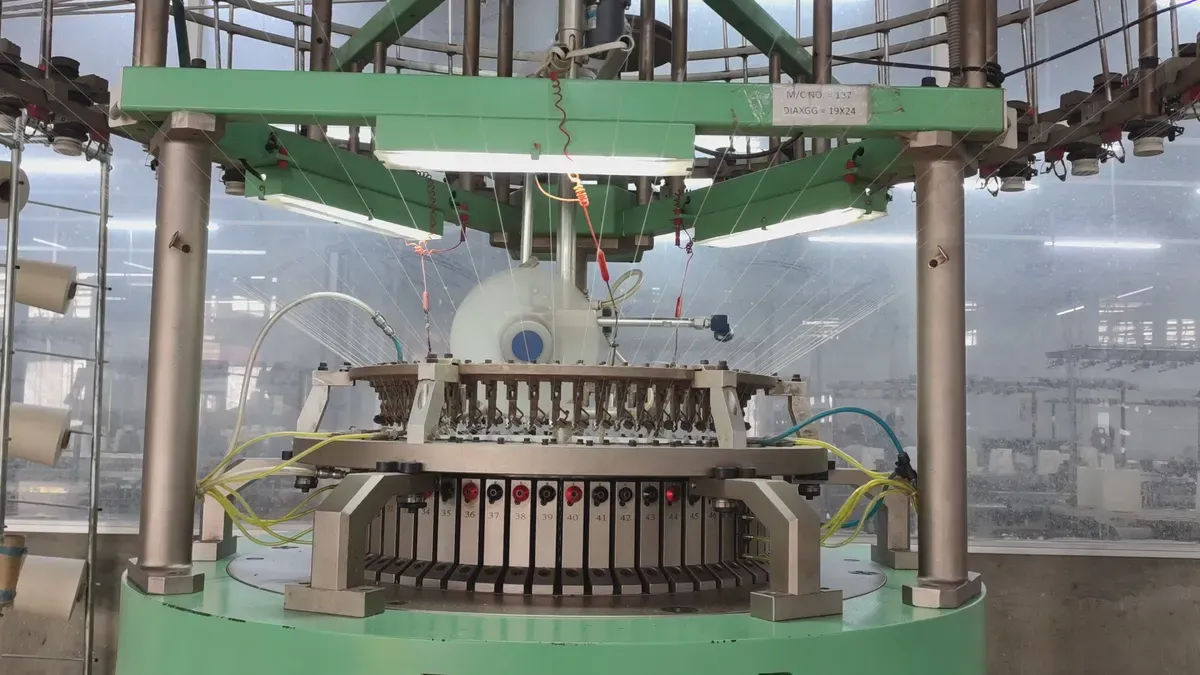
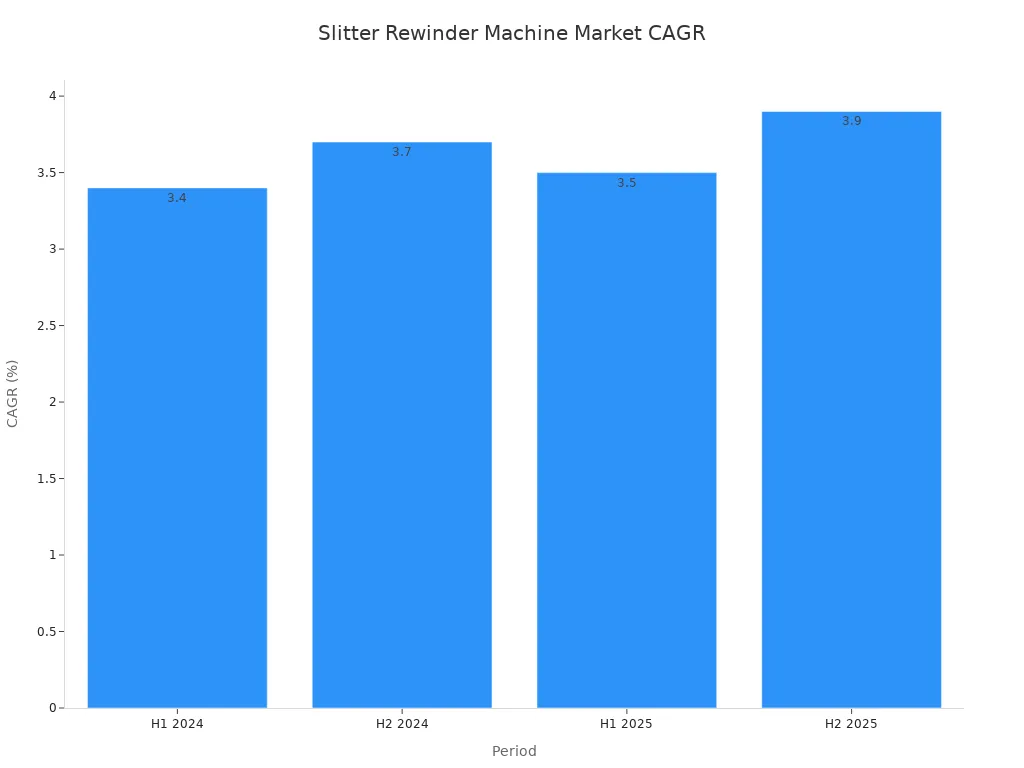
A paper rewinding machine unwinds a big master roll, cuts it into narrower widths, and winds the strips onto smaller cores. Many people call this equipment a slitter rewinder. This article explains the process step by step, from loading to making finished rolls. The global market for this equipment is expected to grow at a compound annual growth rate of 3.5% from 2026 to 2033.
You will learn how each stage works. The machine handles paper of many grades. A skilled operator watches tension, speed, and blade condition. Every step matters for quality. This guide helps you understand the full system.
Key TakeawaysA paper rewinding machine unwinds a big roll, cuts it into thinner strips, and winds them onto smaller cores.
Tension control keeps the paper steady and stops it from stretching, wrinkling, or tearing while it is rewound.
Pick the right slitting method: shear cutting gives clean edges on paper, score cutting works for thick board, and razor cutting is best for films.
Keep the blades sharp and lined up. This helps make clean cuts, lowers dust, and keeps the roll quality good.
Automation boosts accuracy and speed, cuts waste, and makes even rolls.
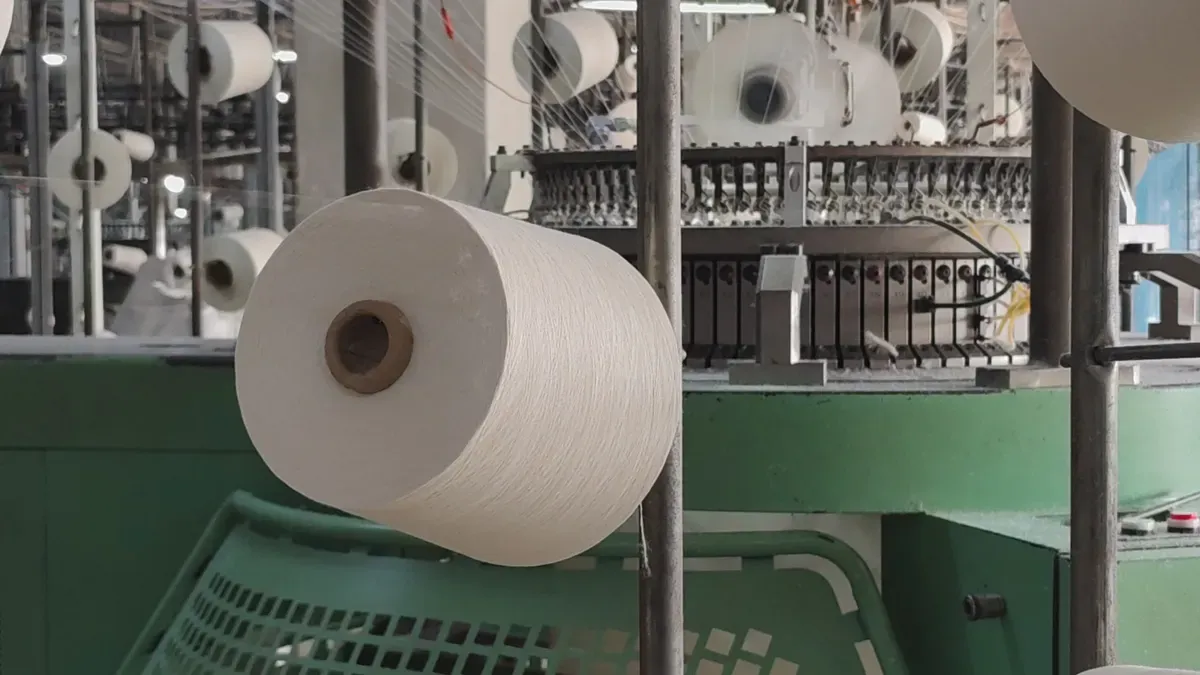
A paper rewinding machine turns one large parent roll of material, like paper, film, or foil, into several smaller finished rolls that are ready to use. People often call this equipment a slitter rewinder. It does three things: it unwinds the big parent roll, slits the paper to a set width using shear, razor, or score blades, and then rewinds the cut strips onto new cores.
Every rewinder relies on parts that work together as one system. The unwind stand holds the material and feeds it under steady tension. It uses pneumatic, magnetic, or motor-driven braking to stop sagging and wandering. The tension control system keeps the web stable during unwinding, slitting, and rewinding. Dancers, rollers, and load cells keep the web steady.
The web guide uses sensors and actuators to keep the paper straight before the blades. The slitting station splits the web into narrower widths. Web spreaders flatten the web and keep slit strips apart. Finally, rewind shafts wind each strip onto individual cores. A control panel lets you set speed, tension, and winding values.
Paper converters often use slitter rewinders for their production lines. A typical master (jumbo) roll can reach 2,200 mm in diameter. You load it onto the unwinder, and the machine pulls the paper through its rollers. The blades then divide the web into many strips. Each strip goes to its own core on the rewind shafts.
Your finished rolls may range from narrow pancakes a few millimeters wide to rewind diameters of 1,600 mm with center winding. Many slitter rewinders offer automatic blade positioning for quick changes. The task changes based on your order. A job with three wide lanes acts very differently from one with thirty narrow lanes. Many lanes need more knives, better slit separation, differential winding, and precise core positioning. Heavy outputs require stronger shafts and assisted unloading, while small paper reels may need faster cycles. Proper rewinding matters for clean edges and even density.
How Does a Slitter Rewinder Machine Work?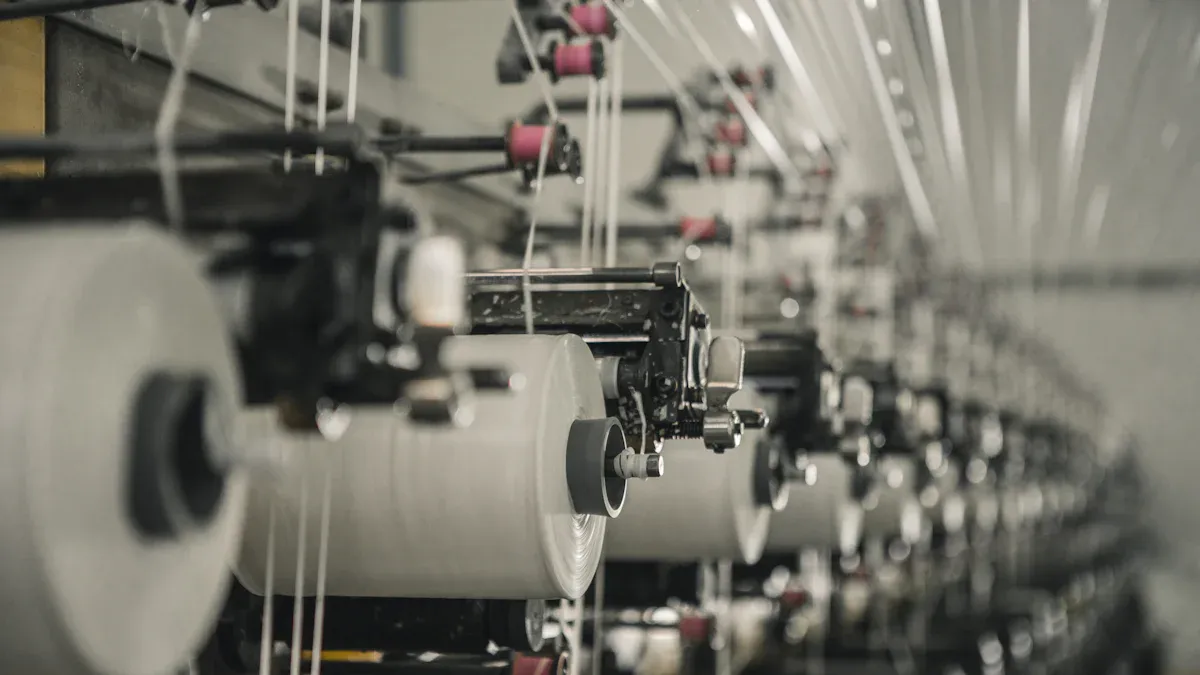
A slitter rewinder machine works in a clear order. You load the material, set the tension and speed, and watch the web. The machine then makes rolls with exact widths and diameters. This is also where defects get removed.
You begin by loading the large parent roll onto the unwind stand. This stand holds and supports the master (jumbo) roll while it unwinds. Shaftless designs make loading and unloading heavy rolls easier. The tension control system then takes over. It uses a magnetic powder brake to control torque and keep the right web tension. An edge guide system uses sensors to find the web position and adjust the guide mechanism. This keeps the material centered and lined up during production.
Modern slitter rewinders run at very fast speeds. The table below shows common operating ranges.
|
Operating stage |
Typical speed |
Notes |
|---|---|---|
|
Unwinding, slitting, and rewinding (overall process) |
400–600 m/min |
At 600 m/min, about 10 m of material is processed per second. |
|
High-speed paper slitter rewinders |
Up to 600 m/min |
PLC-controlled automation makes these speeds possible. |
|
Variable speed control |
Material-dependent |
Thicker papers need slower speeds; lightweight materials can run faster. |
As the parent roll diameter gets smaller, keeping the same torque makes web tension rise. This pulls the material too tight and can cause stretching, wrinkles, or web breaks. Variable torque control fixes this problem. It changes torque in step with the changing roll diameter. You should set the tension setpoint based on the material and never go past its tensile strength. Change tension slowly instead of all at once. Check the web for flaws like tears, cuts, or thin spots that raise break risk.
The web now moves through the slitting station. Here, the machine slits the paper into narrower widths using shear, razor, or score blades. Each strip then travels to its own core on the rewind shafts. The slitting and rewinding machine makes individual cores that match your order specifications.
Defect detection happens during this stage. Inspection slitter rewinders have dedicated inspection zones with controlled web handling. They support basic LED strobe inspection and advanced camera-based vision systems. These systems find defects such as blemishes, color issues, and missing labels. When a defect is found, the system moves the web to a predefined position. You can then remove the defect by hand or isolate it automatically using an optional take-up rewind. This allows defect removal and splicing without hurting finished roll quality.
Rewind parameters control finished roll firmness. Nip pressure removes trapped air at the winding point. Not enough nip pressure leaves trapped air that weakens the internal roll structure. This causes soft rolls, loose outer layers, and telescoping. Too much nip pressure can damage printed surfaces and create too much roll hardness. Tension, nip, and torque play distinct but connected roles. Tension controls longitudinal web force. Nip pressure affects air exclusion and layer contact. Rewind torque supplies rotational force and affects internal pressure. As roll diameter grows, you should manage nip pressure as a profile rather than holding it constant. A controlled hardness profile from core to outer diameter comes from coordinated use of winding tension, taper tension, rewind torque, and nip pressure.
Choosing the Right Slitting MethodThere are three main ways to slit paper on a rewinder. Each one cuts in a different way. Score cutting pushes a round blade against a hard anvil roll. This smashes the material instead of slicing it. Shear cutting uses two rotary knives that work like scissors. The top and bottom knives spin in opposite directions to create a shearing force. Razor cutting uses a sharp blade that does not move and cuts the moving web by touching it directly.
Each method works best for different paper grades and thicknesses. The table below shows the main differences.
|
Criteria |
Razor Cutting |
Shear Cutting |
Score Cutting |
|---|---|---|---|
|
Cutting principle |
Stationary blade cuts by direct contact |
Two rotary knives shear like scissors |
Circular blade crushes against an anvil roll |
|
Best materials |
Thin films, lightweight paper |
Paper, board, foil, laminates |
Thick board, rubber, rigid materials |
|
Edge quality |
Poor on paper; massive dust |
Clean, precise edge; minimal dust |
Slightly rough edge; more dust |
|
Speed limit |
About 300 m/min |
High speed |
Limited by heat and dust |
Shear slitting gives you clean, precise edges on standard paper, kraft, and tissue. Score cutting works well for thick board and non-wovens. Razor slitting suits plastic films and BOPP, but you should avoid it for paper because it creates massive dust.
Blade sharpness, blade shape, and the cutting method directly affect edge quality, dust level, and how the final roll looks. Sharper blades make cleaner cuts and create less dust. Blade sharpness wears down during operation because of shear angle, holder side load, blade material, and rotation speed. You can use more dust and worse cut quality as signs that you need to replace the blade.
Blade shape matters just as much. An uneven bevel angle leads to uneven cuts and burrs. Edges that are not parallel cause misalignment and more scrap. For paper and labels, you need a tolerance of plus or minus 0.2 mm and a thin, straight-edge, low bevel shape. The right blade shape produces smooth, burr-free cuts and reduces extra work later. A packaging line cut its post-cut polishing time by 17% after switching to ground-edge stainless steel blades. Check blade symmetry every 8 to 12 hours to catch wear early.
How Automation and Blade Quality Affect Slitter RewindersSelect the slitting knife system based on material thickness, coating, stiffness, desired edge quality, allowable dust, and production speed.
Today's automation changes how a slitter rewinder machine works. Automatic tension control, edge guides, and inspection sensors all work together. They make results more consistent and cut down on waste. A closed-loop system with very accurate sensors can keep tension changes within ±0.5%. This accuracy is important for thin materials that react to tension.
Test data show that uneven end faces and wrinkled waste can drop by 40% to 60% after using precision taper tension control.
Sensor-based automatic tension control checks real-time web tension with ±0.1N accuracy. This lowers breakage and cuts scrap material by 10–20% at high speeds. You get exact tension control straight from the machine's PLC with very little delay. No operator needs to step in for tension changes. Energy regeneration also cuts energy waste by a lot.
Bad tension settings cause real trouble. Too much tension stretches or snaps the paper. Too little tension makes the web go slack and drift off-track. Shifting tension leads to uneven slitting quality. Regular checks and proper calibration keep tension steady during the whole rewinding process.
Sharp, well-kept blades protect your finished roll quality and cut downtime. You should check blade sharpness often with a bright light or magnifying glass. Look for nicks, chips, or uneven spots. Swap out blades right away when you find these problems.
Check alignment when cuts start to look uneven. Blades or rollers that are out of line cause poor slitting results. Adjust tension settings and make sure the material feeds the right way. Train operators in blade calibration and setup so wear does not happen too soon.
Stick to a set maintenance schedule. Do microscopic edge checks every 50 production runs with a 50× magnifier. Check equipment alignment every three months and keep slitting shaft runout at or below 0.02mm. Regrind tungsten carbide blades every 500–1000 hours. For ceramic blades, regrind every 200–300 hours. Replace them right away if chipping goes past 0.05mm. More vibration or strange sounds during operation mean the blade needs sharpening or replacement.
A paper rewinding machine unwinds a master roll, cuts the web, and rewinds strips onto cores. You now know the whole paper rewinding process.
Every finished roll is shaped by your choices of slitting method, tension control, and blade quality. Slitter rewinders reward careful setup and punish rushed decisions.
Think of the rewinder as one connected system: each winding stage affects the next. Good roll quality starts with you.
FAQA slitter rewinder can run at 400–600 m/min. At 600 m/min, it processes about 10 meters of paper per second. Its speed limit depends on material thickness. Thicker paper runs slower. Fast slitter rewinders use PLC-controlled automation. The machine keeps center winding roll quality steady.
For standard paper, kraft, and tissue, shear cutting gives clean, exact edges. Two rotary knives act like scissors. Thick board suits score cutting. Razor cutting makes lots of dust on paper. Choose the blade based on material. Most slitter rewinders use shear cutting. It gives the cleanest cut.
Tension controls force along the web. Too much tension stretches or snaps paper. Low tension makes the web slack, letting it drift off track. Precision tension control keeps changes within ±0.5%. A rewinder must balance winding tension and nip pressure for even roll hardness. These settings decide roll quality.
Check blade sharpness often with a bright light. Look for nicks, chips, or uneven spots. Do microscopic edge checks every 50 production runs. Regrind tungsten carbide blades every 500–1000 hours. Slitter rewinders need clean, sharp blades for good winding. Clean blades help a rewinder run smoother and make better rolls.
"4mmx2mm Disc Magnet" from S****** received 4 quotation(s)