Date: 2026.10.10 Click: 16

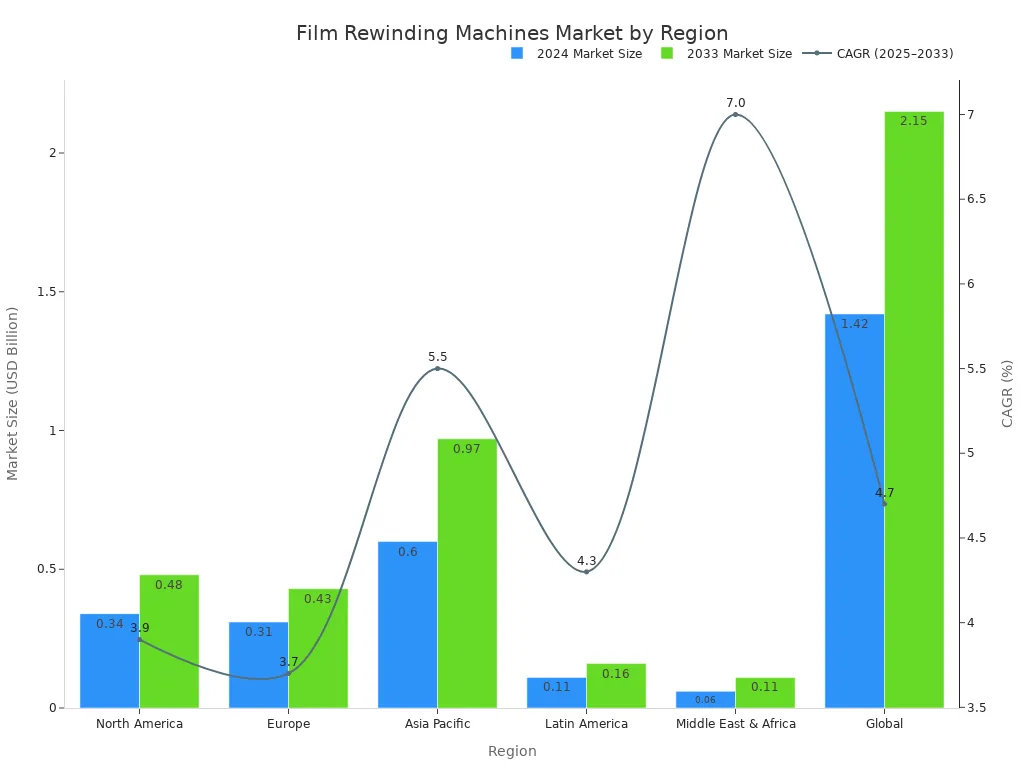
A film rewinding machine unwinds big master rolls, checks the film, and rewinds it into smaller rolls for packaging. Production teams like this machine because it means fewer defects, less waste, and steady quality. The global market for this machine hit $1.42 billion in 2024 and will reach $2.15 billion by 2033.
A stretch film rewinding machine handles stretch film conversion. Another type of stretch film rewinding machine is used for food wrap. These machines spot wrinkles, tears, and uneven tension. They also mark defects so they can be removed. The rewinding process takes out the bad sections. This keeps packaging lines running without problems. Buyers pick models based on film material, roll width, and speed.
Key TakeawaysA film rewinding machine changes big film rolls into smaller, neat rolls for packaging.
It finds and removes flaws like wrinkles and tears, saving money and cutting down on waste.
The machine keeps the tension steady, so the rolls stay tight and even, which helps packaging lines run smoothly.
Automatic models work fast and need little help, which improves output and safety.
Pick a machine that fits your film type, roll size, and speed to get the best results.
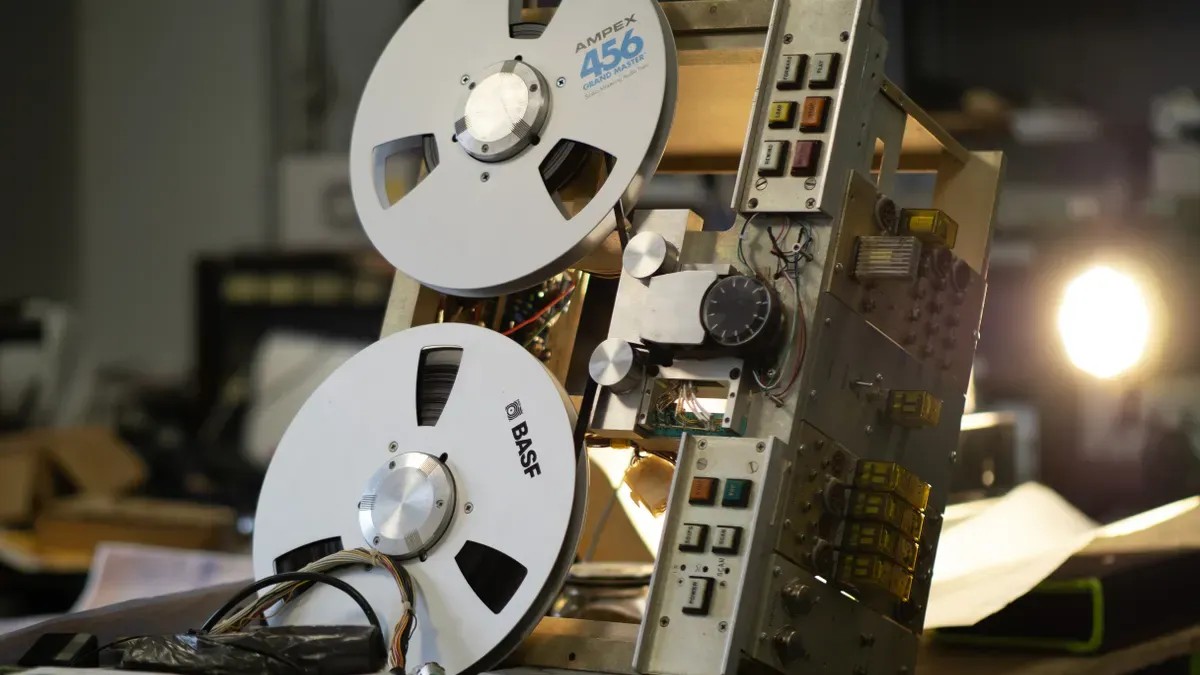
A film rewinding machine is a conversion system. It unwinds large master rolls and rewinds them into smaller rolls. This machine helps the packaging industry by converting PE cling film, PVC cling film, stretch film, industrial film, and food wrap film. Each material needs different settings. The basic way it works is the same for all types.
The main jobs of a film rewinder machine are four tasks: unwinding, inspection, tension control, and rewinding. The process starts with the raw material roll placed on an unwinding stand. A tension control system keeps the material flat and free of wrinkles. It stops the film from getting loose or stretched too much. Loading systems may use shafts, hydraulic shaftless setups, or other mechanisms depending on the model.
Inspection comes next. The machine finds flaws, tears, misprints, and other problems. An inspecting rewinding machine unwinds material, checks it, and rewinds it into a new roll. Its process includes edge alignment, slitting, and marking defects. The rewinder makes rolls that are even, tight, and neat. The settings must change for each job instead of using one fixed value for every material.
Tension control uses load cells or dancer arms. Load cells measure force along the film path. They detect tension changes and send signals to the control system. The system then adjusts motor speed or roller pressure. Dancer arms move up when tension rises and down when it drops. Modern high-speed machines use servo-driven motors and low-inertia dancer rolls. They fix tension ups and downs within milliseconds.
The film path follows a clear order. The master roll loads onto the unwind shaft. The film moves through a tension-control zone using dancer rolls or load-cell feedback. Precision blades slit the web at preset positions. The separated slit lanes go onto individual rewind shafts. When finished rolls reach target diameter, the machine stops, shafts unload, and the cycle starts again.
Fully automatic models combine automatic feeding, automatic film threading, and automatic cutting. An automatic stretch film rewinding machine runs the whole process with very little human help. It loads the master roll, sets cutting blades, loads empty tubes, cuts the film, and unloads finished sub-rolls. Automatic stretch film slitter machines reach real process speeds up to 800 meters per minute. Facilities process thousands of kilograms of film every day.
A stretch film rewinding machine converts stretch film. Another stretch film rewinding machine type handles food wrap. A stretch film rewinding machine also supports slitting and rewinding in one pass. The machine makes film rolls ready for downstream processing or shipping.
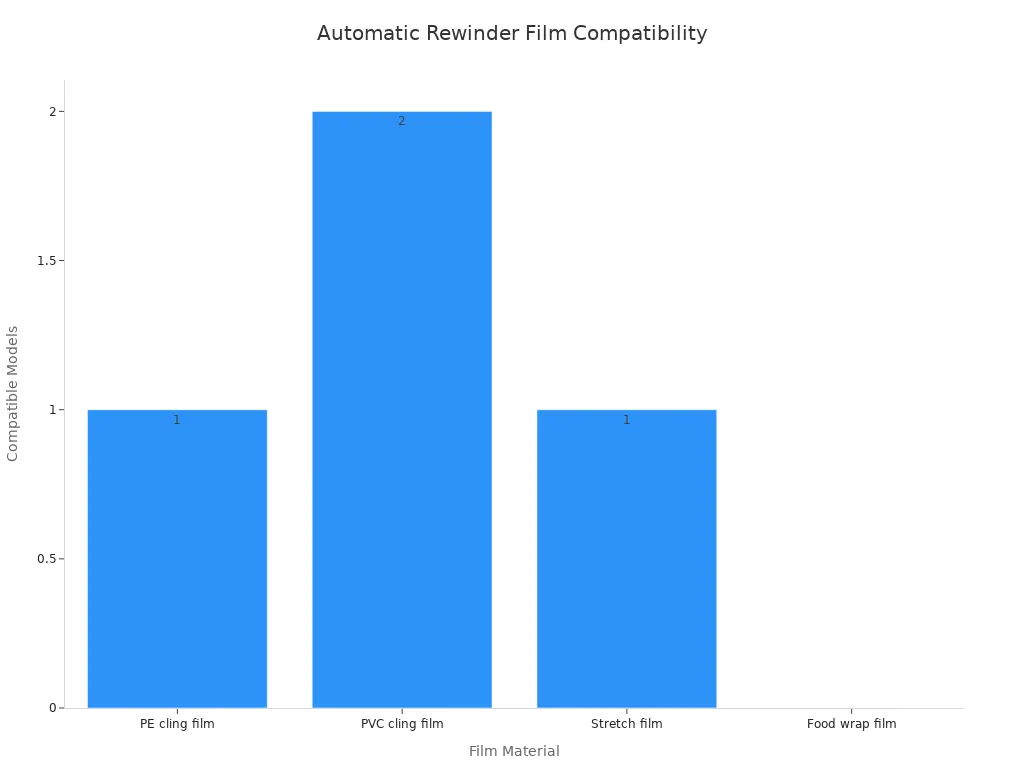
Packaging work uses a few main kinds of film. PE cling film and PVC cling film are the top choices for keeping food fresh. Stretch film is used for wrapping pallets and bundling items. Industrial film protects heavy goods while they are moved. Food wrap film keeps products fresh on store shelves. Each material needs its own machine settings for thickness and breathability.
In the food preservation sector, when using specialized cling film rewinding machines to process PVC or PE materials, it is equally important to precisely match the film's thickness and breathability to the specific needs of supermarkets wrapping fresh meat or households wrapping fruits and vegetables.
A film rewinding machine makes sure materials are wound and shaped correctly for more processing, packaging, or shipping. The machine makes tight, even rolls that feed smoothly into equipment used later. This prep step matters for tray transport packaging and cluster packaging of large or scattered items.
|
Packaging Application |
Description |
|---|---|
|
Tray Wrapping (tray transport packaging) |
Film winding packing machines wrap trays holding products; these trays are used in supermarkets, warehouses, and retail settings for display and transportation. |
|
Bundling (cluster packaging) |
The machines bundle multiple products, such as bottles or cans, using stretch film to keep items tightly secured, organized, and protected. |
Food refrigeration also depends on well-prepared film rolls. A stretch film rewinding machine gives the steady quality that cold storage packaging needs.
A film rewinding machine catches many defects before they reach production lines. Wrinkles, misregistration, ink smudges, tears, and uneven tension are among the most common problems. Automatic optical inspection finds even more subtle flaws.
|
Defect Type |
Description |
Severity |
|---|---|---|
|
Gels and Fish Eyes |
Un-melted polymer lumps appearing as raised inclusions or optical distortions; common in recycled content and low-MFI resins |
Critical |
|
Pinholes |
Sub-100 micron coating voids where barrier layer is absent; can compromise shelf life in food packaging |
Critical |
|
Coating Streaks |
Thin continuous machine-direction lines from die contamination, adhesive viscosity variation, or trapped air |
High |
|
Scratches and Scuff Marks |
Contact damage from guide rollers, nip rolls, or handling equipment |
High |
|
Wrinkling and Web Instability |
Buckle patterns from lateral tension variation or misaligned web path |
Elevated |
The machine also flags print registration errors, material tears or folds, foreign material inclusions, smudges or ink overflows, and perforation alignment issues.
Holes, gels, contamination, coating, and laminating defects cause functional defects in the packaging. Contamination or other surface imperfections can affect the appearance of the packaging and reduce consumer confidence in the product.
Uneven tension creates its own set of problems. Too little tension leads to wrinkles, poor tracking, inconsistent registration, and loose wound rolls. Too much tension causes material stretching, registration variation, edge defects, web breaks, and winding problems. Even small tension changes affect process performance because flexible packaging materials are light and sensitive to strain.
|
Film Issue |
Symptoms |
Root Causes |
Impact on Speed & Waste |
|---|---|---|---|
|
Film Tracking & Misalignment |
Film drifts sideways, skewed packages, crooked seals |
Uneven film roll tension, incorrect threading, worn rollers, variations in film thickness |
Downtime, product waste, rework |
|
Wrinkling |
Visible wrinkles affecting appearance and shelf appeal |
Film tension too high or too low, incorrect forming box size |
Product waste, rejected units |
|
Registration Errors |
Logos/barcodes off-center or cut off |
Slippage between film feed and product feed, inconsistent print repeat length |
Material waste, missed shipments |
Packaging material waste can account for 10–15% of total packaging costs if not properly managed (PMMI Business Intelligence, 2023). Defect detection protects downstream packaging production from costly downtime. A stretch film rewinding machine that marks and removes bad sections keeps packaging efficiency high. The rewinder stops problems before they multiply. A stretch film rewinding machine with inspection capability reduces waste and protects product quality. The machine pays for itself through fewer rejected units and smoother production runs.
Features and Stretch Film Rewinding Machine Types
A film rewinding machine comes with automatic inspection, tension control, slitting, and defect marking. A high-resolution camera checks the film surface while it rewinds. The system compares each image to a preset standard. When it spots stains, scratches, or color differences, an alarm goes off and the machine marks where the defect is. Operators can set the system to stop by itself at the defect so it can be removed.
A stretch film slitting machine combines slitting, rewinding, and other tasks into one pass. The slitting system uses razor blades on a cutter shaft with spacing you can adjust. A pressure roller presses film against the paper core during surface-driven winding. This action squeezes out air between layers and cuts down on bubbles and wrinkles. A film rewinder machine with these features gives you precise rewinding and steady roll quality.
Center, surface, and duplex slitter rewinders work differently when they wind film. A center rewinder turns the roll from its core through the rewind shaft. This type works well for general-purpose converting, but it gives limited tension control for stretch-sensitive film. A surface rewinder turns rolls by touching them with a large drum. It gives great density control, but it may scratch delicate materials.
A duplex slitter rewinder winds onto two parallel shafts at the same time. Each narrow roll controls its own speed and tension on its own. This design fixes problems caused by gauge bands and material inconsistencies. For widths under 50 mm, a duplex slitter rewinder with differential shafts is almost always needed.
Pre-stretch film rewinding machines and pre stretch film rewinding machine models are common picks for stretch film conversion. These machines use pre-stretching technology to stretch film during rewinding. A 400% pre-stretch ratio lets the same roll wrap a lot more pallets with less raw material. Pre-stretching also gives stronger holding power and load stability. A fully automatic stretch film winder runs the whole process with very little manual help. An automatic stretch film rewinding machine keeps quality steady roll after roll. The stretch film slitter rewinder machine and pre stretch film rewinding machine both help with efficient slitting and rewinding for packaging operations.
Benefits and SelectionA film rewinding machine gives you better quality control, less waste, higher output, and rolls that stay the same. Fully automatic coreless rewinding makes tight, stable rolls without inner tubes. This method cuts down on material waste and cost per unit. Servo-driven tension and winding-force control keeps rolls tight and even at speeds up to 800 m/min. Daily output can go over 2,500 kg. Precision tension control stops stretching. It helps reach zero waste and avoids rewraps, crushed corners, and wasted material when handling film.
Rolls wound just right keep production going without stops. Automated core loading, roll unloading, and transfer steps cut down on physical handling and operator touches. This boosts throughput and safety. Turret rewinders keep running non-stop. They wind one roll while another gets ready. This cuts downtime and speeds up roll changeover. Customer production records show changeover downtime dropped by about 80% and output went up by around 15%. A roll wound just right makes printing, laminating, and bag-making work better. AI-powered inspection systems on stretch film machinery find defects with 99.7% accuracy. This leads to a 9% drop in material waste.
Buyers should start with the material type. Different substrates need different web handling and tension control solutions. PE, PP, PET, and BOPP films act in different ways. Kraft paper, coated paper, and self-adhesive label stock each need their own settings. Roll width matters too. The machine must handle the biggest diameter and width of master rolls. It must also make the smallest and biggest finished roll diameters the buyer needs.
Speed and inspection needs shape the final choice. Production speed in meters per minute and expected throughput guide the motor and control system. A stretch film rewinding machine with inspection capability costs more upfront. Yet a machine that costs $20,000 more but cuts scrap by 3 percentage points saves roughly $66,000 in raw material over 8 years. That is more than three times the price difference. A suitable pre stretch film rewinding machine and a customized stretch film rewinding machine both give you efficient rewinding for specific production goals. Semi-automatic models cost less upfront. Fully automatic models need a bigger investment. They pay back through higher throughput and less labor. A stretch film rewinding machine for slitting and rewinding gives buyers one pass for both tasks. The right machine ties every feature back to fewer defects, faster production, and lower material waste.
The film rewinding machine protects quality. The machine keeps packaging lines running. The machine depends on film, width, speed, budget. A smart machine uses IoT sensors and AI. The machine predicts breakdowns and cuts downtime. A stretch film rewinding machine adjusts tension across rolls. Tight rolls, even rolls, and clean rolls matter. Teams investing in slitting and rewinding see fewer defects.
The modern packaging industry favors smart options. A stretch film rewinding machine keeps rolls consistent. The rewinder shapes future operations. A rewinder with PLC control cuts manual work. The machine handles PE and PP. The machine saves energy, and the machine lasts.
FAQA film rewinding machine spots gels, pinholes, coating streaks, scratches, and wrinkles. It points out registration errors, ink smudges, and uneven tension. Sensors mark bad sections, and operators remove them. This protects later packaging lines from delays and wasted material.
Load cells and dancer arms help a stretch film rewinding machine. These parts measure tension, and servo motors change speed fast. Automatic inspection finds flaws while rewinding. Tight, smooth rolls with fewer bubbles and wrinkles need steady tension.
A rewinder turns film into rolls. This machine comes in center, surface, and duplex designs. The center type turns from the core. The surface type uses a drum. The duplex type uses two shafts. It suits narrow rolls and gauge band problems.
Good tension control stops wrinkles, stretching, and loose rolls. Too little tension makes winding uneven. Too much tension causes tears and web breaks. This machine has load cells and dancer arms. It adjusts motor speed within milliseconds.
Buyers weigh material type, roll width, speed, and budget. Different films need different tension settings. A stretch film rewinding machine with inspection costs more upfront. This feature cuts scrap and saves money over time. Automatic models reduce labor. The machine must match daily output.
"4mmx2mm Disc Magnet" from S****** received 4 quotation(s)