Date: 2026.09.03 Click: 1
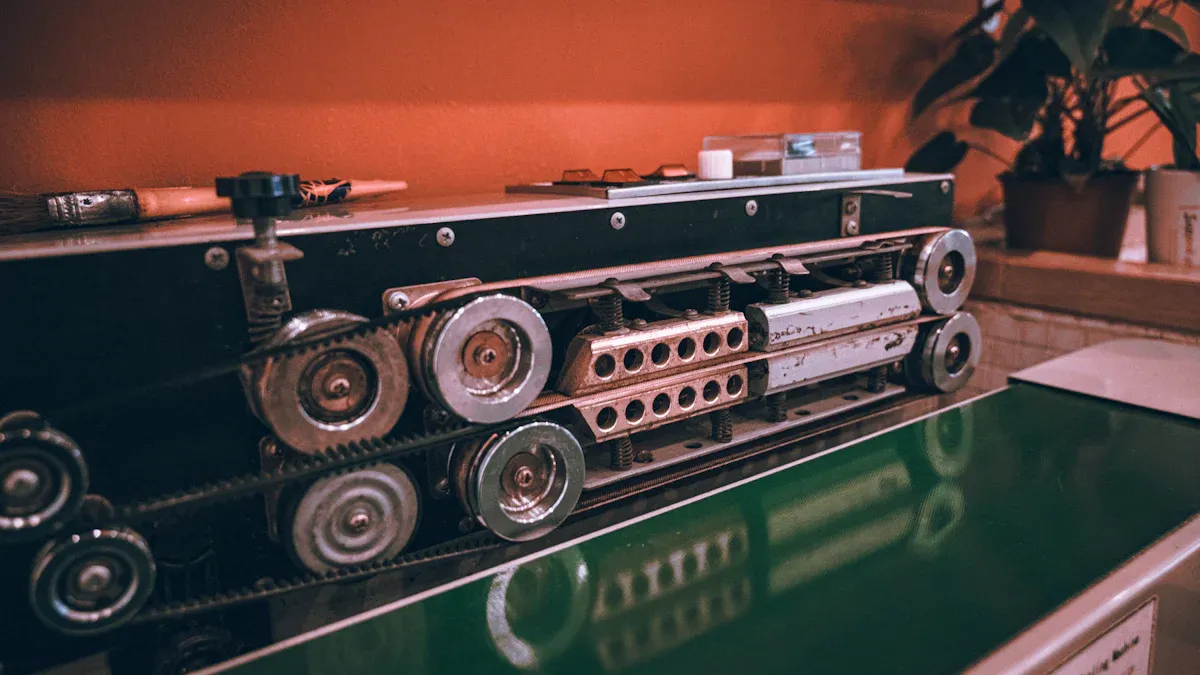
You see plastic bags everywhere—grocery stores, restaurants, retail shops. Each one starts as a flat roll of film. A plastic bag making machine uses a careful process to turn that raw film into finished bags. This machine feeds the film, heats it, shapes it, seals the edges, and cuts each bag. The whole process takes seconds and makes hundreds of bags each minute.
You might wonder how makers keep up with the huge demand for packaging. The answer is the bag making machine's speed and reliability. This process removes hand work, cuts waste, and keeps quality steady. Whether you need simple produce bags or strong liners, these machines get the job done. When you look for a bag making machine for sale, you'll find choices for every size of production. Understanding this machine helps you see the tech behind everyday convenience.
Key TakeawaysBag making machines quickly change film rolls into finished bags.
These machines work quickly and can make hundreds of bags every minute.
Key parts are the unwind, sealing, and cutting sections.
Different machines make different kinds of bags, such as T-shirt bags or zipper bags.
Machines can work with many materials, including films that break down naturally or are made from recycled items.
Automation cuts labor costs and makes bags better.
Cleaning and checking the machine often keeps it working well.
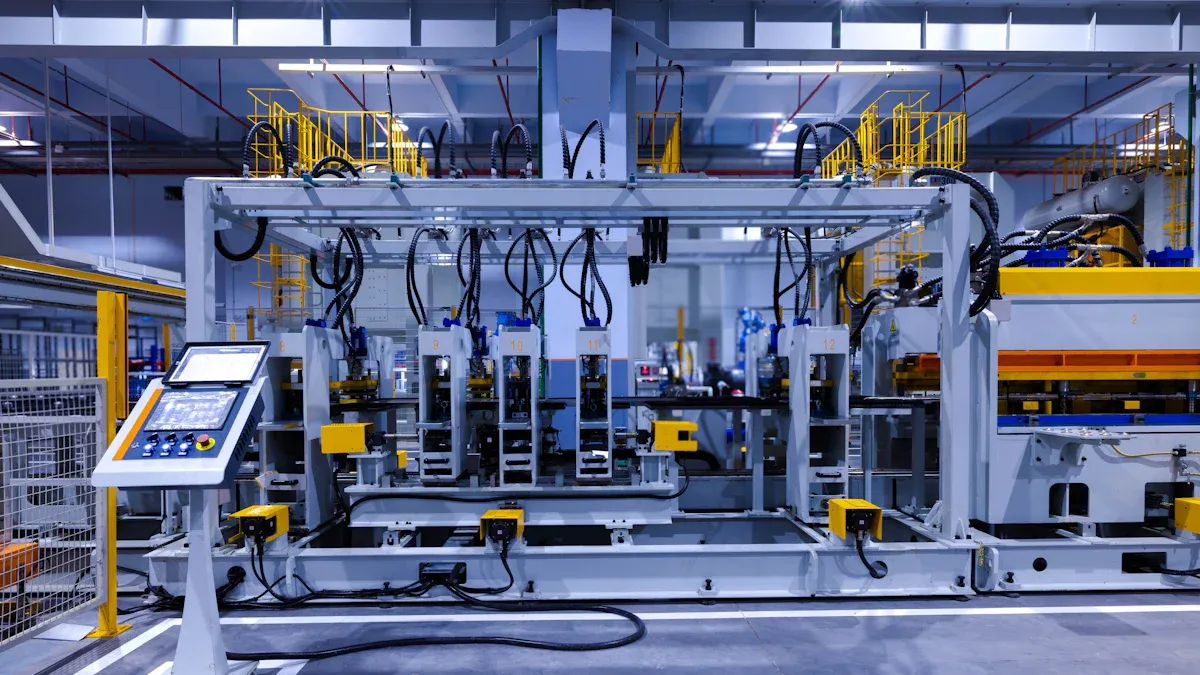
A plastic bag making machine changes flat film rolls into finished bags through a set of exact steps. You put a roll of LDPE, HDPE, biodegradable, or recycled film into the machine. The machine then folds, seals, and cuts that film into separate bags. This step is the core of the plastic bag manufacturing process. Without this machine, you would depend on slow hand methods that cannot keep up with today's demand.
The main job of this machine is simple: it seals and cuts final bag shapes from a long sheet of film. You start with a roll that can be thousands of feet long. The machine pulls the film through its system, folds it to the right width, applies heat to join layers, and cuts each bag to size. The result is a finished product ready for packing, shipping, or store display.
Different bag types need different machine setups. A bottom seal machine makes garbage bags and produce bags. A side seal machine handles courier pouches and stationery items. T-shirt bag machines add automatic punching for handles. Zipper bag machines add resealable closures during production. Each setup serves specific industries and materials.
|
Machine Type |
Industries |
Materials |
Features |
|---|---|---|---|
|
Pouch Bag |
Food, medical, cosmetics |
PE, PET, laminates |
Versatile pouch styles, optional printing, advanced sealing |
|
Garbage Bag |
Cleaning services |
HDPE, LDPE, recycled |
Various styles, perforation and sealing, color customization |
|
T-Shirt Bag |
Retail, supermarkets |
HDPE, LDPE, biodegradable, recycled |
Automated punching, strong seams/handles, size adjustment |
|
Bag on Roll |
Supermarkets, public |
HDPE, LDPE, recycled |
Continuous roll production, adjustable sizes, perforation system |
|
Bottom Seal Bag |
Industrial, commercial |
Heavy plastics |
Bottom-sealing, heat-sealing technology, size flexibility |
|
Side Seal Bag |
E-commerce, postal, boutique |
Thin, flexible films |
Side-sealing, various materials, adjustable sizes/thickness |
|
Zipper Bag |
Food, medical, consumer |
Multiple layers, barrier films |
Integrated zippers, various zipper types, resealable |
|
Air Bubble Bag |
Fragile items, electronics |
Bubble wrap, protective films |
Dual-layered, shock absorption, customizable features |
Automation changes everything about bag production. One worker can watch over multiple machines running at the same time. The equipment handles repeated tasks without getting tired or making mistakes. This automated operation lowers labor costs while boosting output greatly.
Think about the speed difference. A servo-driven model like the ZW-A8 makes 70 to 100 pieces per minute. That rate depends on bag size and material type, but the comparison is still clear. A manual worker might fold and seal a few dozen bags per hour. The machine does that amount in seconds. For businesses growing their packaging work, this speed directly leads to higher profits.
The bag making machine works as a continuous flow system. Film unwinds from the roll and passes through tension control rollers. These rollers keep steady web tension and stop wrinkles. The film then moves to a folding station where a forming plow or folding board shapes it. Guide rollers keep the film aligned and reduce skew.
Next comes the sealing stage. A hot bar presses the film layers together at a set temperature and time. This heat bonds the layers into a permanent seal. Some machines use a flying knife instead, which seals and cuts in one rotary motion. The choice depends on your material and bag design.
The full sequence follows a clear order:
Film Unwinding and Tension Control: The film roll mounts on an unwind stand with a tension control system using dance rollers or servo drives. This keeps steady web tension and stops wrinkles.
Folding and Guiding: The film passes through a forming plow or folding board for central or offset folding. Guide rollers keep skew to a minimum.
Sealing: A hot bar presses layers together at a set temperature and time. Or, a flying knife seals and cuts continuously in one motion.
Cutting and Stacking: A downstream cutting unit slices the web into individual bag lengths. Bags then move to a stacking or winding station.
The final stage includes automatic counters. These counters trigger ejection of counted bundles, so you get even stacks ready for packaging. This whole manufacturing process runs with little human help. You load the film roll, set the settings, and let the machine handle the rest.
Modern bag making machine technology keeps improving. Servo motors give exact control over every movement. Sensors check registration and tension in real time. These upgrades make the plastic bag manufacturing process more dependable than ever. For any business thinking about bag production, understanding this equipment is the first step toward smooth operations.
Key Components of a Bag Making Machine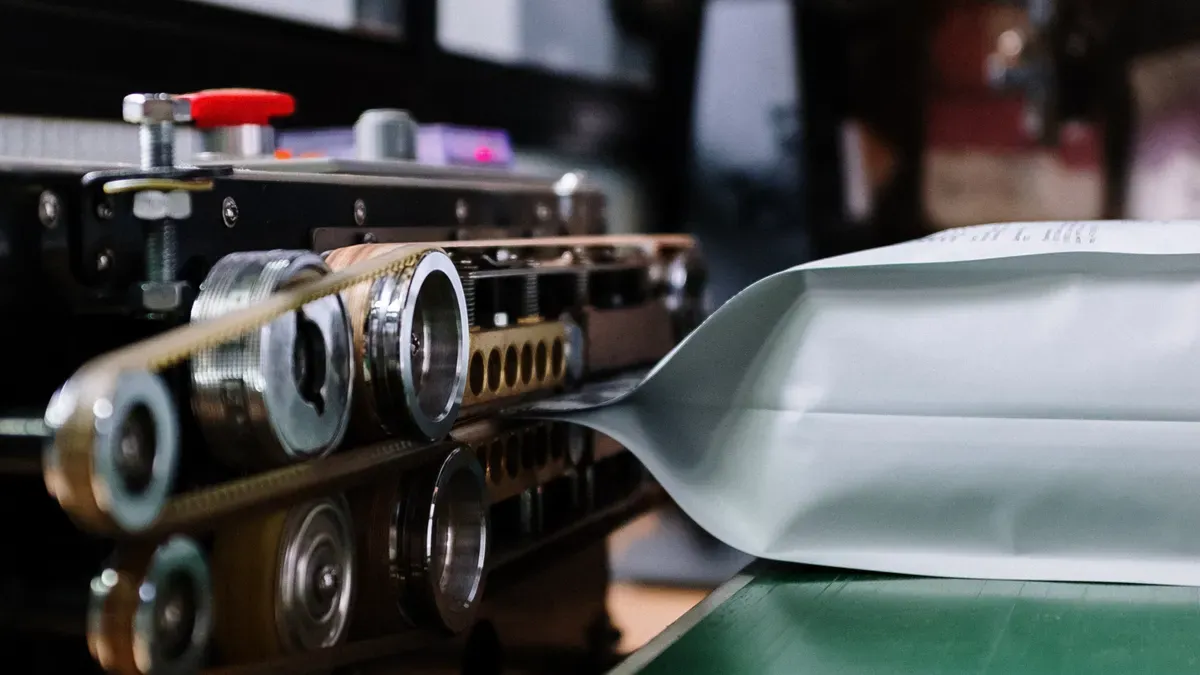
Every bag making machine has three main zones that work one after another. The film unwinding unit feeds raw plastic film from rolls. The heating section gives heat to seal the film. The bag forming zone shapes and cuts the sealed film into single bags. Knowing each part helps you see how the plastic bag making process runs so fast and stays so steady.
The unwind station is where all bag making starts. You put a heavy roll of film onto the stand, and the machine pulls material from it without stopping. This station must handle rolls that weigh hundreds of pounds without making wrinkles or stretching the film. A brake system slows the roll's feed so the material does not unspool too fast. This resistance keeps the right web tension all through the system.
The unwind station also has photoelectric tracking sensors. These sensors check the film's side position and make tiny changes to keep it centered. Without this tracking, the film would shift sideways and cause misaligned bags. The system keeps the film position accurate to ±0.3mm, so each bag lines up correctly even at high speeds.
Tension control is very important in the plastic bag making process. You need steady tension from the unwind roll through the sealing station. Too much tension stretches the film. Too little tension causes wrinkles and misalignment. Modern machines use servo drives with smart feedback systems to control position, speed, and torque in real time.
Servo motors are great at precise positioning. They keep adjusting based on feedback, fixing even tiny errors in position or speed. This real-time fixing directly gives better dimensional accuracy. The system has a feed error of only ±0.1mm at 200 laps per minute. Older drives have delays and mistakes. Servo drives fix errors right away as the machine runs.
After the film leaves the unwind station, it goes into the forming section. Triangular plate formers and bottom folding devices shape the flat film into the bag's structure. You can set these formers for different bag styles, like bottom seal, side seal, or gusseted designs. The forming section decides the bag's final size and shape.
Modern machines have multi-station forming systems. These systems cut changeover time a lot when you switch between bag styles. A multi-station setup drops changeover from 45 minutes down to just 8 minutes. This speed lets you run shorter production batches without losing output.
The sealing section bonds film layers together using heat and pressure. A heated knife and floating blade assembly press the layers at set temperatures. The blade lasts over 800,000 cycles, so you replace it rarely. Pneumatic cylinders give closed-loop pressure control for steady seal quality.
Several things affect seal strength. You must adjust temperature, pressure, and speed based on your material. The table below shows typical settings for common materials:
|
Parameter |
Value/Range |
Notes |
|---|---|---|
|
Upper heat seal temperature |
200–240°C |
For the upper notch of the sealing knife |
|
Bottom heat seal temperature |
50–100°C |
For the bottom notch |
|
Pressure (spacing between bracket and nut) |
5–10 mm |
Adjust to get good seal contact |
|
Machine speed |
20–50 bags per minute |
Increase slowly after fine-tuning |
|
PP material temperature adjustment |
Reduce by 10–15°C |
Compared to standard settings |
|
PVC material speed adjustment |
Increase by 15% |
For cutting speed |
|
HDPE segmented heat-sealing |
Heat quickly to 180°C, then keep at 120°C |
Segmented curve for best seal strength |
|
PID temperature fluctuation control |
±0.1°C |
Precise control using self-tuning PID algorithm |
After sealing, cooling mechanisms set the bond. Good cooling stops the seal from pulling apart during cutting. The length control system uses an eccentric wheel and servo control with linear encoders. This system gives length adjustment accuracy of ±0.05mm.
The cutting station separates the continuous sealed web into single bags. You can pick from several cutting methods based on your bag design and material:
Hot knives for clean edges on heat-sensitive materials
Cold knives for materials that might melt or warp
Rotary cutters for non-stop high-speed operation
Punching mechanisms for handle holes and perforations
Servo-driven synchronized cutting systems for the most precision
Servo-driven cutting systems match the blade speed with the film feed rate. This matching makes sure each bag cuts at exactly the right spot. The quality inspection system uses high-speed cameras running at 2000 frames per second. Laser distance meters check sizes with detection precision improved from 0.5mm to 0.2mm.
The final stage collects finished bags into neat stacks. Automatic counters track each bag as it leaves the cutting station. When the counter reaches your preset number, the machine ejects a full bundle. This automation gets rid of manual counting and cuts labor costs.
The electric control system ties everything together. A PLC with a 12-inch touchscreen gives you full control over all settings. Dual-servo feeding increases speed from 300 to 450 runs per minute. This upgrade also cuts waste from 2.5% to 0.8%. For any business looking at bag making machine technology, these parts decide between profitable production and constant downtime.
Types of Bags ProducedA bag making machine can make many different bag styles. Each style has its own job. The machine setup changes based on the bag type you need. The machine unwinds printed or unprinted film rolls. It then seals, cuts, and forms handles depending on the design.
Flat and side-sealed bags are some of the simplest designs. A side sealing machine creates bags with vertical edge seals. These bags lie flat when empty. They work well for many everyday items.
You find side seal bags across many industries. Food and everyday items use them for bakery goods, vegetables, fruit, and loose products. Pet food and animal feed companies use them for grains, dry food, and minerals. Sanitary items like cotton buds, tissues, and personal care products also come in these bags. The automobile industry uses them for small replacement parts and car care products. The furniture industry packages small parts, decorative items, and textiles this way. Any small, light product that needs storage, protection, organization, transport, or display can use a side seal bag.
Three-side seal pouches work for portion packs, samples, single-serve drink mixes, and spice blends. You see them for snack chips, dried fruit, jerky, and pet treats. Four-side seal sachets handle liquid and viscous foods like soups and sauces. They also work for sample-size cosmetics and pharmaceuticals.
A gusseted bag has an extra crease or panel on the sides or bottom. This design allows the bag to expand into a three-dimensional shape when you fill it. The bag lies flat when empty. This feature increases internal capacity without enlarging the packaging footprint.
You see gusseted bags in food packaging. They hold coffee beans, loose-leaf tea, snack foods, cereals, and granola. Pet food companies use them for small stand-up pouches and large multi-pound bags. Powders and granules work well in gusseted bags. Protein powders, flour, sugar, and lawn care products use this design. The plow bottom design prevents fine particles from getting trapped in seals. Hardware and industrial parts also use gusseted bags as a substitute for rigid boxes.
Specialty bag machines add extra features to basic designs. A T-shirt bag machine creates supermarket shopping bags with punched handles. A patch handle bag machine adds die-cut handles to bags. A loop handle bag machine attaches loop handles for premium shopping bags.
Ziplock bag machines produce resealable packaging. You find these bags for food, cosmetics, and pharmaceuticals. The machine integrates zippers during production. This feature allows the user to open and close the bag repeatedly.
Other specialty machines serve unique needs. A wicketer bread bag machine handles high-speed bakery packaging. Bag-on-roll machines produce continuous perforated bags. You see these for produce and garbage bags. Heavy-duty bag machines work with thick materials. Biodegradable film machines handle eco-friendly materials.
|
Bag Type |
Machine Function |
|---|---|
|
Food packaging bags |
Produce snack bags, stand-up pouches, and vacuum bags |
|
Roll bags |
Create perforated bags on rolls for produce and garbage |
|
T-shirt bags |
Make shopping bags with punched handles |
|
Ziplock bags |
Produce resealable packaging for food and more |
|
Garbage bags |
Manufacture flat, star-sealed, and drawstring bags |
|
Express bags |
Create courier bags for e-commerce shipping |
|
Soft loop handle bags |
Produce premium shopping bags for retail branding |
|
Woven bags |
Make PP woven bags for agriculture and bulk packaging |
|
Medical packaging bags |
Produce sterile packaging for syringes and products |
Paper bag making machines work differently than plastic bag machines. Plastic machines use heat sealing to bond film layers. Paper machines use gluing and folding to form the bag structure. Paper bag machines can use sheet-fed or roll-fed processes.
Grocery paper bag making machines automate the production of paper bags. These machines streamline the process from feeding the paper roll to folding, gluing, and forming the bags. Plastic bag machines use film extrusion and heat sealing. This process is fundamentally different from the gluing and folding process used for paper bags.
The paper bag process follows a clear sequence:
Unwinding and printing (optional): Feed the paper roll into the machine and print the pattern as needed.
Cutting and folding: Cut the paper into sheets and fold it into the required shape.
Gluing and sealing: Glue the sides to form the bag structure.
Install handles (if applicable): Use a handle machine to install twisted paper, flat bottom, or ribbon handles.
Pressing and drying: Press the bag for a firm bond and dry as needed.
Paper and plastic machines differ in several ways. Paper machines produce 200 to 400 bags per minute. Plastic machines produce 500 to 1000 or more bags per minute. Paper machines process kraft, coated, recycled, and specialty papers. Plastic machines process plastic films like polyethylene. Paper machines consume 30 to 40 percent less energy than plastic systems. Plastic machines have higher automation levels and lower labor requirements.
Key Features and BenefitsAutomation changes how you handle bag production. A servo-driven machine gives you instant feedback and exact timing control. This tech cuts down on defects and keeps your line running without problems. You get steady output without the ups and downs you see in mechanical systems.
The "No Product No Bag" feature shows this efficiency well. Sensors on the infeed conveyor spot when a product is missing from a slot. A mechanical machine wraps an empty package, wasting film and needing someone to sort it out later. A servo machine stops its film drive and cutter on its own. At 200 packs per minute with a 1% empty feed rate, you avoid over 1,051,200 empty bags each year. That saving goes straight to your profits.
Your cycle rate tells you how many bags you make each minute. Servo-driven models hit 70 to 100 pieces per minute for many bag styles. This speed turns directly into higher production numbers. You meet customer deadlines without overtime or extra shifts.
Changeover time also affects your total output. A mechanical machine needs 20 to 40 minutes and a skilled mechanic to switch bag styles. A servo machine does the same change in 2 to 5 minutes using a touchscreen. You run shorter batches profitably and react faster to order changes.
One operator can watch over multiple machines running at the same time. The equipment handles repeated tasks without getting tired or making errors. This automation lowers your labor costs while raising overall production efficiency. You move workers to quality checks or other useful tasks instead of manual bag handling.
Your bag making machine works with a wide range of materials. LDPE and HDPE films work for everyday bags. Biodegradable films like PLA, PBAT, and starch-based blends expand your product options. Each material needs specific temperature and pressure settings, but modern machines adjust easily.
Recycled materials offer a sustainability benefit. You can use up to 100% recycled non-woven R-PP and R-PET materials in production. Kraft paper bags contain up to 50% recycled content. This approach cuts reliance on virgin plastic, lowers carbon emissions, and supports a circular economy.
Biodegradable films need special handling. PLA comes from plant-based sources and works with T-shirt bag machines. PBAT blends well with PLA and needs heat-sealing temperatures between 120-180°C. Starch-based blends support film thicknesses from 0.015 to 0.05mm. Machines set up for these materials can produce bags that meet EN 13432 and ASTM D6400 standards.
Servo-driven accuracy gives you lasting precision. Mechanical machines drift over time as chains stretch. Servo systems use digital feedback loops that keep exact positioning. Your bags come out the same size and shape every time.
The table below compares servo-driven and mechanical machines across key performance areas:
|
Feature |
Servo-Driven Machine |
Mechanical Machine |
|---|---|---|
|
Timing Control |
Real-time feedback, precise timing |
Consistent but subject to variations |
|
Defect Rate |
Lower due to precision control |
Higher due to mechanical variations |
|
Consistency |
High, with minimal variation |
Good, but higher variation possible |
|
Maintenance |
Easy and efficient due to modular design |
Frequent and time-consuming |
|
Downtime |
Minimal due to modular design |
Higher due to frequent maintenance |
|
Cost Analysis |
Higher initial cost, lower long-term maintenance |
Lower initial cost, higher long-term maintenance |
Repeatability means you get identical bags from the first run to the last. Servo motors keep their accuracy throughout long shifts. This consistency reduces waste and improves your production efficiency. You build trust with customers who depend on uniform packaging.
The initial investment in servo technology costs more than mechanical systems. But lower maintenance, less downtime, and minimal film waste deliver a stronger return over time. For growing businesses, this performance advantage makes the upgrade worthwhile.
Applications Across IndustriesBag making machines serve many different industries. Each industry has specific needs for bag size, material, and strength. Understanding these applications helps you choose the right equipment for your business.
Retail stores use millions of bags every day. Grocery stores need strong, lightweight bags for carrying purchases. Fashion retailers want bags with premium appearance for branding. Bakeries and pharmacies need cost-effective options for everyday items.
The bag type depends on the product. Flat handle bags work well for grocery stores, bakeries, pharmacies, and takeaway restaurants. They cost less and stack easily. Twisted handle bags suit fashion retail, gift shops, and cosmetic retailers. They offer stronger carrying capacity and excellent print quality for branding. Die-cut handle bags serve promotional packaging and event giveaways. SOS (self-opening square) bags work in grocery stores and coffee shops because the flat bottom allows upright standing.
Material choice matters too. HDPE creates thin, lightweight, durable bags for grocery stores. LDPE produces soft, flexible, transparent bags for bread bags and utility uses. LLDPE offers stretch and strength for bulk food storage. PP provides high clarity and chemical resistance for food packaging. Each material type requires specific machine settings for temperature, pressure, and sealing time.
For retail and consumer packaging, you need machines that handle different materials and bag styles. A bag making machine for sale should match your specific production needs. The right machine improves your efficiency and reduces waste.
Food service requires strict hygiene standards. Bags for bread, ice, frozen foods, and snacks must meet food-grade requirements. The material must be free from harmful chemicals that could leach into food. The machine must operate in a clean, controlled environment.
Bottom sealing bag making machines work well for food-grade bags. They ensure tight sealing to preserve freshness and prevent leakage. This feature is important for bakery products, snacks, and frozen foods. The sealing system must maintain consistent temperature and pressure across every bag.
Food-grade requirements include three main areas. First, material selection requires food-grade paper or film free from harmful chemicals. Kraft paper is a common safe choice. Second, hygiene and cleanliness require machines to operate in a clean environment. Regular maintenance prevents dust and debris contamination. Third, printing and coating must use only food-safe inks. Compatible printing units must handle these safe inks.
CPE bags offer soft, flexible, strong packaging for retail presentation. They can be 100% biodegradable. PE bags provide flexibility, durability, and tear-resistance. LDPE can use 100% recycled materials. PP bags provide high clarity and strong protection against moisture.
For food service companies, investing in the right packaging solutions means choosing machines that meet hygiene standards. A bag making machine for sale with food-grade capabilities ensures your products stay safe and fresh.
Industrial applications need heavy-duty bags. These bags handle waste, bulk materials, and industrial products. The machine must produce bags with strong seals and consistent dimensions.
Key specifications to consider when purchasing a machine include machine suitability matching your production needs. Machine performance covers speed, reliability, and output. After-sales support includes service and spare parts availability. The automated control system handles gathering, folding, sealing, cutting, stacking, and conveying. Production speed affects your overall production rate. Material type compatibility includes recycled and eco-friendly options. Machine size determines your production level.
Important features include a servo motor system for improved feeding and cutting precision. A PLC control system simplifies operation and parameter adjustment. A photoelectric tracking system precisely tracks print marks for consistent cutting. Automatic tension control stabilizes the film to prevent wrinkles and waste.
When you look for a bag making machine for sale, ask about OEM reputation and technical support. Check changeover time, production rates, and scrap rates. Understand the web control system and sealing system. Ask about the cut-off and stacking methods. Consider machine flexibility for different pouch styles. Price is important, but prioritize uptime, seal integrity, and long-term ROI.
Heavy-duty liners serve industrial and institutional needs. They line waste bins, transport bulk materials, and package heavy products. The machine must handle thick materials and produce strong seals. The right packaging solutions for industrial use include machines that can run recycled materials. This approach supports sustainability goals while maintaining production efficiency. You can use up to 100% recycled non-woven materials. This cuts reliance on virgin plastic and lowers carbon emissions.
For any business, understanding your production needs is the first step. Whether you serve retail, food service, or industrial customers, the right machine makes the difference. Look for equipment that balances speed, material compatibility, and long-term value.
Maintenance and TroubleshootingRegular upkeep keeps your bag making machine running at peak performance. A well-maintained machine produces consistent bags, avoids costly downtime, and lasts for years. Your equipment manual contains model-specific procedures, but general practices apply across most machines.
Start each shift with a visual inspection. Check for loose bolts, unusual noises, or residue buildup on sealing jaws and cutting blades. Clean machine surfaces with approved solvents to remove plastic debris that can cause overheating or jams. Lubricate moving parts such as chains and guides using manufacturer-recommended oils to reduce friction and wear.
Your maintenance schedule should follow a clear rhythm:
|
Frequency |
Recommended Actions |
|---|---|
|
Daily |
Remove film scraps and surface contaminants; verify normal operation of film feeding, heat sealing, cutting, and product collection systems. Check air pressure and compressor filters. |
|
Weekly |
Check drive components, pneumatic systems, sensors, and fasteners; lubricate and adjust as required. Clean photoelectric sensors and inspect cutting blades for wear. |
|
Monthly |
Inspect lubricant levels and quality; refill or replace as needed. Replace air compressor filters and hydraulic system filters. Check belts and chains for wear. |
|
Quarterly |
Perform deep cleaning of all moving parts. Inspect gears and drive components for wear or misalignment. Test temperature controller settings. |
|
Annual |
Conduct comprehensive inspection of motor shafts, bearings, and screw drives. Replace worn seals or motors. Change hydraulic oil and verify it is contaminant-free. |
Seal bars and cutting blades face constant heat and pressure. Inspect them weekly for wear, debris, or damage. Clean debris from jaw faces to prevent uneven pressure. Check pressure springs and pneumatic cylinders for wear. A worn seal bar creates weak seals that split during use. A dull cutter tears film instead of slicing cleanly. Replace these components promptly when wear exceeds the limits in your manual.
Misaligned seals come from several sources. Poor material preparation causes uneven seals. Plastic rolls with excess moisture or uneven thickness create bags with misaligned edges. Store materials in a dry, cool space and check thickness with a caliper before loading.
Film tracking issues also cause problems. Low brake tension creates slack that lets film drift sideways. High tension stretches or snaps the material. Center the film roll perfectly on the spindle and check idler roller alignment regularly.
Film jams interrupt your production process. Common causes include:
Incorrect film feeding through guides and rollers
Foreign objects or debris in the machine
Inconsistent film thickness from your supplier
Check film threading against your manual, clean the machine regularly, and source film from reliable suppliers with consistent thickness.
Incorrect parameter settings lead to bad seals. Too high temperature melts plastic. Too low temperature leaves weak seals that split. Follow your machine's user guide and test with 10-20 sample bags before full production runs.
Material tension inconsistencies cause wrinkles and misaligned folds. When tension runs too high, film stretches or tears. When too low, folds become loose. Use automatic constant tension control systems that maintain proper tension from start to finish of each roll. Combine this with automatic deviation correction for best results.
Consistent maintenance directly improves machine performance. You reduce waste, avoid unexpected breakdowns, and maintain steady output. The small time investment pays back through longer equipment life and reliable bag quality.
You now understand the journey from a raw film roll to a finished bag. The bag making machine for sale gives you a powerful tool for scaling your packaging operations. Speed, precision, and material versatility with biodegradable options come standard with this technology. It directly improves your production efficiency. Automated systems boost efficiency while reducing waste and raising your production numbers. Automation and smart sensors represent the next step in this technology. Performance improves and labor costs drop with these upgrades. Understanding this manufacturing process helps you choose the right packaging solutions. A reliable production line depends on the right equipment. Consult with equipment specialists to find the best bag making machine for sale. They can match the advanced technology to your specific production needs.
FAQYou can use LDPE, HDPE, biodegradable films like PLA, and recycled materials. The machine changes temperature and pressure for each material type. This flexibility lets you serve different markets.
Servo-driven models make 70 to 100 bags per minute. The speed depends on bag size and material type. This rate is much faster than manual methods and boosts your production efficiency.
Servo machines use digital feedback for exact positioning. Mechanical machines lose accuracy over time as chains stretch. Servo systems give fewer defects, less maintenance, and higher consistency.
Yes. You can run PLA, PBAT, and starch-based blends. The machine needs specific temperature settings between 120-180°C for PBAT blends. These bags meet EN 13432 and ASTM D6400 standards.
One operator can watch over multiple machines at the same time. The equipment handles repeated tasks without human help. This setup lowers your labor costs while raising output.
Poor material preparation or incorrect tension causes misaligned seals. Check film thickness with a caliper before loading. Adjust brake tension to keep the film centered through the machine.
Clean machine surfaces daily to remove plastic debris. Inspect seal bars and cutting blades weekly. Replace worn components promptly. Regular upkeep prevents downtime and maintains bag quality.
"4mmx2mm Disc Magnet" from S****** received 4 quotation(s)