Date: 2026.09.01 Click: 2
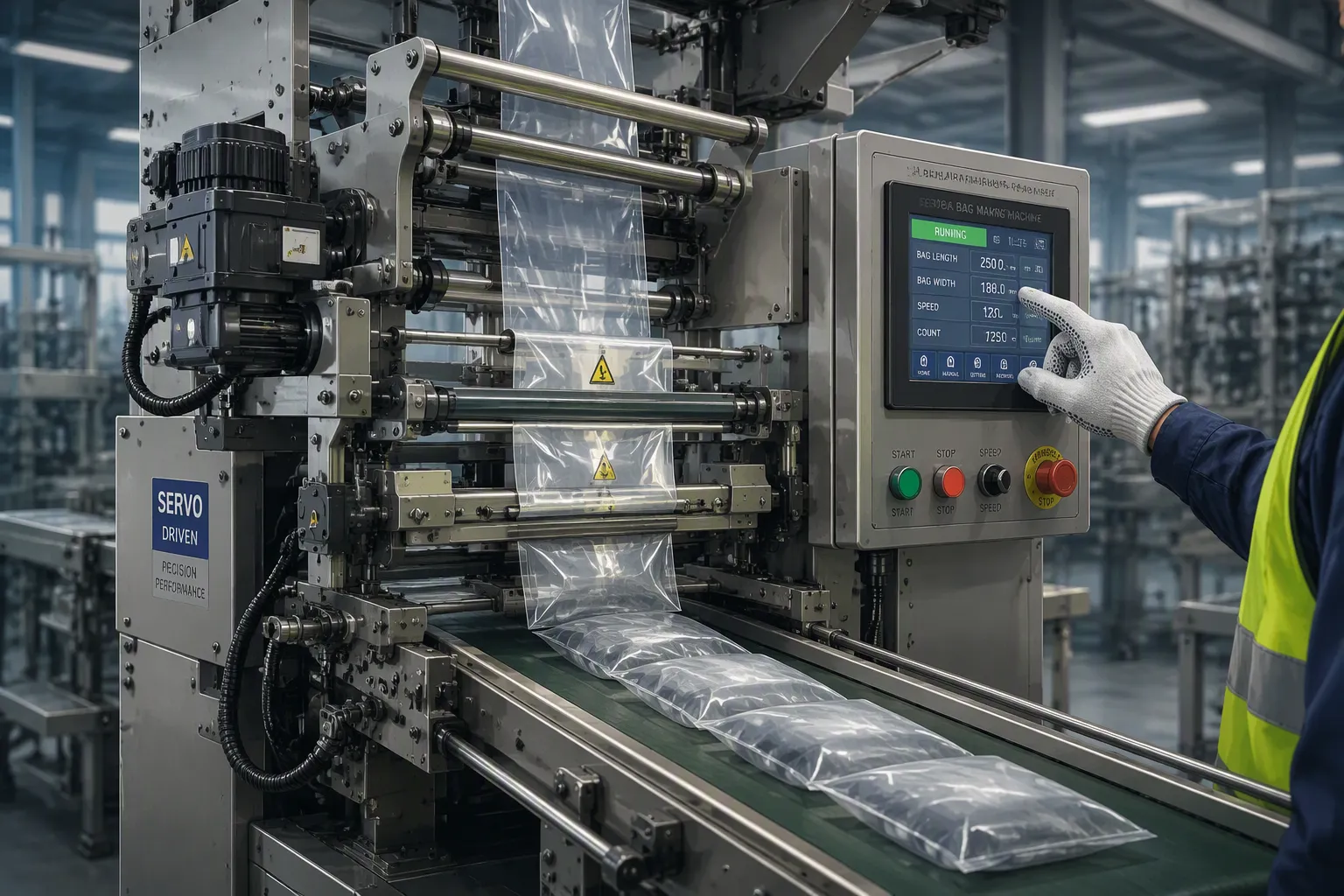
A servo bag making machine is a very exact tool. It uses servo motors to manage film feeding, sealing, and cutting. Unlike older mechanical machines, it works with electronic timing. This gives you exact control every time.
You will see quick benefits. Its accuracy reaches within ±0.1mm. Tension changes stay within ±0.2°. Your material waste drops to 2.5%, much lower than the 8% industry average. You also cut energy use by over 20%. Daily output rises 15-30%. Setup time drops by 40%.
This technology improves packaging and paper making. You get better efficiency with less waste. The next parts explain exactly how this works.
Key TakeawaysServo bag making machines use electronic controls to feed, seal, and cut film with great accuracy.
They hit accuracy within ±0.1mm and cut material waste down to 2.5%, far less than older machines.
Servo drives take the place of mechanical gears, giving quicker reactions and more precise control.
Encoders give instant feedback, so bag sizes stay the same and cuts come out clean.
Touchscreen interfaces let you change settings quickly, reducing setup time from minutes to seconds.
These machines handle different types and thicknesses of film, and they adjust on their own for the best results.
Servo systems cut energy use by 20-35% and lower maintenance to only 0.5 hours each week.
Investing in a servo machine raises daily output by 15-30% and boosts overall profits.
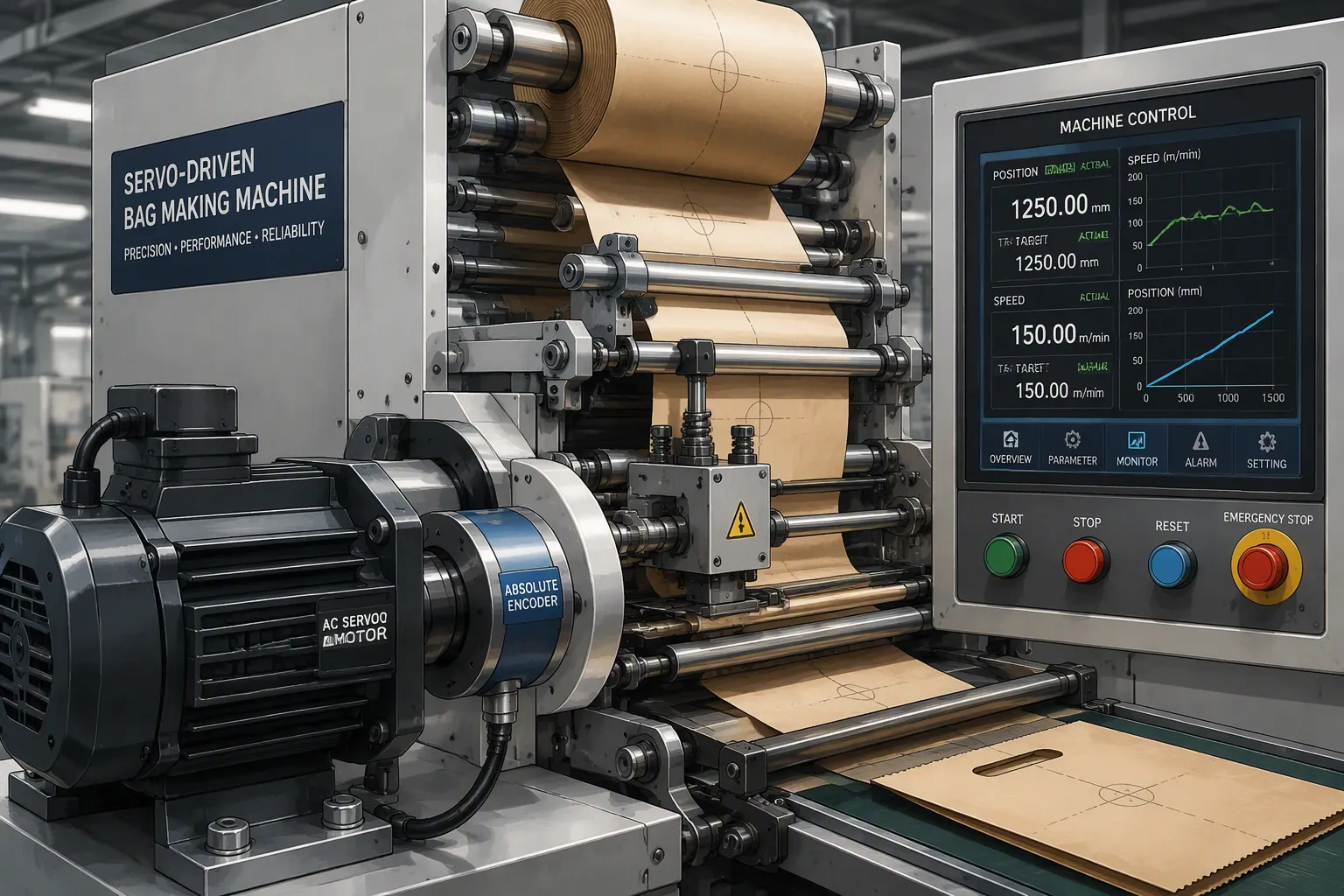
This machine combines electronics with smart control systems for paper manufacturing. It replaces mechanical parts with electronic signals. The result is a reliable production process.
Servo drives regulate position, speed, and torque. They use feedback mechanisms for real-time adjustments. This corrects deviations instantly. The result is tighter tolerances on every product.
Older machines use gears and clutch-brake systems. These parts wear out over time. Servo drives replace them with electronic signals. The system uses high performance servo controls to manage motion. This automated manufacturing machine handles complex paths and varying speeds.
Servo drives provide precise positioning through closed-loop feedback. VFD systems operate open-loop without continuous feedback. This makes VFDs suitable only for basic speed control. Servo drives offer greater flexibility and accuracy. A mechanical belt system achieves registration accuracy of ±0.25 mm to ±0.35 mm. A servo system tightens this to ±0.08 mm to ±0.12 mm. With auto-registration, it reaches ±0.05 mm to ±0.08 mm. That is three times tighter than mechanical systems. The paper industry values this precision.
Servo drives respond in milliseconds. VFD systems take hundreds of milliseconds. Servo drives execute thousands of micro-corrections per second. This prevents cumulative tolerance deviations. Every cut happens at the exact registration mark. Paper materials require clean cuts without fraying.
Encoders provide feedback for servo control. They track the motor shaft position. A typical encoder has 17‑bit to 23‑bit resolution. This means it detects over 8 million positions per revolution.
The encoder sends position data to the drive thousands of times per second. The drive compares this data to the target position. If there is any difference, it adjusts the motor instantly. This closed-loop control ensures the film moves the right distance every time.
This accuracy is essential for consistent dimensions. The system detects and corrects microscopic deviations. The control update rate ranges from 1 kHz to 8 kHz. In advanced systems, it reaches 16 kHz. Paper products require this precision for proper seal alignment.
The process follows a series of steps. Each step is controlled by servo drives.
The process starts with film feeding. You mount a large roll of packaging film on a spindle. Transport belts pull the film off the roll. Paper waste is minimized through precise tension control.
Next, the film passes through tension control. It goes over a dancer arm that maintains constant tension. This prevents wandering or wrinkles. Paper production becomes more efficient with proper tension control.
The film then moves through registration. A photo-eye detects printed marks on the film. These marks allow the control system to coordinate film movement. Edge sensors monitor lateral position and shift the transport carriage.
After registration, the film enters formation. It passes over a forming tube that folds it into a continuous tube shape. A rotary encoder measures the exact length. Once the desired length is reached, the system signals the film transport. Paper converting operations use similar technology for length control.
The sealing stage comes next. Heated bars create the bottom seal. A vertical bar creates the side seal. Temperature and pressure are controlled precisely. This ensures strong seals.
Finally, the cutting stage separates individual bags. A cutting knife, synchronized with the sealing head, cuts at the correct position. The finished bag then moves to a conveyor.
This entire process happens at high speed. Double-line technology achieves speeds up to 280 bags per minute. The machine handles film thickness as low as 8 μm and widths up to 1600 mm. Advanced temperature and tension control maintain consistent quality, reducing scrap rates.
Changing bag lengths on a traditional machine requires manual adjustment. On a servo machine, you enter the new length on the touchscreen. The motors adjust automatically.
The system uses multi-axis servo control to synchronize the traction speed with the sealing and cutting cycles. Cutting parameters are set digitally through the control panel and are automatically recalculated when the operator changes the target bag length. The servo drives make real-time adjustments to correct any deviations, ensuring precise positioning.
This system automatically compensates for variations. It eliminates manual setup when changing sizes. The servo drive provides dimensional accuracy within ±0.08mm to ±0.12mm, ensuring consistent bag lengths.
The motors also adjust the timing of sealing and cutting. When you change the length, the system recalculates the cutting parameters. The knife moves to the correct position. The sealing bars adjust their timing. This happens automatically.
This flexibility is a key advantage. You can switch between different sizes quickly. This reduces downtime and increases production efficiency. It allows you to produce a wider range of products. Efficiency improves across the entire paper packaging line.
Common Types of Servo Bag Making Machines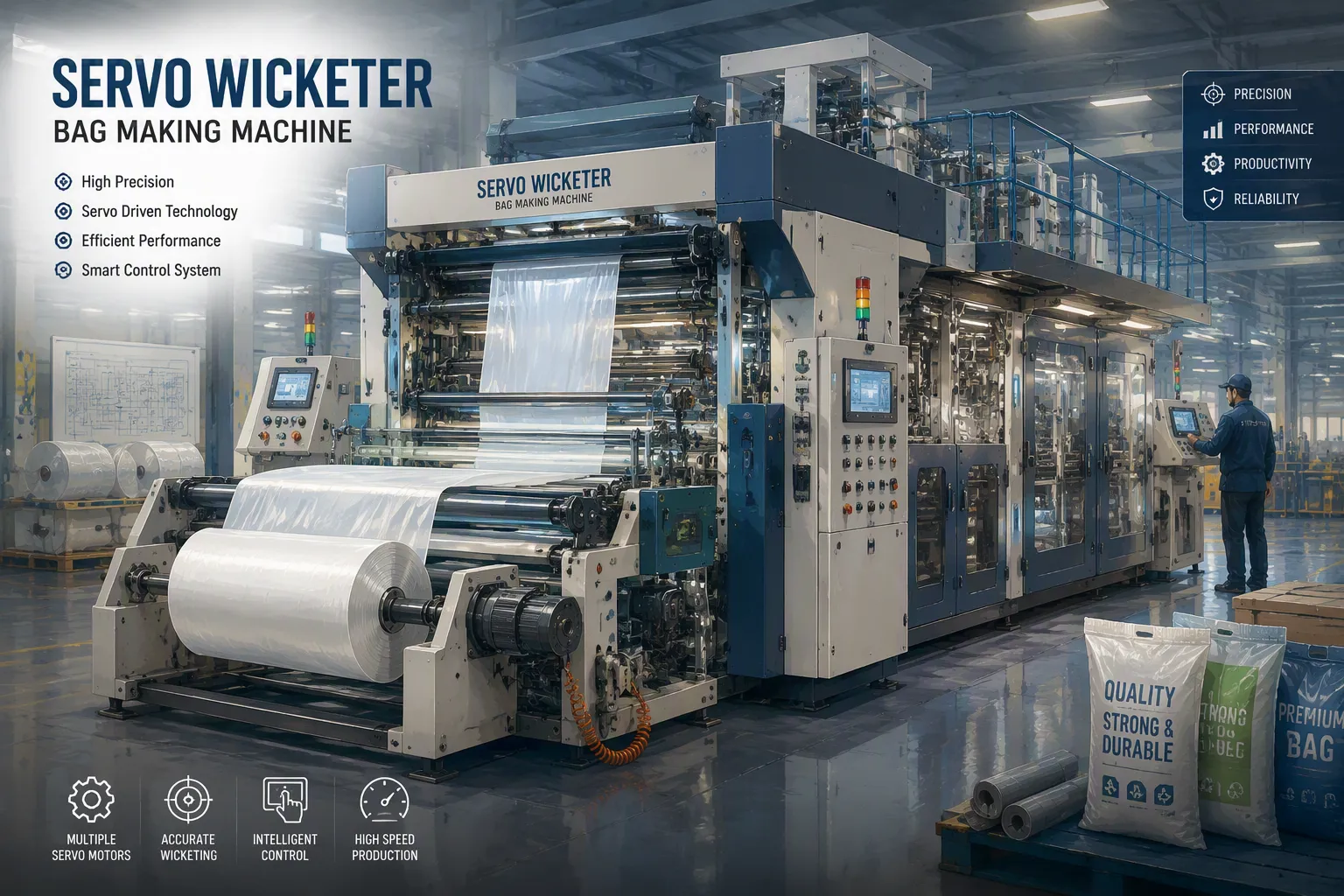
Different production tasks need different machine setups. Each servo bag making machine type works best for a certain product style or material. Knowing these options helps you pick the right equipment for your paper manufacturing line. The paper industry uses this technology to handle materials like films and paper. A paper bag manufacturing machine with servo drive systems gives steady quality across many paper grades. The main parts of a paper bag machine are motors, encoders, and control systems. These parts work together to make precise products. When you look at a plastic bag and converting machine, the same ideas apply to material processing. You can get more output with less waste when you choose the right machine type. Three main groups cover most production needs. These are wicketer machines, side‑weld machines, and bottom seal machines. Each type has its own strengths for different uses. The best choice depends on your product type, material, and volume needs. Knowing these differences helps you make a smart choice. Understanding what sets these types apart helps you match the machine to your production needs.
Servo wicketer machines run fast to make handled products. They use multiple servo motors coordinated through an EtherCAT control system. This keeps all parts moving in sync. The coordinated motion keeps quality steady. Energy‑saving motors cut power use by over 20 percent. This lowers operating costs over time.
Key features include servo‑driven film unwinding. This keeps tension steady through the whole run. An auto tension system and auto web guiding system cut down on waste. A touchscreen interface lets you change settings quickly. Product data memory stores job setups. This allows fast order changeovers. Paper manufacturing needs this kind of flexibility. You can save settings for different products and bring them up instantly. The system includes IoT‑enabled remote diagnostics. This lets you check machine performance from anywhere.
For handle and patch application, the servo drive system gives exact positioning. The wicketer puts handles or patches at precise spots. This accuracy matters for paper products that need reinforcement. The paper material must line up perfectly with the handle attachment point. A paper bag manufacturing machine handles this task with precision. The paper industry values this accuracy for high‑quality paper products. The result is steady quality across every production run. The SPS function control automates sequencing for repeatable results. The system also includes a print registration system. This tracks printed material accurately. It ensures exact alignment and cut‑off for every product.
The servo control system improves stacking and counting through independent motion control. The machine has a multi-servo setup. Separate drives control the wicket arms and pin stacker. An auto pin stacker ensures efficient stacking. Each unit lands on the wicket pins with accuracy. This cuts down on jams and improves stacking consistency.
The result is neatly stacked products ready for automated filling. Digital timing adjustments give you precise control over positioning. The system achieves high production rates, with the servo-driven design ensuring accurate motion. This allows perfect stacking even at high output levels. The adjustable arms and customizable pin setups support precise stacking. This level of control is vital for high‑volume production. The system keeps accuracy across long production runs. This reduces the need for operator involvement. The system also supports dual‑line synchronous drive operation. This keeps both lines running steadily. It cuts down on debugging downtime and makes the process smoother.
Servo side‑weld machines focus on thin film products. These machines need precise tension control. The film must move through the system without stretching or wrinkling. Servo systems keep tension steady throughout the process. Making thin films requires precise control of every setting. Tension control stops film distortion and ensures consistent seal quality.
The sealing stage uses heated bars with exact temperature control. The system makes sure the bars apply steady pressure. This creates strong seals for each bag. The tension control stops film distortion during sealing. This is key for keeping product quality. The system watches temperature and pressure in real time. You can adjust these settings through the touchscreen interface. The sealing bars keep steady temperature across their whole surface. This stops weak spots in the seal. The result is a reliable seal every time. The system also adjusts sealing settings based on film thickness. Thinner films need lower temperatures. Thicker films need more heat and pressure. The system handles these changes automatically.
Side‑weld machines handle different film types. The system adjusts settings automatically. You can switch between materials quickly. This includes film‑based materials and plastic materials. The system stores settings for each material type. This cuts setup time between runs. The ability to handle various material grades makes these machines versatile. Each material type needs different temperature and tension settings. The system pulls these settings from memory. This removes manual trial and error. The system also adjusts the cutting speed for different materials. This ensures clean cuts without fraying or tearing. The system also watches the cutting blade condition. It alerts you when blade replacement is needed. This stops quality issues from dull blades.
Servo bottom seal machines handle heavy‑duty products. These machines work with thick materials. A paper bag manufacturing machine controls the sealing pressure precisely. This ensures strong seals even for thick materials. The system keeps steady temperature across the sealing bar. This stops weak seals or material damage. Heavy stock needs this level of control. The system applies steady pressure no matter the material thickness. This ensures reliable seals on every product. The sealing bar design fits different material thicknesses. You can adjust the sealing settings for each job. The system also includes a dual‑line synchronous drive for stable operation. Twin independent drives control each line separately. This allows exact length control for each product.
Heavy‑duty materials create large inertial loads. The system handles these loads well. The drives respond quickly to changing conditions. Optimized acceleration and deceleration curves improve the load response. The system uses a 23‑bit high‑resolution encoder for precise positioning feedback. This stops material jams or misalignment. The system keeps smooth operation even at high speeds. Material converting operations benefit from this stability. The system handles start and stop motions smoothly. This cuts wear on mechanical parts. The result is longer machine life and lower maintenance costs. The system is capable of continuous operation, suitable for high-volume production. The system reaches bag‑making speeds up to 280 bags per minute with stable operation. It runs without abnormal noise. The continuous operation capability makes it suitable for demanding production schedules.
Advantages Over Traditional Mechanical SystemsA servo bag making machine gives you amazing accuracy. Old mechanical systems use gears and clutches that wear down over time. This wear causes your product sizes to drift. Servo drives fix this problem with closed-loop feedback. The system checks the real position against the target position hundreds of times each second. It fixes any difference right away. Your paper products stay the same size through the whole production run.
This accuracy covers every step of the process. Registration marks line up perfectly with cutting points. Seals form in the exact right spot on every bag. This precision matters for paper packaging that must meet strict customer requirements. You cut down on rejected products by a large amount. Your quality control team spends less time checking and sorting. The whole paper manufacturing line runs with more confidence.
Accurate cutting lowers your material costs directly. The system cuts at the exact registration mark every single time. You get rid of the miscuts that trouble mechanical systems. Each sheet of paper film gives you the most usable bags possible. Your scrap rate drops far below industry averages.
The system also cuts waste during setup and changeover. You type the new sizes on the touchscreen. The machine positions itself correctly on the first try. You avoid the trial-and-error runs that waste expensive paper material. This efficiency leads to real cost savings. Your paper converting operation becomes more profitable with less waste.
Changeover time drops by 40% with touchscreen presets. That is a significant reduction. You just pick the saved job setup. The motors position all parts automatically. Digital recipe systems cut adjustment time by 40%. Your operators no longer need special mechanical skills.
The touchscreen makes the machine easy for operators with different skill levels. You remove the guesswork from setup steps. Servo-driven parts position themselves with micrometer accuracy. You take out trial-and-error and measurement mistakes. Settings are right from the start, which boosts first-run yield and cuts rework. Your production schedule stays on track.
Servo drives lower mechanical wear because they remove many moving parts. Old machines have gears, clutches, and brakes that wear out. The new system replaces these with electronic signals. You have fewer parts that need replacing. Your maintenance costs go down a lot. Your paper manufacturing line has less unplanned downtime.
The system also gives smoother acceleration and deceleration. This lowers stress on the mechanical parts that remain. Your machine stays stable for longer periods. You get steady output all day long. Less wear means less downtime and lower maintenance costs. Your production planning becomes more dependable.
The drive motors adjust roller speed based on real-time data from tension sensors. They give high-precision adjustments with quick, fine speed changes. Fast response times keep tension stable in dynamic manufacturing processes. You stop the film stretching that causes weak spots and poor seals. Your paper material moves through the machine smoothly.
Multi-zone closed-loop tension control systems watch the film at several points. Precision roller alignment stops wrinkling at extreme production speeds. Highly sensitive load cells give constant tension feedback to the drive motors. You catch tension changes before they turn into defects. Your finished bags have clean surfaces without wrinkles or distortion.
The motors give high precision in controlling speed and position. They allow dynamic real-time adjustments to optimize tension for each material type. You lower the risk of defects like wrinkles, shifting, or misalignment. The system automatically adapts to differences in thickness, texture, or elasticity. You switch between paper grades without manual recalibration.
This flexibility makes your operation more versatile. You can take on a wider range of customer orders. The system stores settings for each material type. You pull them up instantly when needed. Your paper manufacturing business becomes more competitive. You deliver high efficiency across diverse product lines.
The Control System and User InterfaceThe control system uses a PLC with drive units. Together, they give you exact control over the whole process. You use a touchscreen to work with the system. This makes the machine simple to run. The system handles hard tasks on its own.
The PLC and servo drives link through an EtherCAT bus. This bus allows fast communication. It lets the system run many parts at once. This setup is key for making steady paper products. The system reacts in milliseconds. It stays accurate during long production runs.
You set the length right on the touchscreen. The drives take care of the rest. The unwinding and rewinding shafts run in speed mode. The feeding and rotating shafts run in position mode. This mix keeps material flow smooth and cuts precise. Each shaft does its own job without getting in the way.
You can change several settings. These include rigidity, gain, and speed feed forward. Adjusting these cuts down error and boosts accuracy. The system cuts with an accuracy of ±0.08mm to ±0.12mm. It runs as fast as 280 pieces per minute. You can set the length in a range, allowing different sizes without changing parts. The paper making process gains from this control. The paper material moves with steady tension. The bus control and axis control frame keep starts and stops smooth. The startup routine keeps the system stable.
The touchscreen shows live data on machine performance. You can see output numbers, cycle times, and other details right away. This helps you spot trends and problems as they happen. You make fast choices based on data. The screen updates frequently.
The system has quality control tools. You can zoom in on clear images. You can mark defects and compare results to standards. This boosts accuracy and speed. It lowers mistakes in quality checks. The output stays the same across every run. Operators can see full details about each product.
The overseer dashboard shows live status lights. It displays alarms and key performance numbers for many lines. You catch issues early. The system also offers predictive maintenance. Built-in analytics find early signs of equipment wear. This allows quick fixes. It cuts down unplanned downtime. The system checks vibration sensors and thermal imaging data. It gives a full picture of equipment health.
The system manages fleets of robot systems. It gives full oversight of robot status and task assignments. It also sends predictive maintenance alerts. This lowers the chance of errors. The paper converting process becomes more dependable. The roll handling system runs smoothly. The system plans maintenance based on real condition data.
The touchscreen is easy to understand and use. It shortens the learning time. Operators with different skill levels can work with it well. The interface uses custom dashboards and visual hints. This makes operation simpler. The menus are set up in a clear order. Each function is simple to find.
You can save job setups for different production runs. Each setup holds all the needed settings. The system loads the right setup for each device on its own. This keeps setup the same every time. It removes manual changes.
You make new setups with a unique name and description. You give each one a description. The system saves the chosen setup and job filter in a reference table. The browser uses a local cookie ID to find the right row. This makes sure the correct job filter is pulled up for each device. The system remembers your choices between sessions.
You can look for jobs by ID or order ID. The system also lets you adjust material use during reporting. This makes changes for different runs easier. You save time and cut setup errors for each run. The paper industry values this efficiency. You can keep a library of saved setups. This makes repeat orders fast to set up.
Switching between production runs is simple. You pick the saved setup from the touchscreen. The system changes all settings on its own. This covers length, speed, temperature, and tension. The system makes all changes at once.
The interface walks you through the steps. It gives clear directions. You do not need mechanical skills. The system handles complex changes automatically. This cuts downtime between runs. Your paper making line becomes more productive. You can switch between paper grades and products quickly. The system adapts to different paper thicknesses. This flexibility is a big plus. You can meet changing customer needs without delays.
Choosing the Right Servo Bag Making MachinePicking the right machine starts with knowing what you want to make. You need to match the machine to your products, materials, and how many bags you need. The right choice cuts waste and helps you earn more from your investment.
Begin with your product details. The table below shows the main things to check before you buy.
|
Selection Factor |
Key Considerations |
Example Application |
|---|---|---|
|
Bag Specifications |
Size, sealing method, special features |
Flat food bags → side seal machine; shopping bags → patch handle system |
|
Production Volume |
Bags per hour; standard vs. high-speed |
Standard speed for startups; high-speed for large-scale operations |
|
Material Compatibility |
Film type must match machine capability |
LDPE, HDPE, PP, PLA, multi-layer laminates |
|
Budget |
Speed, features, automation level affect price |
Custom features add value but increase cost |
Your product line tells you which machine fits best. A side-weld machine works well for flat bags with clean seals. A wicketer machine handles shopping bags with handles and patches. A bottom seal machine suits heavy-duty items. Each style needs different parts and setups.
Material compatibility matters just as much. Check the film thickness range your machine can handle. Most servo systems work with films as thin as 0.008 mm. You also need to think about material stiffness and whether you use recycled content. If the film type does not match the machine, you will face problems. The main parts of a paper bag machine include motors, encoders, and control systems that work together to handle various paper grades.
Your production volume sets the speed you need. A single-line machine makes 100–200 bags per minute. A double-line system makes over 300 bags per minute. Automatic machines reach 150–200 bags per minute for high-volume work. Think about your floor space and daily output goals before you choose.
Higher automation levels cost 30–50 percent more but cut labor and waste a lot. You also need to check web width capacity. Machines handle widths from 200 mm to 1200 mm. Match this to your product sizes. The paper manufacturing process works better when you pick the right speed class for your needs.
The purchase price is only part of the picture. You need to figure out the full cost over the machine's life. This includes energy, maintenance, waste, and changeover time.
|
Cost Component |
Semi-Automatic |
Full-Servo |
|---|---|---|
|
Waste rate |
8% |
2.5% |
|
Energy consumption |
Baseline |
Over 20% lower |
|
Maintenance hours per week |
Higher |
Lower |
|
Changeover time per job |
Longer |
Shorter (40% reduction) |
A full-servo machine costs more at first. The long-term savings make up for this. Changeover time drops by 40%. Setup waste is minimal after loading a recipe. Running waste drops from the industry average of 8% to 2.5%.
These savings add up fast. A European bag producer saw this exact improvement. Your paper bag manufacturing machine pays for itself through lower material costs alone. The paper industry values this efficiency because margins stay tight.
Servo systems use over 20% less energy than mechanical ones. This reduction lowers your operating costs every single day.
Maintenance needs also drop a lot. Full-servo machines require less maintenance than traditional systems. Servo drives watch torque, temperature, and position error in real time. This allows predictive diagnostics that stop unplanned downtime. Your paper converting operation stays productive with fewer breaks. The manufacturing process becomes more predictable and profitable.
You now understand how a servo bag making machine transforms production. Servo motors replace mechanical gears with electronic precision. This control delivers accuracy within ±0.1mm and cuts waste to 2.5%. Your paper manufacturing line gains speed, consistency, and lower maintenance costs. The paper industry demands these results. Paper products need exact seals and clean cuts. Paper waste drops dramatically. Paper changeovers take seconds, not minutes. Paper quality stays uniform across every run. Paper tension remains stable. Paper film stretches less. Paper output rises 15-30%. This technology solves your production challenges. You reduce downtime, save energy, and boost efficiency. A servo bag making machine is a smart investment for modern manufacturing. Your bag production becomes faster, cleaner, and more profitable. The future of paper converting belongs to servo-driven systems.
FAQA servo-driven system makes 15-30% more bags each day. Double-line setups can reach 280 bags per minute. Changeover time is reduced by 40%. This speed boost helps your production without needing more floor space.
Full-servo machines require less maintenance than traditional systems. Servo drives watch torque, temperature, and position errors in real time. This smart monitoring prevents surprise breakdowns. You spend less time fixing and more time making bags.
Yes. Servo systems work with many paper grades and thicknesses. The control system saves settings for each material type. You can switch between recycled and virgin paper without manual adjustments. Tension control stops stretching or tearing. This flexibility gives you more material choices and lowers costs.
Most operators earn back the higher starting cost within 12-18 months. Waste drops from 8% to 2.5%. Energy use falls over 20%. Maintenance costs go down a lot. A paper bag manufacturing machine with servo drives pays for itself through material savings alone. Your long-term operating costs drop significantly.
You type the new length on the touchscreen. The servo motors adjust on their own. The system recalculates cutting settings and sealing timing. Positioning stays within ±0.08mm to ±0.12mm. You never need manual setup. This automation cuts downtime between production runs.
No. The touchscreen guides operators through every step. Menus follow a clear order. Visual hints make hard adjustments simple. Operators with different skill levels can work well. The system saves job setups for quick recall. Training time drops a lot compared to mechanical machines.
Most servo systems handle films as thin as 0.008 mm. The system changes temperature and tension automatically for each thickness. Thinner films need lower temperatures. Thicker materials need more heat and pressure. This flexibility makes the paper manufacturing process more useful across product lines.
Servo drives keep steady pressure and temperature during the whole sealing cycle. The system watches these settings in real time. It fixes any problem right away. This precision creates strong, even seals on every bag. Your finished products meet quality standards every time. Defect rates drop significantly.
"4mmx2mm Disc Magnet" from S****** received 4 quotation(s)