Date: 2026.09.01 Click: 2
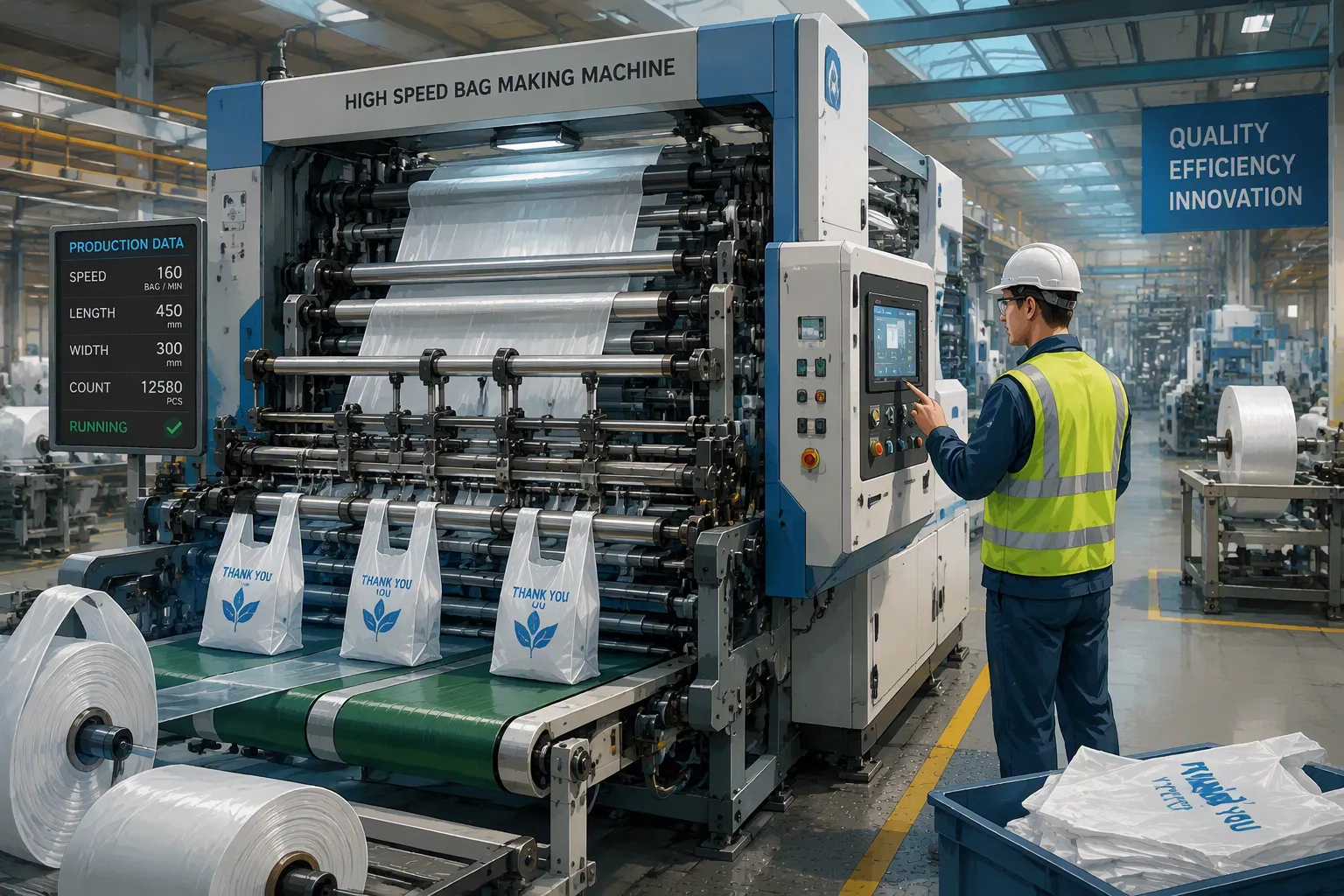
Picking the right high speed bag making machine for your business can feel hard. You need to match how much you produce, the bag kinds, and your money. What do you need to produce? Answering this first stops costly errors.
The wrong bag-making machine leads to downtime and lost money. You need a machine that gives steady quality at the speed your orders need. Think about four things: production needs, technical performance, cost, and supplier support.
Every bag making machine maker offers different performance levels. You must check each choice against your own output goals. A machine that can't grow with your business holds you back.
Your choice directly affects your profits. Look at total value, not just the buying price. The right pick saves money and stops problems at work.
Now let's look at your production needs closely.
Key TakeawaysBefore comparing machines, decide how many bags you need to make, what types of bags, and what materials you will use.
Choose a machine that matches your real production needs. Expect it to run at 70–80% of its top speed.
Pick your automation level by thinking about your budget and labor costs to save money over time.
Choose modern servo-driven systems to save energy and get exact control.
Think about the full cost of the machine. This includes labor, energy, and upkeep.
Buy a machine with parts you can add later as your business grows.
Choose a reliable supplier with a good warranty, parts, and support.
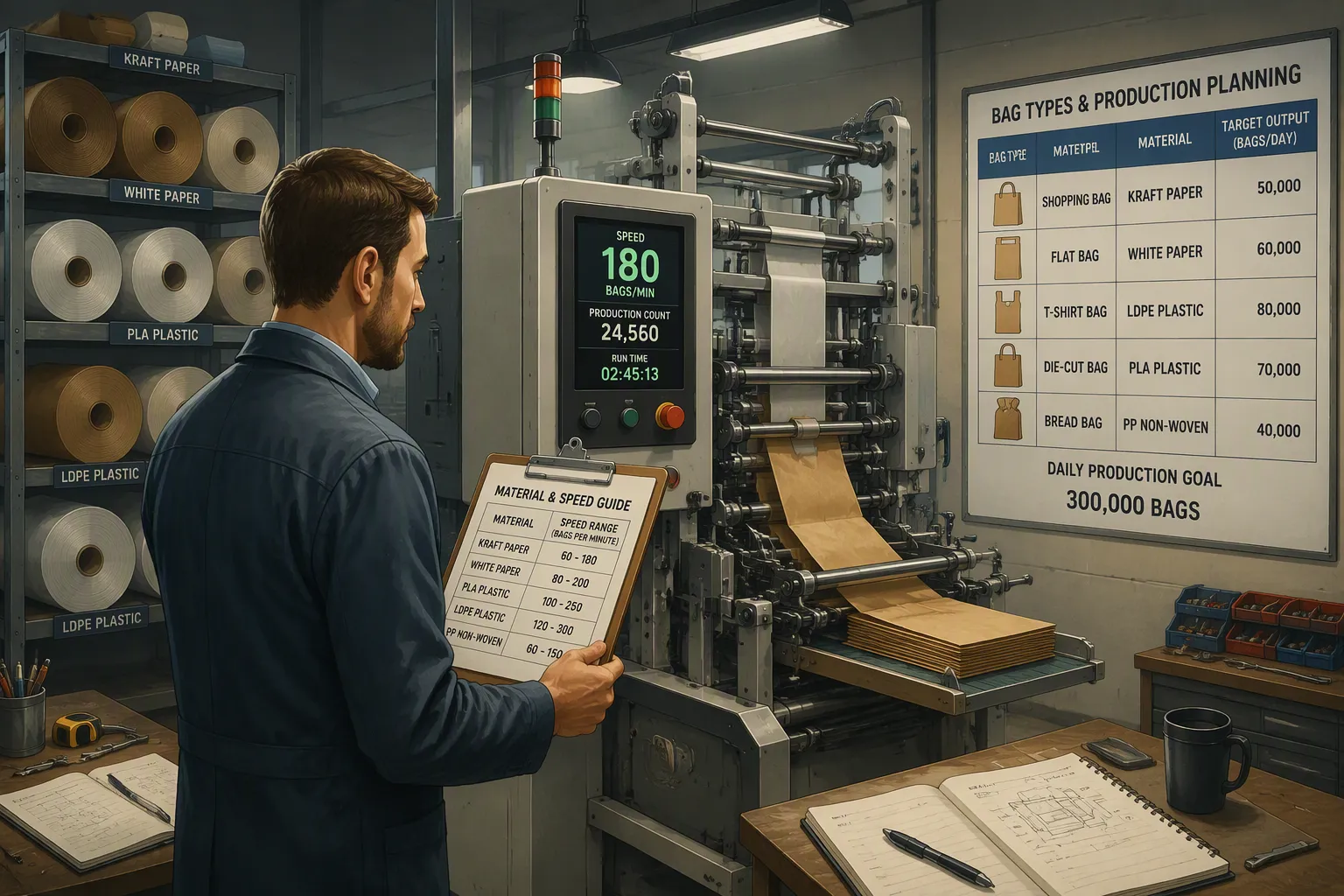
Before you compare machines, you must define what your business actually requires. Every decision flows from your production volume, the bag types you plan to make, and the materials you will process. Skipping this step leads to buying a machine that either sits idle or struggles to keep up with orders. Take time to answer these questions honestly.
Your production volume determines which machine class fits your operation. You can categorize your output as small, medium, or large. Small operations might produce a few thousand bags per day. Medium businesses run tens of thousands. Large facilities push hundreds of thousands. Knowing your category narrows your options immediately.
Start by calculating your daily and weekly order volume. Look at your sales history from the past six months. Identify your peak season demand, not just your average. A machine sized for average output will fail during busy periods. Your capacity requirements should match your highest expected demand, not your slowest month.
Small businesses often start with semi-automatic machines. These machines require more manual labor but cost less upfront. Medium operations typically need fully automatic systems. Large producers demand the fastest equipment available. Your production volume directly controls your machine choice.
Machine speed matters, but rated speed differs from real-world output. A machine rated at 300 bags per minute will not sustain that pace all day. Material changes, operator breaks, and quality checks all reduce actual production. You should expect actual output to be lower than rated speed during normal operation.
The table below shows typical speed ranges for different materials:
|
Material |
Speed Range (bags/min) |
Calculated Average (bags/min) |
|---|---|---|
|
Paper |
200-400 (high-speed) |
300 |
|
Plastic |
500-1000+ |
750 |
Paper machines run slower because the material requires more careful handling. Plastic films move faster through the process. Your material choice directly affects your achievable speed. Match the machine speed to your realistic demand, not your ideal scenario.
Different bag styles require different machine configurations. A basic flat bag machine cannot produce handle-attached bags. You must know your product line before you shop. This decision affects every part of your equipment selection.
Flat-bottom bags feature a simple construction with a sealed bottom edge. Square-bottom bags open into a box-like shape for standing upright. Handle-attached bags include twisted paper or plastic handles for easy carrying. Each style demands specific machine features.
For square-bottom and handle-attached production, your paper bag making machine needs several critical systems:
Automatic Tension Control System: Maintains consistent paper tension throughout production, ensuring uniform feeding.
Web Guide System: Prevents misalignment by accurately feeding and aligning the paper.
Hydraulic System: Facilitates easy loading of paper reels for efficient operation.
Handle Attachment Unit: Automatically attaches twisted handles, with adjustable length and style.
Handle Sealing Unit: Secures handles via heat sealing or adhesive for durable attachment.
Gluing System: Applies adhesive proportionally to machine speed for proper bag formation.
Cutting System: Precisely cuts paper to desired length, ensuring uniform bag dimensions.
Creasing System: Creates necessary creases for structured, high-quality bag formation.
Bottom Opening and Gluing System: Opens the bag bottom and applies glue to form the square-bottom structure.
Optional Printing Unit: Enables direct branding or logo printing on the bags.
These features add cost but deliver the quality your customers expect. A basic machine cannot handle these complex operations.
Some industries need specialized bags. Food packaging requires grease-resistant materials. Retail stores want branded bags with printed logos. Medical facilities need sterile packaging options. Each specialty application may require additional machine features.
Consider whether you need a non-woven bag making machine for reusable shopping bags. These machines handle thicker materials and often include ultrasonic sealing systems. They produce durable bags that withstand repeated use. Your target market determines whether this investment makes sense for your business.
The materials you process determine your machine's required capabilities. Paper, non-woven fabric, and plastic films each behave differently. Your machine must handle your chosen materials without constant adjustments or breakdowns.
Paper bags come in various grades and thicknesses. Kraft paper remains the most common choice for grocery and retail bags. Coated paper adds moisture resistance for food applications. Your paper bag making machine must handle these variations smoothly.
Non-woven fabric requires different handling than paper. This material stretches more and needs gentler feeding systems. A non-woven bag making machine typically includes specialized sealing mechanisms. Plastic films run fastest but require precise temperature control for sealing.
Material gauge refers to thickness. Thicker materials need stronger cutting and creasing systems. Wider rolls require larger machine frames. You must verify that your chosen machine accommodates your material specifications.
A quality machine includes a Japanese Mitsubishi servo system and SICK photocell for accurate tracking of printed material. These components minimize adjustment and pre-set times. Mitsubishi electric control systems provide high-speed, high-precision motion control. Tension systems and automatic WEB correction reduce waste and improve efficiency. Side sealing and automatic mechanical speed glue volume adjustment save glue. Automatic fault alarms with paper web detectors prevent machine damage from paper jams.
These features protect your investment and reduce downtime. A reliable manufacturer builds these systems into their machines as standard equipment. You should not need to add them as expensive aftermarket upgrades.
Your production needs define every other decision you will make. Take the time to document your volume, bag types, and materials. This information guides your machine selection and ensures you invest wisely. The right machine delivers value for years. The wrong one costs you money from day one.
Match Your Production to a High Speed Bag Making Machine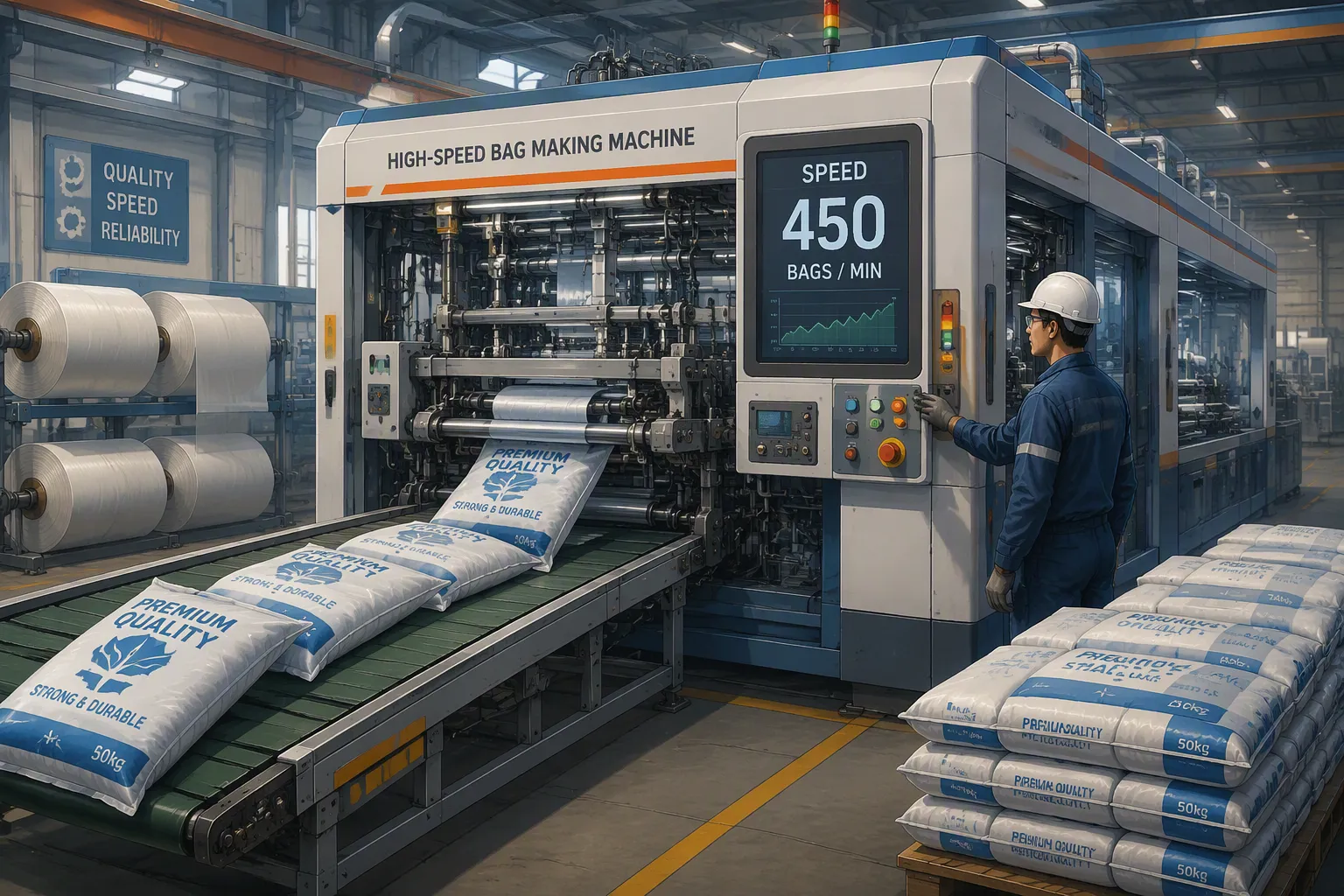
You now know what you need to produce. The next step is finding a machine that fits those needs. Three things control this fit: speed, automation level, and build quality. Each one affects your daily output and long-term costs. Getting this fit right helps you avoid costly mistakes.
Speed numbers on a spec sheet look great. But real life is different. You must see the difference between rated speed and actual output. A high speed bag making machine can perform well, but only when you think about real-world conditions. The best choice balances speed claims with practical production factors.
A machine rated at 300 bags per minute will not keep that pace all day. Material changes, operator breaks, and setup adjustments slow things down. You should expect actual output to be lower than rated speed during normal work. A 300-bag-per-minute machine will produce fewer bags per minute in practice. This gap matters when you plan your daily schedule.
To find your needed throughput, divide your daily output goal by available run hours. For example, a goal of 5,000 bags over 8 hours needs at least 625 bags per hour. But you need extra room. Add at least 15 to 20 percent above your current needs. This extra room handles changes and future growth. Your equipment should handle 750 or more bags per hour for 5,000 bags per day.
Several common factors slow down your production during continuous work. Lack of proper lubrication causes friction and wear. Regular lubrication cuts breakdowns by 25 percent according to the Industrial Maintenance Association. Operator errors from poor training slow down production. Training reduces machinery-related accidents by 40 percent as reported by the Manufacturing Institute. Maintenance issues also cut speed. Consistent maintenance improves equipment lifespan by up to 30 percent. Improper setup or adjustment leads to material waste and defects. You need skilled workers who can use machine features correctly.
Your automation choice decides labor needs, upfront cost, and long-term efficiency. A bag-making machine comes in three automation levels. Each level fits different production volumes and budgets. You must pick the level that matches your business goals.
Semi-automatic machines need a lot of manual work for bag placement. They fit lower speed needs, frequent changeovers, or tight budgets. The upfront price is lower, but labor costs stay higher. Human error affects consistency more. These machines work well for small businesses just starting.
Fully automatic machines need little to no human help. They give maximum output and minimal labor. The upfront price is higher, but the long-term payoff comes through higher speed and efficiency. Fully automatic machines reduce human error and fatigue. They deliver steady product quality over long production runs.
|
Automation Level |
Labor Requirement |
Upfront Price |
Efficiency & Error Rate |
|---|---|---|---|
|
Semi-automatic |
Significant manual intervention for bag placement |
Lower |
Higher labor costs; more human error |
|
Fully automatic |
Minimal to no human intervention |
Higher upfront price |
Higher speed and efficiency; minimizes human error and fatigue; pays off long-term |
Automatic machines include features that boost production efficiency. Servo-driven systems give precise motion control. Sealing units keep steady temperature for strong seals. Cutting systems ensure clean edges. Stacking units organize finished bags automatically. These features cut waste and increase speed.
A high-performance machine combines these features into one system. You do not need to add them later. The right bag-making machine delivers these functions without constant adjustment. This combination saves time and improves output quality.
A machine that breaks down often costs you money. Durability and build quality decide how long your equipment lasts. You should check frame construction, component sourcing, and maintenance needs. These factors affect your total ownership cost.
A high-quality machine uses a sturdy frame. Steel frames provide stability at high speeds. Component sourcing matters too. A manufacturer that uses proven parts from reliable suppliers builds a more durable machine. Look for Japanese servo systems and precise sensors. These parts reduce downtime and improve accuracy.
Machines that are poorly maintained are prone to frequent breakdowns, poor seal integrity, and short lifespans. You must follow a regular maintenance schedule to protect your investment.
|
Common Issue |
Root Cause |
Prevention |
|---|---|---|
|
Misaligned bags or seal failures |
Inconsistent tension, worn blades, sensor failure |
Routine alignment checks, scheduled part replacement |
|
Material jams or feed errors |
Worn rollers, poor tension control, incorrect loading |
Thorough operator training, automated error logging |
|
Heat element burnouts |
Overuse, voltage fluctuations, improper cooling |
Monitor heating cycles, use surge protection |
|
Uneven cuts, fraying |
Dull or damaged blades |
Sharpen or replace blades weekly |
A non-woven bag making machine needs similar maintenance attention. The operability and long-term reliability of your machine depend on consistent care. Regular maintenance extends lifespan and keeps production speed.
Your business needs a machine that delivers value. The high-speed model you choose must match your production goals. A careful balance of speed, automation, and durability gives you the best return on investment.
Evaluate Key Features of a Bag-Making MachineThe features you choose affect how much you make each day and how happy you are with the machine over time. A machine with good controls, energy savings, and the right material handling saves you money. You must check each feature against your own production goals. The wrong features cause slowdowns and frustration.
Your workers use the control system every day. A hard-to-use screen slows down training and causes more mistakes. A simple screen lets your team focus on making bags instead of fixing problems. The control system directly affects how fast and how well you produce.
Modern machines use three main parts: PLC controllers, touchscreen panels, and servo motors. Each part has a specific job in how the machine runs. You should know how they work together.
|
Component |
Operational Efficiency Advantage |
|---|---|
|
Servo motors |
Precise control over cutting, sealing, and stacking; keeps bag size the same; good seals; less waste; higher speed; less need for workers; more reliable for large orders. |
|
PLC + Touchscreen |
Easy to change settings; watch performance; run many lines from one screen; switch bag types without stopping; more flexibility and output. |
A touchscreen with smart PLC keeps the machine running smoothly and makes motors and sensors work together. High-precision servo motors give the same bag length every time, less waste, and fast setup. These parts work together to keep quality high during long runs.
Your workers need to learn the machine quickly. A clear touchscreen cuts training time a lot. Workers can change settings without opening panels or looking at manuals. This ease of use cuts down on mistakes and keeps production moving.
Semi-automatic machines often have simpler controls but need more manual steps. Fully automatic machines use advanced screens that handle more jobs on their own. You must balance your team's skill level with the machine's complexity. A machine your team cannot use fully will not reach its top speed.
Energy use affects your monthly bills and your cost per bag. Older mechanical systems use more power. Newer servo-driven systems use power only when needed. This difference adds up over a full year of production.
Mechanical systems run all the time, wasting energy when they are idle. Servo-driven systems use power only when the motor actually moves. This on-demand power use cuts electricity costs a lot. The savings show up on your utility bills each month.
Servo systems also make less heat, so cooling costs drop. They need less maintenance because they have fewer moving parts. These factors lower your total cost over the machine's life. A high speed bag making machine with servo drives pays back its higher price through energy savings.
You can guess energy savings by comparing motor types. A servo-driven machine uses power based on how much work it does. A mechanical system uses full power no matter how much it makes. This difference matters a lot when the machine is not running at full speed, which happens often in real production.
Energy efficiency also helps the environment. Less energy use means fewer emissions from power plants. Many customers now ask about green practices. An efficient machine helps your marketing and saves money.
Paper bags need different handling than plastic or non-woven materials. A dedicated paper bag making machine has features made for paper's special properties. You cannot simply change a plastic bag machine to make paper bags.
Paper needs precise web tension control to stop tearing or stretching. A paper bag making machine includes automatic tension systems that adjust all the time. These systems keep the paper feeding smoothly through the whole process.
Scoring makes the creases that give paper bags their shape. A quality paper bag making machine uses a creasing system that makes clean, even folds. This feature makes sure your bags open right and stand up. The cutting system must also handle paper's thickness without fraying edges.
Your paper bag making machine must handle different paper types. Kraft paper is the standard for grocery and retail bags. Coated paper adds moisture resistance for food packaging. Each material acts differently during production.
A versatile paper bag making machine adjusts to different paper weights and finishes. This flexibility lets you serve many types of customers with one machine. You can make standard kraft bags for grocery stores and coated bags for food service. This versatility adds value to your investment.
A non-woven bag making machine serves a different market. These machines handle thicker, reusable materials with ultrasonic sealing. You might need both machine types to serve all your customers. Check your market demand before making this choice.
The right features protect your investment and help you grow. A bag-making machine with modern controls, efficient motors, and material-specific design gives steady quality. Choose features that match your real production needs, not just the sales sheet. Your business depends on machines that work well every day.
Compare Costs of a Bag Making MachinePrice tags tell only part of the story. You must look beyond the sticker price to understand what a machine truly costs your business. The cheapest option often becomes the most expensive choice over time. A thoughtful cost comparison protects your budget and your production goals.
Shopping bag machines range from $8,500 to $38,000. T-shirt bag machines cost between $17,000 and $32,000. High-speed automated models sit at the upper end of these ranges. They include more powerful motors and advanced electronics. These features suit high-demand environments where downtime costs money.
Your total cost includes more than the machine price. Installation, training, and financing add to your initial outlay. You must factor in these expenses when comparing quotes. A machine that needs extensive installation or operator training costs more than its sticker price suggests.
The real comparison starts when you calculate total cost of ownership. This figure includes purchase price, installation, energy use, maintenance, and spare parts over the machine's life. A $30,000 semi-automatic machine may seem like a bargain. But its higher labor needs and slower speed could cost you more each year than a $120,000 fully automatic model.
Added features deliver value that offsets their upfront cost. Consider the difference between machine types. A semi-automatic machine costs about $30,000. A fully automatic model costs $120,000. The automatic machine saves $50,000 to $120,000 annually in labor by replacing 2 to 3 operators. It also reduces waste from 3-8 percent down to 1-3 percent, saving another $10,000 to $25,000 each year.
For a manufacturer producing 50,000 bags daily, the fully automatic machine saves approximately $305,000 over five years. The additional $90,000 investment pays back in about 12 months. This example shows why you must evaluate value, not just price. A high speed bag making machine with automation delivers better product quality and production efficiency.
Your monthly expenses continue after installation. Energy consumption and maintenance affect your profit margins. You must budget for these ongoing costs when you choose your equipment.
Complex plastic bag making machines require quarterly servicing. This maintenance costs $18,000 to $35,000 per year. You need a supplier who stocks critical parts locally. Long lead times for spare parts mean extended downtime. Every hour your machine sits idle costs you production and revenue.
A reliable manufacturer provides documentation for every component. This information helps your maintenance team order parts quickly. You should ask about warranty coverage and service response times before you sign a contract. These details affect your long-term operating costs.
Energy costs vary by machine type and motor system. Servo-driven machines use power only when needed. Mechanical systems consume energy continuously. This difference shows up clearly on your utility bills. Calculate your energy cost per bag produced to compare machines fairly.
Your business will change over time. Order volumes rise. Customer demands shift. Your machine choice must accommodate this growth without requiring a complete replacement.
A bag-making machine with modular design allows upgrades as your needs grow. You can add features like printing units or handle attachment systems later. This flexibility extends your machine's useful life. A non-woven bag making machine might serve one market today and another tomorrow. Choose equipment that adapts to new bag types and materials.
Your budget and return on investment determine your financing approach. Leasing spreads costs over time but increases total expense. Buying outright saves interest but ties up capital. Calculate your expected ROI timeline before deciding. A machine that pays for itself in 12 months justifies a higher initial investment. One that takes five years to break even requires careful consideration.
A paper bag making machine serves a growing market as plastic bans expand. This demand creates opportunities for businesses that invest wisely. Your cost analysis should include market trends and future demand projections. The right machine grows with your business and delivers value for years.
Choose a Reliable Bag Making Machine SupplierYour machine choice matters, but your supplier choice matters just as much. A dependable partner keeps your production running. A poor supplier leaves you stranded when problems arise. You must evaluate each potential supplier against clear criteria before you commit.
Warranty terms tell you how much confidence a manufacturer has in their equipment. You need to understand exactly what coverage you receive. Read the fine print carefully before signing anything.
Warranty types vary widely across the industry. A limited warranty covers basic components and manufacturing defects. A full warranty includes all components and performance assurance. An extended warranty provides coverage beyond the standard period. You should ask which type each supplier offers.
The claim process matters too. Most manufacturers follow a simple sequence: documentation verification, field engineer inspection and repair, then follow-up verification. Some companies prioritize customer ease throughout this process. They want to make warranty handling transparent and hassle-free. You should ask about their specific claim procedure during your initial conversations.
Technical support channels affect how quickly you resolve issues. Most leading manufacturers offer 24/7 phone, email, and live chat support. Full and extended warranties add field engineer visits and scheduled maintenance. You need to know which support level your contract includes.
Ask about remote diagnostics. Many modern machines allow technicians to connect digitally and identify problems without visiting your facility. This capability reduces downtime significantly. A supplier with strong remote support saves you money on every service call.
Machine breakdowns happen. Your recovery speed depends on parts availability. You cannot afford to wait weeks for a critical component. Your supplier must have a robust parts network.
You have two main options for parts sourcing. Local distributors offer faster shipping but limited inventory. Direct manufacturers stock more components but may take longer to reach you. The best arrangement often combines both. You should verify that the supplier stocks critical components domestically for overnight shipping. A two-day delay for a custom part can halt an entire production line.
Standard wear parts should arrive quickly. Non-stock custom parts take longer. You should ask for a recommended spare parts list with part numbers. Standard industrial components should not be locked behind proprietary connectors. This allows local sourcing if you need parts urgently.
|
Spare Part Category |
Lead Time |
|---|---|
|
Standard wear parts (sealing tools, servo drives, sensors, timing belts, bearings) |
Quickly |
|
Non-stock custom parts |
Longer |
Proactive stocking of a recommended spare parts list is essential. You should keep critical components on hand for your paper bag making machine. This approach minimizes downtime and keeps your production schedule intact.
A supplier's reputation tells you how they treat customers. You should research their track record before making a commitment. Past customers provide honest insights about real-world performance.
Customer feedback reveals common patterns. Buyers often praise high bag consistency once calibrated properly. They appreciate easy transitions between bag sizes with saved presets. Durable construction on stainless steel frames earns positive comments. Responsive vendor support during commissioning also stands out.
Recurring complaints deserve attention too. Some buyers report initial setup taking longer than expected due to language barriers. Others mention sealing bar degradation under continuous use. Missing critical spare parts in shipments happen occasionally. Software interface crashes occur on older control systems. You should weigh these patterns against your own priorities.
You should see the machine work before you buy. Request a demo run with your actual materials. This test reveals how the equipment handles your specific bags. You can evaluate the paper bag making machine's output quality firsthand.
Visit existing installations when possible. Talk to operators about their daily experience. Ask about maintenance frequency and parts replacement. These conversations provide practical insights you cannot get from a brochure. A supplier who welcomes these visits demonstrates confidence in their equipment.
Your supplier partnership directly affects your business success. The right partner provides reliable support, fast parts delivery, and honest communication. This relationship protects your investment and maximizes your roi. Take time to evaluate each candidate thoroughly. Your due diligence pays off through years of smooth operation.
Plan for Future Growth and ScalabilityYour business will change over time. Order amounts will go up. What customers want will shift. The machine you pick must handle this growth without needing a whole new machine. Planning for growth now saves you from costly upgrades later.
A bag-making machine with a modular design lets you add upgrades as your needs grow. You can add features like printing units or handle attachment systems later. This flexibility makes your machine last longer. Choose equipment that can work with new bag types and materials.
Top manufacturers build their machines so you can expand them later. Start with a basic setup and add modules as demand increases. This way you spread your costs over time.
|
Machine Series |
Modular Upgrade / Feature |
Production Capacity Impact |
|---|---|---|
|
T-shirt Sack Line |
High-speed models, wave-top capability, optional flexible dies |
Lets you make trash bags on a roll efficiently |
|
Trash Bag Line QB & B-Series |
Tensionless sealing, dual-sided heating, in-line or out-of-line production |
Works with many film types and can grow capacity later |
|
Compact Global Bag Machine |
Makes bottom seal bags at high speed, options for side-seal, labeling, banding |
High-speed conversion with add-on modules |
|
QB-Series |
Runs various film types; X2 option adds twin tracks |
Twin-track option doubles output |
|
Extended-Dwell Rotary |
Runs at high speed, seals heavy-gauge films, multi-lane capability |
Multi-lane option greatly increases throughput |
|
Euroline 2.0 |
Driven C-folder, optional dual sealing bars, dual-sided sealing |
Made for garbage bags with faster sealing |
These modular options directly boost production capacity. A drawtape module lets you make drawstring garbage bags. A zipper module adds inline zipper welding for food bags. A bag-on-roll rewinder supports coreless rewinding for produce bags. A rotary die-cutting module does pattern cutting for handle cut-outs. Each module expands your product range without slowing down the line.
Your machine must handle tomorrow's materials, not just today's. A paper bag making machine that works with kraft paper today may need coated materials tomorrow. A non-woven bag making machine serves the reusable market. Check that your chosen equipment can handle recycled and bio films. Some machines work with various film types. This flexibility protects your investment.
Your budget must balance current needs with future growth. Buying a machine that is too big wastes capital. Buying one too small forces you to replace it early. Smart planning finds the middle ground.
A machine that is significantly larger than your projected demand may never be fully used. You pay for capacity you do not need. Calculate your realistic growth over the next three to five years. Choose a machine that meets that projection with some extra room. A semi-automatic machine might work well for you today. Fully automatic machines become necessary as volume grows. Match your purchase to your actual path.
How you pay affects your cash flow and long-term cost. Leasing has lower upfront costs and steady payments. Buying needs a lot of capital but builds asset value.
|
Financial Aspect |
Leasing (Renting) |
Buying |
|---|---|---|
|
Upfront Cost |
Lower upfront costs, saves your capital |
Needs a large upfront payment or loan down payment |
|
Cash Flow |
Predictable, spread-out payments |
Costs can vary and strain cash flow |
|
Long-term Cost |
May cost more over time |
More cost-effective in the long run |
|
Ownership |
No ownership; no asset to sell |
Full ownership; you can resell later |
|
Maintenance |
Usually handled by the lessor |
Owner pays for all costs |
|
Flexibility |
Easy to get the latest technology |
Equipment may become outdated |
Leasing gives you flexibility when technology changes fast. Buying gives better long-term value when you use the machine often. Your business size and growth rate decide the best choice. A paper bag making machine with strong resale value favors buying. A rapidly changing technology favors leasing.
Your ROI depends on matching machine power to market demand. A paper bag making machine serves a growing market as plastic bans spread. A paper bag making machine with modular options grows with your orders. A paper bag making machine that handles many materials serves different customers. Choose equipment that gives quality today and adapts tomorrow. The right paper bag making machine pays for itself through years of reliable service.
Your growth plan should include equipment strategy. A bag making machine that grows with your business protects your investment. The manufacturer you choose should offer upgrade paths and quick support. This partnership ensures your equipment never becomes a bottleneck.
You now have the four main things to think about when picking your machine. Production needs tell you how much you will make and what materials you will use. Machine features decide how fast and how well it works. Cost analysis looks at the price and the value over time. Supplier support keeps your machine running well.
The best machine fits what you need now and what you plan to do later. A good machine from a trusted maker saves money and cuts downtime. Your business deserves equipment that works hard every day. The right choice gives you years of good service.
Ready to move ahead? Contact our team for a personal consultation. Ask for a quote or get our equipment checklist. We will help you find the right high speed bag making machine for your business.
FAQManufacturers rate speed under ideal conditions. Your actual output is lower than that. Material changes, operator breaks, and quality checks slow production. Plan for real-world performance.
Semi-automatic machines fit lower volume and tight budgets. Fully automatic machines suit high output with minimal labor. Match your choice to your production volume.
Machines handle paper, non-woven fabric, and plastic films. Each material needs specific features like tension control for paper or ultrasonic sealing for non-woven.
The total cost of a fully automatic machine at $120,000 can pay back in about 12 months. Labor savings and reduced waste drive this return. Your timeline depends on volume.
Check warranty terms, spare parts availability, and customer reviews. A reliable supplier provides fast support and local parts. This minimizes downtime for your business.
Yes. Many machines have modular designs. You can add printing units, handle attachment systems, or other features later. This protects your business investment.
Complex machines need quarterly servicing costing $18,000 to $35,000 per year. Regular lubrication and blade replacement extend lifespan. This maintains quality.
"4mmx2mm Disc Magnet" from S****** received 4 quotation(s)