Date: 2026.08.31 Click: 2
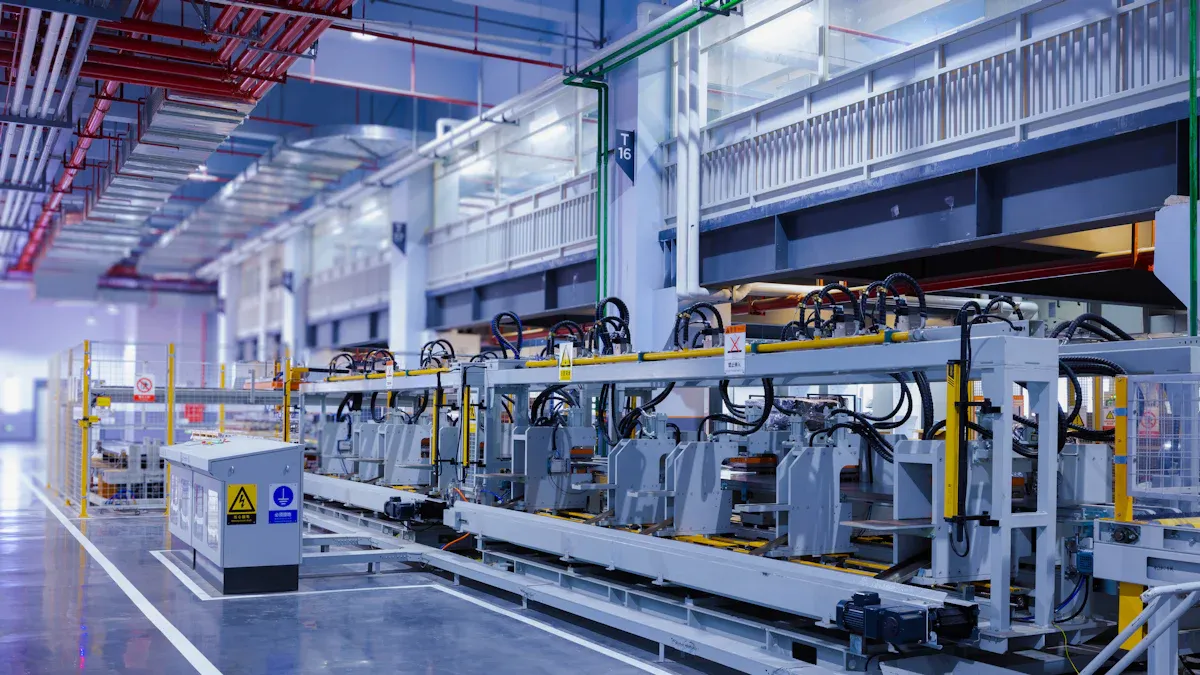
An automatic bag making machine turns rolls of plastic film or paper into finished bags. It handles unwinding, forming, sealing, cutting, and stacking by itself. You can use it with both plastic and paper materials. Fully automatic models run the whole process without any help from a worker. Semi-automatic models need some manual steps. This machine gives you speed, steady quality, and saves labor for packaging. You will learn how it works and what makes it useful. The bags it makes include plastic and paper types. Paper is a common choice for many uses. Automation brings higher output and fewer mistakes. Paper packaging gains from these benefits. The machine works for many jobs, like retail and food packaging. Knowing about paper helps you pick the right machine. Bag types differ by design and material, including paper.
Key TakeawaysAutomatic bag making machines change rolls of plastic film into finished bags without needing people to help.
They manage unwinding, shaping, sealing, cutting, and stacking all in one smooth, nonstop process.
Servo motors and sensors help make sure bags are the right size and quality stays the same.
These machines can use plastic or paper materials, which makes them flexible.
Fast production can make up to 300 bags per minute, which helps the machine work more efficiently.
Automation cuts down on labor costs and material waste, often paying for itself in 12 to 18 months.
Doing regular maintenance and getting proper training helps the machine last longer and stops it from breaking down.
You can make many kinds of bags, like t-shirt, gusseted, and paper bags.
An automatic bag making machine uses several special systems. Each system does its own job. Together, they turn flat rolls of film into finished bags. You will find these parts on both plastic and paper machines. But the exact parts depend on the material. Paper machines have extra units for folding handles and stitching. Plastic machines focus on heat sealing and handling film. Servo motors drive most modern machines. These motors give precise control over feeding and sealing. They also cause less wear and better accuracy.
The material feeding system starts the whole process. This system pulls film or paper from a big roll. It then feeds the material into the machine at a steady speed. You need steady feeding to make uniform bags. Any change in speed or tension causes defects. The feeding system stops these problems with careful design.
The film roll holder holds the raw material roll. You put the roll on a spindle or shaft. The holder must fit different roll widths and sizes. Most holders have adjustable arms. These arms grip the roll core firmly. A brake controls how fast the roll unwinds. This brake keeps the right tension on the material. Tension control matters because loose material gives wrinkles. Tight material stretches and tears. Modern machines use sensors to check tension all the time. The system adjusts the brake on its own. You get steady material flow without doing it by hand.
Tracking sensors keep the material centered as it moves. Film and paper can drift sideways while unwinding. This drift causes misaligned seals and cuts. Tracking sensors find the material edge using light or sound. The system then adjusts the roll position. Alignment sensors also check printed marks. These marks help the machine place cuts exactly. You get less waste and cleaner bags. The sensors work all the time during operation. They fix any problem right away.
The forming and sealing units shape the material into bags. These units fold, seal, and get the material ready for cutting. You will see different setups depending on the bag type. Flat bags need simple folding. Gusseted bags need extra folding parts. Paper bags may need creasing and gluing stations. The forming section guides the material along exact paths.
Folding mechanisms shape the material into the bag shape. You find folding boards, plows, and forming collars on these machines. Each part directs the material along a certain path. Guiding rollers keep the folded shape. These rollers also stop creases and wrinkles. For paper bags, the folding section makes the side gussets. It also makes the bottom shape. Some machines have perforation wheels. These wheels make tear lines for easy opening. The folding section must line up with the sealing unit. Misalignment gives crooked bags and wasted material.
Heat sealing bars join layers of material together. You use these bars mostly for plastic bags. The bars apply heat and pressure to the film. This melts the plastic layers together. Temperature control is very important for strong seals. Too much heat burns the film. Too little heat gives weak seals. Modern machines use digital temperature controllers. These controllers keep exact temperatures within a few degrees. Sealing time also matters. The bars must stay on the material long enough. Servo-driven systems control the sealing cycle exactly. Paper machines use gluing units instead of heat sealing. These units put glue on the paper surfaces. The glue bonds the layers under pressure.
The cutting and stacking mechanisms finish the bag-making process. These systems separate each bag from the continuous web. They then arrange the finished bags for collection. You need clean cuts and exact counts. The cutting system must match the sealing speed. This prevents wrong cuts and damaged bags.
You will find two main cutter types on bag machines. Rotary cutters use a turning blade. This blade cuts the material as it passes through. Rotary cutters work well for high-speed production. They give smooth, continuous cutting action. Guillotine cutters use a straight blade that moves up and down. This blade cuts through the material like scissors. Guillotine cutters work for thicker materials and paper bags. Both cutter types need sharp blades. Dull blades tear the material instead of cutting cleanly. You should check blades often. Replace them when you see rough edges on bags.
Counting systems keep track of how many bags are made. You set a target number on the control panel. The system counts each bag as it leaves the cutter. When the count reaches your target, the machine signals the collection system. Collection systems stack the bags neatly. Some machines use conveyor belts to move bags away. Others use stacking trays that lower as they fill. You can also add automatic packaging units. These units bundle the bags into packs. The packs then move to the next step of your production line. Counting and collection systems cut down on manual work a lot. You save time and reduce damage from handling.
The parts work together as one connected system. Each part depends on the others for smooth operation. You should understand these parts before buying a machine. This knowledge helps you compare different models. It also helps you keep your equipment running well.
How an Automatic Bag Making Machine Operates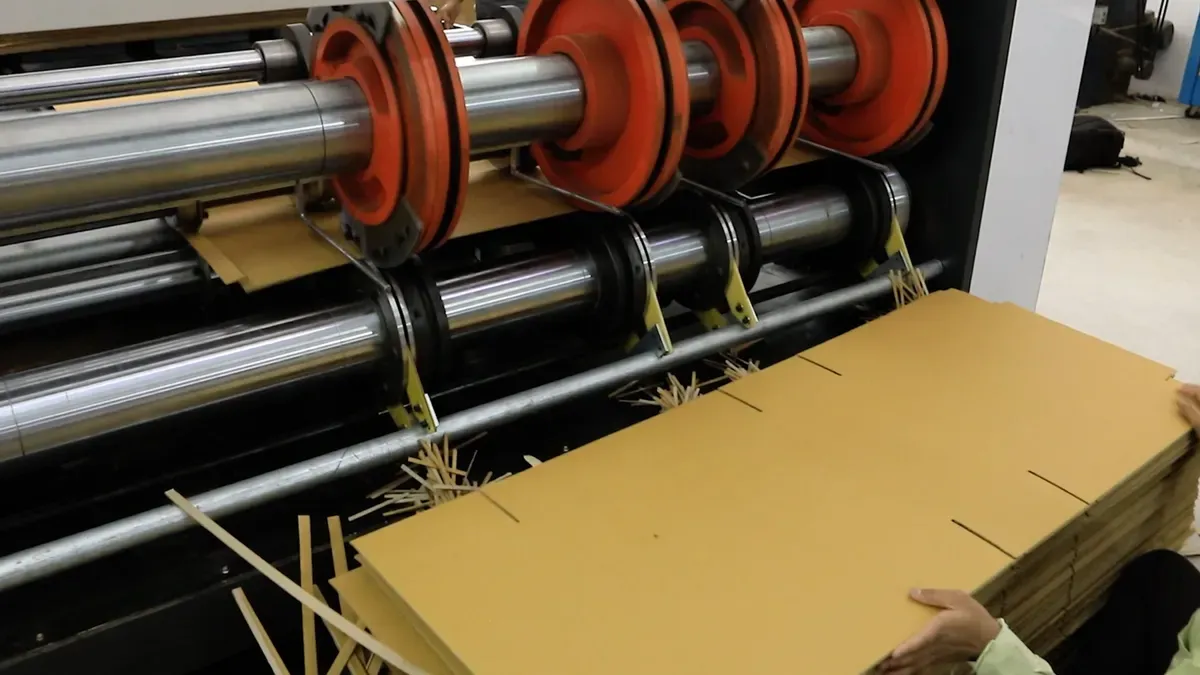
An automatic bag making machine works in a clear order. You start with a roll of material. The machine unwinds, forms, seals, cuts, and stacks bags without your help. A fully automatic model does the whole job by itself. A semi-automatic machine needs you to do some steps by hand. The steps below use a plastic bag as an example. Then you will learn how paper bags go through a different process.
The machine starts by pulling material from the roll. The film roll holder lets the material unwind freely. A tension control system keeps the material tight and flat. This tension is important for the whole process. Loose material causes wrinkles. Tight material stretches and tears. The machine uses several parts to control this tension. A pneumatic film tensor applies controlled air pressure. A dancer roller with a linear encoder senses changes in tension. The encoder sends signals to the control system. Magnetic-powder precision brakes adjust braking force based on the reel diameter. Servo-controlled film feed rollers keep the material moving at a steady speed. All these parts work together to give you steady tension. For paper rolls, the same tension control system applies. Paper is less stretchy than plastic, so the tension settings differ. You need to adjust the settings for paper material.
Automatic splicing lets you change rolls without stopping the machine. This feature improves your production efficiency by up to 10 percent. You reduce material waste because the machine does not stop and restart. The splicing system works with two film rolls. One roll feeds the machine while the other waits. When the first roll runs out, the machine joins the new roll to the old material. The splice happens while the machine keeps running. This non-stop operation boosts your line efficiency. You save time and make more bags each shift. The tension control system keeps steady tension during the splice. You get no breaks in the production process. Paper machines also use automatic splicing for continuous runs. The splicing mechanism handles paper differently because paper is thicker and more rigid. The gluing system bonds the paper layers together during the splice.
After unwinding, the material enters the forming section. The folding mechanisms shape the material into the bag shape. For a plastic t-shirt bag, the process follows specific steps. The sequence needs precise control:
The machine shows a flat tube of film with two long side edges.
The tube has a lower heat seal and an upper heat seal across it.
The tube has three sections separated by two fold lines.
The machine cuts the second section along a cut line across the tube.
The machine folds the first section over the second section.
The machine folds the third section over the folded first section.
All three sections now overlap, making six layers of material.
The machine cuts along lines that run lengthwise to remove material and make handle openings.
For paper bags, the formation sequence uses different methods. The folding steps are similar, but the machine creates side gussets and a flat bottom. The paper bag production process needs creasing rollers to make sharp folds. Paper bags need stronger structural support than plastic bags.
The folding and sealing steps happen together in one continuous flow. For plastic bags, the heat sealing bars bond the layers together. You get strong seals at the sides and bottom of the bag. The temperature control system keeps the bars at the right heat. For paper bags, the machine uses gluing instead of heat sealing. The gluing system puts adhesive on the paper surfaces. Pressure rollers bond the glued areas together. The machine also adds perforation blades for easy-tear openings. These blades make a line of small cuts. You can tear the bag open along this line. The machine can add side gussets as well. These gussets are usually 20 to 80 millimeters deep. They let the bag expand when filled. Handle punching uses a hardened steel die. This die stamps out the carrying holes. The whole operation happens without stopping. The machine processes each bag in a fraction of a second.
The final step separates each bag from the continuous web. The cutting system must match the speed of the sealing operation. This synchronization prevents miscuts and damaged bags. The machine uses either rotary or guillotine cutters. Rotary cutters work well for thin plastic films. Guillotine cutters handle thicker materials and paper bags. The cutting action happens at the exact moment the seal is complete. The control system coordinates the cutter speed with the feed rate. You get clean, consistent cuts on every bag.
Dull blades tear the material instead of cutting cleanly. You should check blades often and replace them when you see rough edges on bags.
The synchronization between cutting and sealing is critical for the production process. The machine's control system watches both speeds all the time. Servo motors drive the sealing and cutting units. These motors respond instantly to speed changes. The cutter blade moves at the same linear speed as the film. This prevents the film from stretching or bunching. You get bags with exact dimensions every time. After cutting, the bags move to the stacking section. Counting systems track the number of bags. The machine signals the collection system when the target count is reached. The bags stack neatly for packing or further processing. For paper bags, the cutting process uses harder blades. Paper is thicker and more abrasive than plastic. You need to check these blades more often. The rest of the discharge cycle works the same way. The machine counts, stacks, and collects the finished paper bags. You get the same efficiency for paper as for plastic. The whole operation completes in a smooth, automated cycle. You make high-quality bags with little waste and maximum speed.
Types of Bags Produced by Automatic Machines
An automatic bag making machine can make many different kinds of bags. The types you can produce depend on how the machine is set up and what materials you use. Knowing these bag types helps you pick the right equipment. The bag type also changes your production settings. Let us look at the different kinds of bags you can make.
Plastic bags come in several common styles. The types you see every day include t-shirt bags, gusseted bags, and flat bags. The machine settings change based on the bag design.
T-shirt bags are the most common type found in grocery stores. You can spot them by the handles cut into the top. These bags work well for carrying groceries and light items. The hand holes give you a strong grip. Retail stores use them with custom logos for customer packaging.
Flat bags are the simplest type. They have width and length but no depth. Flat bags must stretch when you fill them. You can seal them with heat, ties, staples, or tape.
Gusseted bags have folded pleats on the sides. These pleats expand when you fill the bag. Gusseted bags hold much more than flat bags. They can form a flat bottom when opened. The machine needs special folding parts for gusseted bags. For side gussets, the machine folds the film along its length on each edge before sealing.
Here is a comparison of flat and gusseted bags:
|
Feature |
Flat Plastic Bags |
Gusseted Plastic Bags |
|---|---|---|
|
Shape |
Two-dimensional (length and width) |
Three-dimensional with depth |
|
Capacity |
Limited to flat dimensions |
Increased volume without stretching |
|
Common Use |
Food to electronics |
Fruit, vegetables, hardware |
|
Sealing |
Heat, ties, staples, or tape |
Heat, ties, staples, or tape |
The different bag types need different machine settings. For example, twin channel machines can reach speeds up to 800 pieces per minute. They handle bag widths from 100 mm to 850 mm. The machine can be set for eco-friendly materials like PLA and PBAT.
Paper bags also come in many styles. The paper bag making machine uses different forming parts. Paper material choices affect the seal strength and stiffness.
SOS bags stand for self-opening sacks. These paper bags have a V-shaped folded bottom. The bottom opens easily when you shake the bag. Side gussets expand the capacity while keeping the footprint small. SOS bags use twisted cord or flat paper tape for handles. The handle attaches under a turnover without grommets. You use these paper bags for everyday retail loads.
Block bottom bags have a flat, rigid square bottom. The machine does precise bottom creasing and folding. Side gussets support volume and flat folding. These paper bags use rope or ribbon handles for a premium feel. The handles go through holes with knots. Block bottom bags need top and bottom boards plus side stiffeners. You use them for heavier premium goods.
Here is a comparison of these two types of bags:
|
Feature |
SOS Bag |
Block Bottom Bag |
|---|---|---|
|
Bottom construction |
V-shaped folded bottom |
Flat, rigid square bottom |
|
Side gusset |
Yes |
Yes |
|
Handle type |
Twisted cord or flat paper tape |
Rope or ribbon |
|
Handle attachment |
Glued under turnover |
Through-hole with knots |
|
Stiffeners |
None |
Top and bottom boards |
|
Typical load |
Everyday retail loads |
Heavier premium goods |
The different bag types also include handle bags. A roll fed paper bag machine or a sheet fed paper bag machine can produce these designs. The gluing system bonds the paper layers together. The handle folding unit is a modular addition to the machine. Paper bag production needs careful calibration for different paper thicknesses.
Specialty bags meet unique packaging needs. The different bag types in this category include zipper bags, multi-layer films, and biodegradable options. These bags need custom machine setups.
Zipper bags have a reclosable seal along the top. The machine adds a zipper profile during the sealing process. You use these bags for food storage and household items.
Multi-layer film bags combine different materials. Each layer gives a specific property. One layer may block oxygen. Another layer gives strength. You use these bags for coffee, snacks, and frozen food. The machine must handle the different melting points of each layer.
Biodegradable bags use materials like PLA and PBAT. These materials break down faster than traditional plastics. The machine settings need adjustment for these materials. Temperature and pressure settings differ from standard polyethylene. You need to calibrate the machine carefully.
Your bag production depends on your machine and materials. You should evaluate your packaging needs before choosing equipment. The automatic bag making machine gives you flexibility for many bag styles.
Key Features and Operational BenefitsAn automatic bag making machine gives you several big benefits that change how you pack products. These features go beyond just doing things by machine. They change how you think about how many bags you can make, how good they are, and how much you pay for workers. Knowing these benefits helps you decide if the machine is worth the cost and helps you pick the right one for your needs.
Speed is the main thing that an automatic bag making machine can do for your business. New machines reach output rates that you cannot match with hand work. The VF 1200 continuous motion bagger, for example, makes up to 150 bags every minute. That is 9,000 bags each hour. High-end flat bag making machine models go even faster, reaching 200 to 300 bags per minute or more.
Making each cycle faster helps reach these high-speed numbers. The machine lines up every step—feeding, forming, sealing, cutting, and stacking—to stop wasted motion. Each cycle finishes in a tiny part of a second. The machine never stops for a worker to catch up. It never slows down for a manual change. This steady flow gets the most output from every shift.
Several technologies work together to reach these speeds:
Servo motor integration cuts changeover times by about 40 percent and raises daily output by 15 to 30 percent.
Modern PLC and touchscreen HMI systems cut defective products by about 22 percent.
Automated material handling, including auto-feeding roll stands and coreless unwind, cuts changeover times by about 80 percent and lowers unexpected shutdowns by 30 to 50 percent.
Preventive maintenance programs lower unexpected shutdowns by about 30 percent.
These improvements add up. Faster changeovers mean more running time. Fewer defects mean less wasted material. Fewer shutdowns mean steadier output. Together, they give you a production line that runs closer to its best possible speed.
Speed means nothing without quality. An automatic bag making machine gives you both through precise control systems. Servo-driven controls keep bag size within ±0.5 millimeters. This accuracy holds from the first bag on a roll to the last. You get the same bags every time.
The difference between servo-driven and mechanical-feed systems becomes clear when you compare them side by side:
|
Parameter |
Servo-Driven Feed (with encoder feedback) |
Mechanical-Feed (cam-driven) |
|---|---|---|
|
Bag length accuracy |
±0.5 mm from full roll to core |
Drifts; bags from first 100 m are 2–3 mm longer than last 100 m of same roll |
|
Film slip compensation |
Compensates cycle-by-cycle via encoder counts |
No compensation; slip increases as roll diameter decreases |
|
Position control |
Closed-loop, based on actual roller rotation |
Open-loop, based on mechanical cam timing |
|
Repeatability impact on quality |
Consistent bag length and seal quality across shifts and roll diameters |
Operator-dependent; seal temperature varies ±10°C, causing weak or scorched seals |
The servo system reads actual roller rotation through encoder feedback. It compares that reading to the target position. If the film slips, the system corrects on the next cycle. This closed-loop control stops the drift that bothers mechanical systems. You keep consistent production quality from the start of a roll to the end.
Repeatability matters for another reason. When every bag matches the last one, your downstream processes run smoothly. Filling machines line up correctly. Sealing equipment works reliably. Customers get uniform products. This consistency builds trust in your brand and cuts complaints about bad bags.
The money benefits of an automatic bag making machine go far beyond the purchase price. Labor savings alone often pay for the machine. A fully automatic machine needs just one operator per shift. Semi-automatic or manual production needs two to four operators for the same output.
The cost difference adds up quickly:
|
Factor |
High ROI (Fully Automatic) |
Low ROI (Semi-automatic/Manual) |
|---|---|---|
|
Labor requirement |
1 operator |
2–4 operators |
|
Payback period |
8–18 months |
24–48 months |
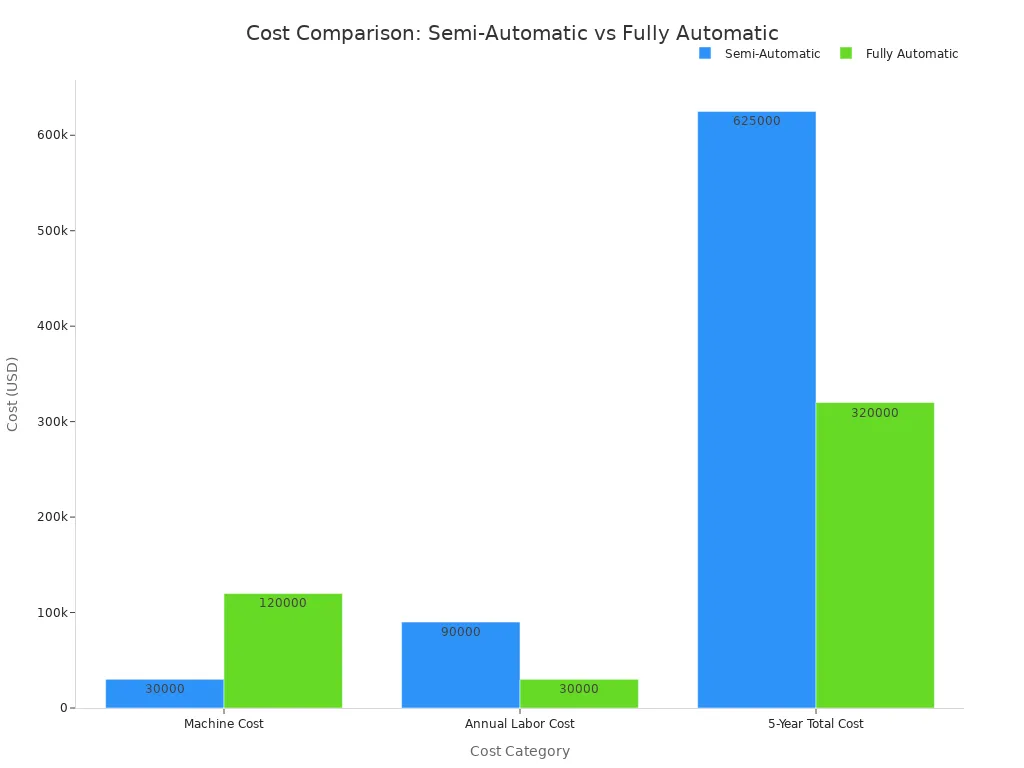
A real example shows the impact. A semi-automatic machine costs about $30,000. A fully automatic model costs $120,000. The semi-automatic line needs three operators per shift, creating an annual labor cost of $90,000. The fully automatic line needs only one operator, cutting annual labor costs to $30,000. Over five years, the total cost of the semi-automatic approach reaches roughly $625,000. The fully automatic approach totals about $320,000. The extra $90,000 investment pays back in about 12 months.
The savings grow with your production volume:
Fully automatic machines typically save 2 to 3 operators per shift, meaning $50,000 to $120,000 in yearly labor savings.
At production volumes above 30,000 bags per day, the payback period for full automation is typically 12 to 24 months.
At 30 million bags per year, yearly savings of about $210,000 are possible, giving a payback period of roughly 17 months.
These numbers show a clear pattern. Higher production volumes shorten the payback period. The efficiency gains from automation become more valuable as your output grows. You also cut waste through better precision. Fewer bad bags mean less material wasted. Less manual handling means fewer damaged bags. These savings add to the labor reductions.
The key features and benefits of an automatic bag making machine also apply to paper packaging. Paper bag production gets the same speed, precision, and labor savings. The machine handles paper rolls with the same automated feeding, forming, and cutting systems. You get the same operational advantages no matter what material you choose.
When you look at these key features and benefits, think about your specific production needs. The efficiency gains from automation change packaging operations of all sizes. The machine pays for itself through labor savings, less waste, and higher output. These benefits make the automatic bag making machine a must-have investment for modern packaging facilities.
Packaging Applications Across IndustriesAn automatic bag making machine helps many different industries. Each sector needs certain bag types for its products. The machine changes to meet these needs with different settings and add-ons. You will find these machines in grocery stores, food plants, factories, and hospitals. This flexibility makes the machine a useful tool for any packaging job.
Retail stores use bag making machines every day. The machine makes shopping bags in large amounts. These bags must hold up during the trip from store to home. The machine creates even bags with strong seals and handles. You can add printed logos and store branding to the bags. The machine uses print sensors to keep the design in the right spot.
Shopping bags come in many styles for retail. Plastic t-shirt bags are common at grocery checkout. Paper shopping bags are a green choice instead. The machine switches between these materials with small changes. You get the same speed and quality for both. Produce bags need a different design. These thin bags sit in the produce section for customers to fill. The machine makes them with perforated tear-off lines. The perforation helps separate bags at the store. Produce bags need holes for fresh fruits and vegetables to breathe. The machine adds these holes during cutting. Retail packaging needs high volume and low cost. The automatic bag making machine gives both without losing quality.
Food packaging needs strict hygiene and safety rules. The machine meets these rules with clean cuts and tight seals. Food bags must keep out moisture and air. The machine makes airtight seals that keep food fresh. You can use multi-layer films for extra protection. These films block oxygen and make food last longer. The food industry likes the steady quality of automated bag production.
Snack bags need a tight seal to keep crunch and flavor. The machine uses heat seals that lock in freshness. Potato chips and crackers stay crisp inside these bags. The machine can also add a nitrogen flush for longer shelf life. Frozen food packaging has special needs. The bags must handle cold temperatures without cracking. The machine uses special film blends for freezer-safe bags. These films stay flexible below freezing. The sealing bars adjust to the lower melting point of these materials. You get strong seals that survive freezing. Frozen vegetables and ready meals use these tough bags. The machine makes them at high speed to meet demand. Food packaging shows how the machine works with different materials and conditions.
Industrial and medical sectors use bag making machines for special jobs. These uses need stronger materials and tighter quality control. The machine handles heavy-duty films and sterile packaging materials. You can adjust the settings for thicker gauges and different seal types. The machine keeps its precision even with hard-to-handle materials.
Heavy-duty bags carry industrial parts, chemicals, and construction waste. The machine uses thick film rolls for these bags. The sealing bars apply more heat and pressure for thicker materials. You get bags that hold up under rough use. Some industrial bags need reinforced bottoms for extra strength. The machine adds these reinforcements during the forming process. Medical packaging needs a completely different approach. Sterile bags protect surgical tools and medical devices. The machine makes these bags in a clean environment. The sealing process must create a barrier against bacteria. Medical-grade films need exact temperature control during sealing. The machine keeps this control within tight limits. You can make peelable seals for easy opening in operating rooms. These seals open cleanly without tearing the bag material. The medical field relies on the machine's repeatability for patient safety. Every bag must meet the same high standard. The automatic bag making machine gives this reliability in all its uses. From grocery stores to hospitals, this equipment proves its value. The packaging industry still benefits from these flexible machines. You can adjust your production line to serve many sectors with one investment.
Maintenance Requirements and TroubleshootingYou keep your machine running at its best by following a set schedule. If you skip routine care, you may face sudden breakdowns and expensive repairs. A good plan includes daily, weekly, monthly, and quarterly checks. This schedule helps you catch small issues before they cause big problems.
The table below shows how often you should care for your machine and what to do.
|
Frequency |
Key Tasks |
Impact on Lifespan |
|---|---|---|
|
Daily |
Check air pressure, clean sealing units, inspect roll alignment, lubricate moving parts, check safety devices |
Cuts equipment failure rate by 40% |
|
Weekly |
Deep clean internals, inspect cutting blades, clean sensors, calibrate temperature controllers, lubricate chains |
Extends gear wear cycles from 3 to 8 months |
|
Monthly |
Inspect belt tension, clean filters, review error logs, test bag formats, lubricate bearings, inspect electrical connections |
A factory avoided a 50,000 yuan loss |
|
Quarterly |
Inspect gearbox lubrication, check rotating disk clearance, audit spare parts |
Extends machine lifespan from 5 to 8 years |
Daily cleaning removes leftover product from surfaces that touch the material. You wipe forming tubes, sealing jaws, and conveyor belts. Clean sensors with isopropyl alcohol so they stay precise. Lubricate chain drives at 2-3 points per shift using food-grade lubricant. Check seal quality on five sample bags. Do a squeeze test and look for wrinkles. Listen for odd bearing noises. Weekly tasks focus on drive belts and pneumatic systems. Check that pneumatic pressure stays between 5-7 bar. Drain moisture from the filter unit. Verify temperature calibration stays within 5°F of setpoint. Inspect electrical connections monthly.
You will face problems during operation. The Three T's protocol fixes seal failures: Temperature, Pressure, and Dwell time. Every machine action depends on balancing these factors. Low temperature gives weak seals. High temperature burns the material. Uneven pressure causes gaps. Short dwell time stops proper bonding.
|
Symptom |
Cause |
Quick Fix |
|---|---|---|
|
Weak or leaking seal |
Worn Teflon tape or low temperature |
Replace tape; increase temperature by 5°F |
|
Bag melts or burns through |
Temperature too high |
Decrease temperature; inspect heating bar |
|
Bag fails to blow open |
Clogged nozzle or low pressure |
Clean nozzle; verify pressure at 60-80 PSI |
|
Crooked seals or film jams |
Improper tension or misaligned roll |
Adjust tension brake; re-seat film roll |
|
Inconsistent bag length |
Worn feed rollers or encoder slippage |
Inspect rollers; clean encoder wheel |
Contamination causes many seal failures. Product dust and adhesive residue build up on sealing jaws. Clean jaws between changeovers using brass tools. Never use steel tools, which damage the surface. Alignment errors account for up to 15% of stoppages. Check film roll tension before adjusting guide rollers. You also run paper bags on this equipment, which need different blade care.
Smart spare parts management and operator training minimize downtime and prevent wear.
Regular inspection of cutting blades, sealing bars, belts, and bearings detects early wear. Replace parts with genuine manufacturer parts. Non-genuine parts void warranty. Keep a stock of essential parts. Operator training must cover start/stop, settings adjustment, basic maintenance, and troubleshooting.
Your inventory should include cutting blades, sealing wires, bearings, belts, temperature probes, and pneumatic valves. Track usage frequency to decide what to stock. Train operators to identify early wear and perform safe changeovers. Keep an SOP binder with QR codes for quick reference. A trained operator catches problems before they damage the machine. This reduces repair costs by up to 30% and extends service life by 3-5 years. Paper handling requires additional training on glue systems and creasing roller maintenance.
An automatic bag making machine gives you speed, accuracy, and lower costs for making plastic and paper bags. You get the same high quality for every bag type. The machine uses fewer workers and less material. These benefits make automation a must for today's packaging.
Think about how many bags you make and what types you need before you buy. Look at how much automation you need for each bag style. Talk to equipment suppliers for showings. You can watch the machine work with your own materials.
Paper packaging is still in high demand. You can make both plastic and paper bags with one machine. Paper is a green choice for many stores. Automation changes with new materials and tech. Biodegradable films and better paper grades open up new options. Your packaging line can adjust to these changes. The automatic bag making machine is a flexible investment for your future.
FAQThese machines can work with both plastic films and paper. Plastic choices include LDPE, HDPE, and biodegradable options like PLA. Paper choices range from recycled grades to heavier kraft stock. The machine settings change based on what material you pick.
Fast models can make 200 to 300 bags every minute. That adds up to 12,000 to 18,000 bags per hour. Your exact output depends on bag size, material thickness, and design complexity. Simpler bags run faster than those with handles or zippers.
Basic operation needs only minimal training. Most modern machines use touchscreen controls with clear menus. You need about one week to learn standard procedures. Advanced troubleshooting and maintenance require extra instruction. Your supplier usually provides operator training when you buy the machine.
You should clean sealing units and check air pressure each day. Inspect roll alignment and lubricate moving parts. Test seal quality on five sample bags. These simple tasks prevent most breakdowns and greatly extend your equipment's lifespan.
Yes, you can switch materials with proper adjustments. The changeover takes time and needs different sealing methods. Plastic uses heat sealing bars. Paper needs gluing units instead. Some machines include both systems for quick material changes.
Low temperature, incorrect pressure, or short dwell time cause weak seals. Check your temperature settings first. Inspect the sealing bars for worn Teflon tape. Clean any residue from the jaws. Adjust one variable at a time until seals improve.
A well-maintained machine serves you for 5 to 8 years. Regular cleaning and lubrication extend this lifespan. Replacing worn parts promptly prevents damage to other components. Following the manufacturer's maintenance schedule gives you the longest service life.
Modern machines include emergency stop buttons and safety guards. Light curtains stop operation when hands enter danger zones. Interlock switches prevent access during running cycles. These features protect operators and greatly reduce workplace accidents.
"4mmx2mm Disc Magnet" from S****** received 4 quotation(s)