Date: 2026.08.31 Click: 3
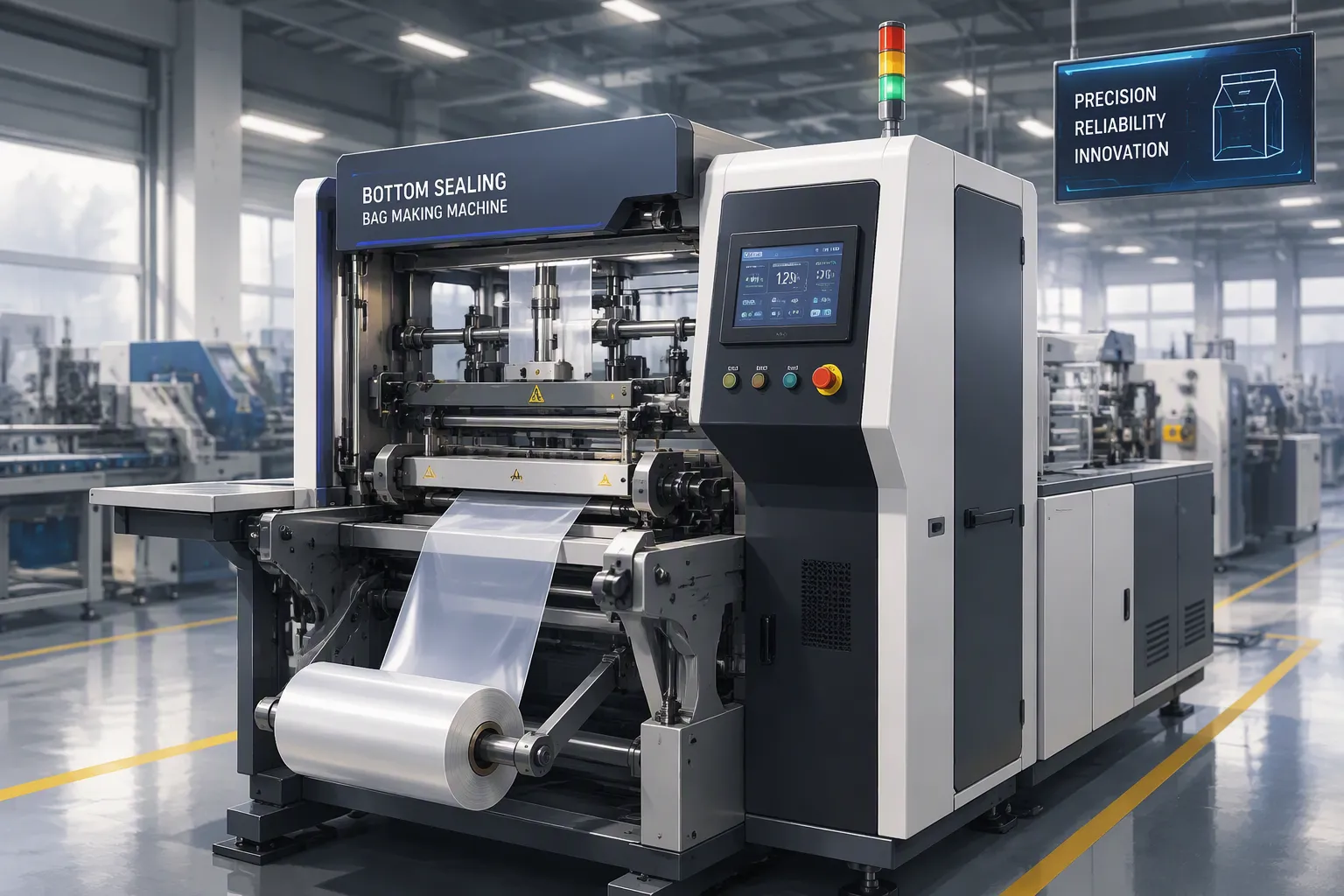
Choosing the wrong bottom sealing bag making machine causes costly downtime, wasted material, and production slowdowns. This bag making machine turns roll-stock film into strong, bottom-sealed bags. It handles tough jobs like garbage bags, industrial liners, and thick-film packaging. It works reliably in demanding settings. The bottom seal gives extra strength for heavy loads. How do you weigh cost against performance to make a smart investment for your production needs? You must learn machine basics, compare key specs, and review ownership costs. Avoiding common buying mistakes is vital. A bad choice can cause years of inefficiency.
Key TakeawaysMake sure your machine works with your film materials and bag width. Check with the supplier to confirm they match.
Choose servo drive for exact, high-volume work; choose pneumatic for lower cost and easier use.
Don’t just look at the price tag. Add in energy, spare parts, and downtime to see the real total cost.
Use automated systems like PLC controls and photoelectric registration to reduce labor and waste.
Check suppliers closely: ask for test runs, look at their papers, and talk to people who already buy from them.
Don't buy a machine that is too big or too small for your needs. Plan ahead for parts that wear out, and make sure your workers are trained well.
Pick a machine that fits your job. Food work needs clean parts. Retail needs fast setup changes. Heavy factory work needs tough builds.
A bottom sealing bag making machine converts roll-stock film into finished bags with a strong seal at the bottom. Manufacturers engineer these machines specifically for heavy-duty, thick-film applications. The bottom seal provides superior structural strength compared to other bag types. This strength makes these machines ideal for demanding products like garbage bags, industrial liners, and thick-film packaging.
The process follows a straightforward sequence. First, the machine unwinds film from a roll. The film travels through tension rollers that keep it flat and aligned. Next, the machine forms the film into a tube shape. A sealing mechanism then creates the bottom seal using heat and pressure. After sealing, a cutting blade separates each bag from the continuous web. Finally, a stacking system collects the finished bags for packaging.
The entire cycle happens automatically on modern machines. Operators load the film roll, set the bag length, and start production. The machine handles the rest without manual intervention.
Bottom seal bag machines excel with thick films. These machines handle film thicknesses from 10 to 150 microns (0.01-0.15 mm). For heavy-duty garbage bags, manufacturers typically process HDPE and LLDPE films ranging from 0.03 to 0.1 mm. Some machine series accommodate even wider ranges, handling HDPE and LDPE films from 0.01 mm to 0.20 mm per layer.
The bottom seal configuration suits products that carry significant weight. Garbage bags, fertilizer sacks, and industrial liners all benefit from this design. The seal distributes stress across a wider area, preventing tears at the bottom where weight concentrates.
|
Feature |
Bottom Seal |
Side Seal |
Wicketed |
|---|---|---|---|
|
Seal location |
Bottom edge |
Side edges |
Bottom edge |
|
Load capacity |
Very strong |
Moderate |
Strong |
|
Best for |
Heavy, granular items |
Light goods |
Retail display |
|
Typical products |
Garbage bags, rice, seeds |
Apparel, stationery |
Bread, produce |
Bottom seal bags provide superior load-bearing capacity for heavy or bulky items. Side sealing alone would likely cause the bag to tear under significant weight. Side seal bags work adequately for lighter goods like apparel or stationery. Wicketed bags offer strong seals but prioritize display convenience over maximum load capacity.
Your production volume determines the machine speed you need. A plastic bag making machine typically runs between 80 and 200 bags per minute, depending on the application. Refuse sacks from HDPE or LLDPE film run at 80-120 bags per minute. Produce bags from thin LDPE film achieve 160-200 bags per minute. Bread bags run at 140-180 bags per minute.
Calculate your required output by dividing your daily bag demand by available production hours. Include a buffer for changeovers and maintenance. A shopping bag making machine with higher speed costs more but may justify the investment for large orders.
Machine footprint matters as much as speed. Multi-lane configurations support 1 to 8 lanes, allowing you to scale commercial output without increasing the factory floor footprint. This design means you can multiply throughput by adding lanes within the same floor area. Your facility space requirement stays constant while production capacity grows.
Measure your available floor space before contacting suppliers. Account for material storage, operator access, and finished bag staging areas. A plastic shopping bag making machine with a compact footprint but multi-lane capability offers the best space efficiency for growing operations.
Key Specifications for a Bottom Sealing Bag Making MachineBefore you compare prices or ask for quotes, you must check one key detail: the machine you pick must work with the exact film materials you plan to use. Not every bottom sealing bag making machine works with every film type. Some machines only handle polyethylene. Others can work with biodegradable films or polypropylene. If you skip this check, you might buy equipment that cannot run your main materials.
Bag width capability decides what products you can package. Standard bottom sealing machines usually make bags from 90 mm to 900 mm wide. Some special models go beyond this range. The table below shows real specs from different makers:
|
Machine Model |
Film Material |
Min Bag Width |
Max Bag Width |
|---|---|---|---|
|
STIEGLER U 900 SBT/L |
LDPE, HDPE |
90 mm |
900 mm |
|
GUR-IS MAKINA PS Roll 900M |
HDPE/LDPE |
250 mm |
870 mm |
|
ROLLOMATIC Delta 900 S |
Garbage bags |
300 mm |
850 mm |
|
MOBERT ROLLER 110 2M-AUT |
Polyethylene/BIO |
Not specified |
250 mm |
|
AMUTEC TSA ROLLER 1380 |
Not specified |
300 mm |
1380 mm |
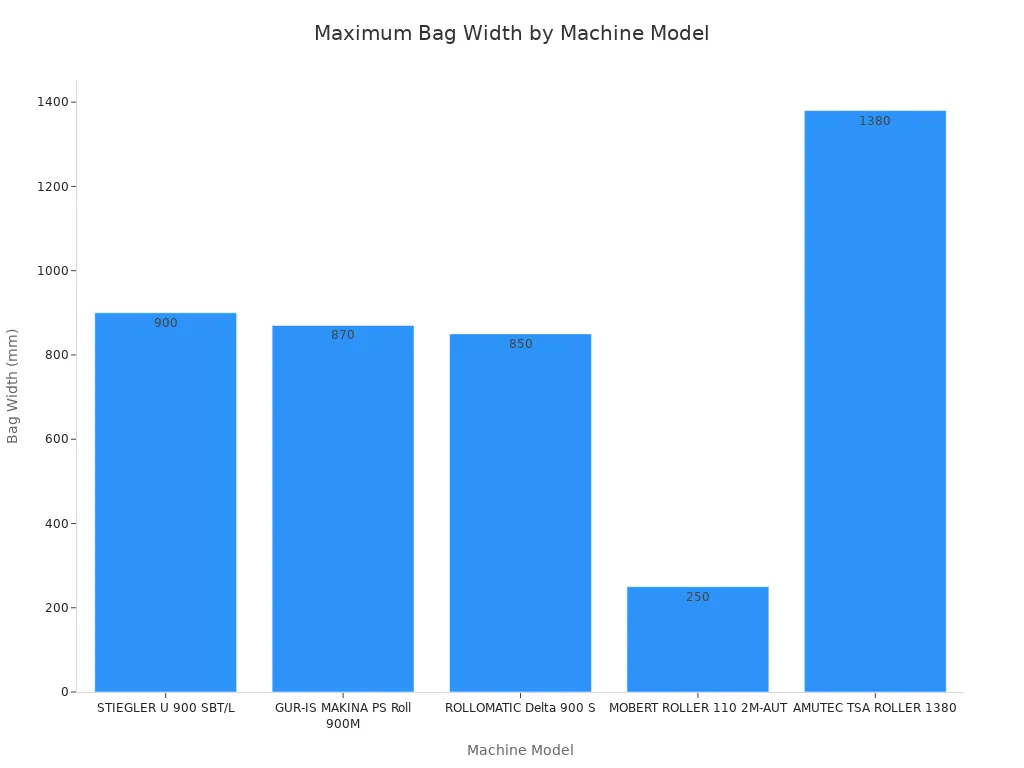
The MOBERT machine's 250 mm max width fits niche uses like small produce bags. The AMUTEC model reaches 1380 mm for industrial liners. Most buyers need the standard 850-900 mm range. Some makers offer even wider options. Mahindra Plastic Industries produces side and bottom sealing machines that handle web widths from 610 mm to 1650 mm, with max bag widths up to 1780 mm. These larger machines support LD, PP, HM, Biodegradable/Cassava, PVC Shrink, and Corn Starch materials.
Your film choice directly affects machine compatibility. LDPE (low-density polyethylene) offers flexibility and clarity. HDPE (high-density polyethylene) provides stiffness and strength for thinner bags. PP (polypropylene) resists heat and chemicals. Biodegradable films break down faster in landfills but need different processing temperatures.
Each material melts at a different temperature. Each material stretches differently during unwinding. A bag making machine set for HDPE may make poor seals with LDPE. You must check that your chosen machine supports every material you plan to run. Ask suppliers for a material compatibility chart before signing any deal.
Servo-driven systems use electric motors with precise digital control. These motors keep exact positioning throughout the production cycle. Each bag comes out the same length. Each seal lands in the same spot. This precision directly improves packaging quality and cuts material waste.
Servo systems cost more upfront. They also need more technical skill for maintenance. However, they give consistent results at high speeds. For operations running printed film or needing tight tolerances, servo technology justifies the higher cost. You can change bag length settings instantly through the control panel without mechanical adjustments.
Pneumatic systems use compressed air to drive mechanical movements. These systems cost less at first. They also cost less to maintain because the parts are simpler. Many operators find pneumatic machines easier to fix and repair.
The trade-off shows up in precision. Pneumatic systems cannot match servo accuracy for fine positioning. Bag lengths may vary slightly between cycles. For basic uses like plain garbage bags, this variation rarely matters. For printed bags or products needing consistent sizes, pneumatic systems may create too much scrap.
Your production volume should guide this choice. High-volume operations benefit from servo precision because even small waste percentages add up fast. Lower-volume operations may find pneumatic systems perfectly fine at a fraction of the cost.
Sealing technology decides how the machine makes the bottom seal. Two main methods exist: constant heat and impulse sealing.
|
Feature |
Constant Heat Sealing |
Impulse Sealing |
|---|---|---|
|
Heating Mechanism |
Seal bars stay hot continuously |
Heating element activates only during sealing |
|
Cooling Control |
No controlled cooling under pressure |
Cooling happens while material stays clamped |
|
Suitability for Thick Films |
Preferred for thick or multi-layer materials |
Works but not ideal for thick films |
Constant heat sealing keeps the seal bars at a steady high temperature at all times. This method suits thick films because heat is ready when the jaws close. Impulse sealing powers the heating element briefly, then cools the material while still under pressure. This method works well for thinner films but struggles with heavy materials.
For your bottom sealing bag making machine, constant heat sealing is the best choice. The thick films used in garbage bags and industrial liners need immediate, steady heat to create strong seals.
Temperature control directly affects bag quality. Inconsistent temperatures cause weak seals, wrinkled film, and rejected bags. Precise temperature controllers keep the exact heat level needed for each material type.
Inconsistent seals. Slow production. Costly rework. Bag sealing challenges like uneven heat, poor seal strength, and inconsistent throughput... The right equipment helps remove these issues by giving precise temperature control, repeatable results, and faster production speeds. With better seal quality and efficiency, you can cut waste, increase output...
Modern machines feature digital temperature controllers that hold temperatures within tight limits. These controllers react quickly to any change. They also store settings for different materials, so you can switch between film types without manual recalibration.
The cutting and sealing technology you choose affects every bag you make. A polythene bag making machine with precise temperature control produces consistent, strong seals. This consistency cuts waste and improves your overall output. When checking pouch making machines, always ask about temperature controller specs. The difference between a basic controller and a precision unit can mean thousands of dollars in saved material each year.
Automation Levels and Their Impact on Bag Making MachinesAutomation level directly affects your labor costs, operator skill needs, and overall production output. You must balance upfront investment against long-term savings. Calculate the payback period before you decide.
A manual bag making machine needs constant operator attention. Workers load film, monitor seals, and remove finished bags by hand. This setup requires more operators and higher costs over time.
Semi-automatic machines handle some steps automatically. Operators still oversee the process. These machines reduce labor needs but do not eliminate them.
Fully automatic systems run with minimal human input. A medium-sized manufacturer that upgraded to a fully automatic PP bag machine reported a 40% reduction in labor costs. These machines handle unwinding, sealing, cutting, and stacking without operator help.
|
Aspect |
Semi-Automatic |
Fully Automatic |
|---|---|---|
|
Labor |
Requires more operators, higher costs |
Reduces operator count, lowers expenses |
|
Payback/ROI |
Faster payback due to lower initial cost |
Higher initial cost, higher ROI over time |
Fully automatic machines demand different skills. Workers need training on control interfaces rather than manual adjustments. Every bag making machine comes with a different price tag, but total cost depends on labor savings over time.
Your current layout affects your automation choice. Fully automatic bag making machines integrate with upstream extruders and downstream equipment. This creates a continuous production flow.
Semi-automatic machines need more space for manual handling. Fully automatic systems reduce space requirements because the machine handles material transfer.
For high-speed production needs, a bottom seal bag machine is a recommended configuration.
Modern bag making machines use PLC and HMI systems. These controls simplify operation through touchscreen panels. You enter bag length, seal temperature, and production speed through a single interface.
Recipe management stores settings for different products. You switch from garbage bags to industrial liners by selecting a saved recipe. The machine adjusts all parameters automatically. This cuts changeover time from minutes to seconds.
Pouch making machines with advanced PLC systems track production data. You see real-time output, waste rates, and machine status. Operators spot problems before they cause downtime. Some pouch making machines now offer the same level of control as larger industrial systems.
Higher automation levels enable data collection. Your machine records production counts, downtime events, and maintenance alerts. This data helps you improve production efficiency over time.
Industry 4.0 ready machines connect to factory networks. You monitor multiple machines from a central location. This supports predictive maintenance and production planning.
Smart automation features go beyond basic control. They analyze machine performance and suggest adjustments. These systems learn from production patterns and optimize settings automatically.
Printed film needs precise alignment. Photoelectric registration sensors detect print marks on the film. The machine adjusts the cutting position to match the print pattern.
This feature prevents misaligned prints that waste material. For operations running printed bags, photoelectric registration pays for itself through reduced waste.
Automatic film splicing joins a new roll to the old roll without stopping the machine. This keeps production running continuously. It eliminates downtime for manual roll changes.
Waste removal systems automatically remove scrap from the production line. These systems keep the machine running at high output speeds.
For high-speed machines, automatic splicing and waste removal are essential. You cannot stop a machine running 200 bags per minute just to change a roll.
Technology in bag making machines continues to advance. High speed bottom seal bag making machine options now include these automation features. Buyers who invest in these features see faster payback through reduced labor and higher output.
Bottom sealing bag making machine buyers should prioritize features that match their production needs. Not every feature makes sense for every operation. Calculate the savings each feature provides before you buy.
Understanding Bottom Seal Bag Making Machine Cost Drivers
The price on a quote is only part of the picture. A bottom sealing bag making machine has hidden costs that build up over time. Energy, maintenance, and downtime often cost more than the machine itself. You need to know these factors before spending your budget.
The frame decides how stable the machine stays. Heavy steel frames handle vibration at high speeds. Lighter frames bend and cause parts to shift. This leads to weak seals and wasted film.
Parts matter just as much. Machines with trusted servo motors, quality bearings, and strong sealing bars cost more at first. These parts last longer and work the same every time. Cheaper parts break sooner. Each break stops your line and needs new parts.
Ask suppliers where they get key parts. A machine with Japanese or German servo motors costs more. That price shows proven reliability. A polythene bag making machine with generic parts may save money now but cost more in repairs within two years.
Better performance raises the base price. Faster speeds need stronger motors and sturdier frames. Wider bags need larger sealing bars and heavier build. Multi-lane setups multiply the number of parts.
The table below shows how different factors affect the bottom seal bag making machine cost:
|
Cost Factor |
Impact on Price |
|---|---|
|
Automation level (automatic vs. semi-automatic) |
Automatic machines cost 35-40% more |
|
Energy consumption (automatic vs. semi-automatic) |
Automatic machines use 30-50% more electricity |
|
Custom configuration (blown-film technology) |
Adds 15-20% to base cost |
You pay more for more power. The trick is matching power to your real needs. Too much power wastes money. Too little power slows you down.
Standard machines fit most jobs well. They handle common film widths and bag sizes. Makers build these in bulk, which keeps prices lower. Standard setups also ship faster.
Custom setups solve specific problems. You may need a special seal for thick films. You may need a unique stacker for odd-shaped bags. Each change adds design time and cost.
The bottom seal bag making machine cost rises 15-20% when you add blown-film technology. This feature lets you make film yourself instead of buying rolls. It pays off for big operations but makes little sense for small ones.
Automation adds power and price. Think about these options:
Lane count: Single-lane machines cost less than multi-lane or double-deck models.
Sealing system: Cold-cut systems differ in price from hot-cut systems.
Automation level: Manual settings cost less than servo-controlled, programmable systems.
Additional features: Hole punching, printed-bag tracking, and gripper folding each add to the final price.
Safety features also add cost. Light curtains, emergency stops, and interlocked guards protect your workers. These features are not optional in most places. Plan for them from the start.
You must look past the sticker price. A full total cost of ownership analysis includes setup, training, spare parts, energy use, and upkeep times. A machine with a bit higher upfront cost but lower power use and fewer breakdowns usually gives better return on investment over five years.
Think about a real example. A typical machine uses 10-20 kWh per hour. At $0.10 per kWh, that adds up to about 2640 kWh per month and an annual cost of $3,168. Annual upkeep contracts run 10-15% of the purchase price. Routine cleaning, lubrication, and part replacement also contribute to ongoing costs.
Now add downtime. Unplanned downtime can result in significant lost production hours per year. Those hours directly cut your output and income. A cheaper machine that breaks more often becomes the costly choice.
When assessing total cost of ownership, look beyond the purchase price to include installation, training, spare parts, energy consumption, and expected maintenance intervals. A machine with slightly higher upfront cost but lower power draw and fewer breakdowns typically delivers better return on investment over five years.
After-sales support can make or break your investment. A lower-priced machine from a supplier with weak support becomes the most costly option you ever buy. When a key part fails, every day of downtime costs you money.
Fast spare parts delivery cuts machine downtime. A supplier that provides quick parts delivery lets you get back to work quickly. This quick response can prevent a major production halt.
Full training also lowers long-term costs. On-site, factory-based, or online training on setup, safety, and upkeep ensures your workers run the machine right. Trained workers make fewer mistakes that lead to costly fixes.
When you evaluate bottom seal bag making machine cost, compare suppliers on support. Ask about response times for spare parts. Check if remote help is available. A supplier with a 24-hour hotline and local service network may justify a higher quote. The same logic applies to pouch making machines and other packaging equipment.
Check lead times for key parts like servo motors or sealing bars. If a part takes weeks to arrive, your line stops. Think about keeping key spares to avoid long downtime. This plan adds upfront cost but protects your production schedule.
The true bottom seal bag making machine cost includes every expense from setup through years of use. When you evaluate bottom seal bag making machine cost, use a full TCO model. Compare machines on total lifetime expense, not just the purchase price. This method ensures your investment delivers real value. Quality parts and reliable support reduce your total cost even when the initial quote runs higher. Your production quality depends on equipment that runs steadily. Choose accordingly.
A Step-by-Step Supplier Evaluation FrameworkA step-by-step plan helps you avoid expensive errors. You need a simple checklist for supplier visits or online meetings. This plan covers machine quality and after-sales help. Follow these steps to pick a reliable bottom sealing bag making machine.
You must see the machine run your exact film before buying. Ask the supplier to test a sample batch with your materials. Bring your own film rolls to the demo. Watch how the machine handles your film thickness and width. Check the seal quality on every sample bag. Look for steady seal strength through the whole run. Measure the bag lengths to confirm accuracy. A machine that works well with your materials today will work well tomorrow.
Certifications show the machine meets safety and quality rules. You must check these papers before signing any deal.
CE certification shows the machine meets European safety and quality rules.
UL certification shows the machine meets North American safety rules.
RoHS compliance shows the machine avoids banned dangerous materials.
Safety features protect your workers during use. Look for these key parts:
Interlocking guards that stop the machine when opened
Emergency stop buttons placed for quick reach
Laser safety curtains if workers need to reach the sealing area
Protective barriers around moving parts
Certification check: The supplier says all their bag making machines are CE certified and UL certified. They also mention CSA certification for North American rules. Ask for copies of these certificates and check them with the issuing groups.
Your machine will need service at some point. The supplier's response time decides how long your production stops. Ask every supplier about their emergency service promise. A fast on-site response time is the industry standard for bagging machinery suppliers. This fast response prevents long downtime that costs you money. Also ask about remote support options. Many suppliers now offer diagnostic help through video calls or remote access. This can fix small issues without a service visit.
|
After-Sales Metric |
Supplier Guarantee / Value |
|---|---|
|
Emergency response time |
Fast on-site guarantee |
|
Calibration accuracy impact |
Prevents product giveaway |
Talk to real customers before you buy. Ask the supplier for reference sites. Speak directly with existing customers who have run the equipment in 24/7, multi-shift settings. Ask about their experience with breakdowns, spare parts delivery, and technical support. Look for references with long-term continuous use. This shows long-term durability and supplier accountability. Visit an installation if you can. Seeing the machine run in a real production setting tells you more than any brochure.
Read the warranty document carefully before you sign. Standard warranties cover parts and labor for a set time. Exclusions matter just as much. Many warranties do not cover consumable parts like sealing bars and cutting blades. Some warranties require regular maintenance by approved technicians to stay valid. Ask about these conditions upfront. You need to know what happens if a major part fails after the warranty ends. A clear understanding of warranty terms prevents surprises later.
Your negotiation should include spare parts and training promises. Get written guarantees about spare parts availability. Ask the supplier to commit to a specific delivery time for critical parts. This protects you from long downtime waiting for parts. Training is equally important. Your workers need to operate and fix the machine well. Negotiate on-site training for your team. Ask about factory-based training for your maintenance staff. Some suppliers offer online training modules for ongoing education. These promises reduce your long-term costs and boost your team's confidence. The same logic applies when you evaluate pouch making machines or other packaging equipment. A full review of both bag making machine performance and supplier support ensures your investment delivers value for years.
Application-Specific Recommendations for Bottom Seal Bag MachinesFood packaging must follow strict hygiene rules. Your bottom seal bag machine needs to work with food-grade films without causing contamination. The sealing parts should resist rust and be easy to clean. Stainless steel surfaces on sealing bars stop bacteria from growing. Open-frame machine design allows simple cleaning between production runs. You should check that the machine meets food safety certifications for your market. This rule applies to all bag making machines used for food products.
Food packaging lines run at fast speeds. Your bag making machine must match the pace of upstream filling equipment. Produce bags made from thin LDPE film reach 160-200 bags per minute. This speed fits typical food packaging needs. A bottom seal bag machine with servo-driven control provides steady output at these speeds. Accurate temperature control keeps seals consistent during long production runs. Reliable high-speed machines prevent bottlenecks in your packaging line. When checking pouch making machines for food use, make sure they keep seal quality at top speed. High production volume needs machines that never miss a cycle.
Retail packaging requires frequent product changes. Your machine must switch between bag sizes quickly. Quick changeover features allow rapid size adjustments. Quick size adjustment systems and recipe memory store settings for different products. You can move from small bags to large bags by picking a saved recipe. Servo-driven control systems support fast parameter changes for various jobs. A plastic shopping bag making machine with these features cuts waste and keeps your line running.
Retail bags need to look good on store shelves. Seal quality directly affects how your finished product looks. Quality sealing bands create strong, reliable seals while reducing machine wear. Proper belt systems hold the bag top securely, ensuring steady seal quality. Fully adjustable sealing components allow fine-tuning for different film types. Accurate temperature controllers reduce defects like weak seals and wrinkles. A shopping bag making machine that makes clean, consistent seals helps your products stand out on the shelf.
E-commerce and industrial packaging need strong bags. Your machine must handle thick films and large sizes. Bottom seal bag machines process PE, PP, HDPE, LDPE, and other materials. This flexibility supports packaging for electronics, industrial parts, and shipping supplies. The machine should create bottom seals for upright bags, flat bags, and other formats. Polythene bag making machine options in this group handle film thicknesses up to 150 microns and bag widths over 900 mm.
Industrial operations run all day and night. Your bag making machine must handle continuous use without frequent breakdowns. Precision engineering with heat sealing and cold cutting creates clean seams across thousands of cycles. Computerized automation reduces manual work and ensures steady production. Look for CE and ISO compliant machines from suppliers who offer on-site training and 24/7 service. Customizable machines can process local film and thick LDPE without problems. A durable bag quality machine with proper support keeps your production running smoothly. Pouch making machines for industrial use should include these durability features.
Common Buying Mistakes and How to Avoid ThemYou buy a machine that runs 200 bags per minute. Your orders only need 80 bags per minute. You paid for speed you never use. That extra money sits idle.
A medium-sized manufacturer bought a high-speed machine with multi-lane ability. Their production only needed two lanes. The machine had space for four. They paid significantly more for unused capacity. Every year, wear and upkeep on those extra lanes added to their bottom seal bag making machine cost without any return.
The right way matches specs to your real needs. Calculate your peak daily demand. Add a 15%–20% cushion for growth. Do not buy a machine that goes far beyond that range. You can always upgrade later when demand grows.
The opposite mistake hurts just as much. You buy a bag making machine that barely meets your current output. Then a new customer places a large order. Your machine cannot keep up. You lose the sale.
A packaging company bought a basic machine for their startup phase. Two years later, demand exceeded capacity. They had to buy a second machine mid-contract, which cost more than planned. A rush purchase always raises your bottom seal bag making machine cost compared to planned buying.
When you look at options, think about your future growth. A machine that handles 20% more than your current needs gives you room to expand. This applies to both shopping bag making machine purchases and pouch making machines for other products.
The purchase price covers the machine. It does not cover the parts that wear out. Sealing bars and cutting blades have a limited lifespan. You must replace them often. The true bottom seal bag making machine cost includes these parts over the machine's lifespan.
Sealing bars and cutting blades require periodic replacement. Each set can cost hundreds to thousands of dollars. Over time, these parts can add a significant amount to your total cost.
Ask suppliers about expected lifespan for every part that wears out. Get prices for replacement sets before you buy. Include these costs in your total cost of ownership math. Ask about the bottom seal bag making machine cost for replacement sealing bars and blades before you buy. The cheapest machine may use expensive, short-lived blades. A slightly more expensive machine with longer-lasting parts saves money over time.
You should also check custom options for sealing bars. Some machines accept bars from multiple suppliers. Others use special parts that cost more. Special parts lock you into one source. Choose machines with standard parts when possible.
A bag making machine is only as good as the people running it. Without proper training, even the best equipment gives poor results. Operators make mistakes that cause jams, weak seals, and wasted material. Include training and manuals when you calculate the full bottom seal bag making machine cost.
Training Staff: Teach operators how to handle and fix the machine. This lowers the chance of human error. Well-trained operators make fewer mistakes. This prevents machine stoppages and cuts the time needed to fix errors.
Support Method
How It Reduces Downtime/Troubleshooting Time
Detailed user manuals and online videos
Give step-by-step instructions so operators understand machine features without trial-and-error. This cuts time spent figuring out operations.
Troubleshooting guides and FAQs
Help operators quickly find and fix small issues (like jams or cutter problems) without waiting for outside help. This reduces machine stoppage.
Remote diagnostics
Experts access the machine from afar to find and fix hard problems. This removes travel time and on-site waiting, so downtime is shorter.
Custom training sessions
Tailored to operator skill levels. This ensures everyone learns how to run and fix the machine quickly. It cuts downtime from human error.
Hands-on workshops
Give practical experience so operators learn special tricks and best practices. This prevents common mistakes that cause machine stoppages.
Full operator training covers basic operation, advanced features like adjusting settings for different bag sizes, and hands-on fixing of common issues like jammed feeders or broken cutters. This training lets operators solve problems right away without waiting for outside help. An online knowledge base with user manuals, troubleshooting guides, and FAQs lets operators search for answers quickly.
When you compare pouch making machines, ask about training programs. A supplier that offers on-site training, remote diagnostics, and detailed manuals adds real value. The cost of training is small compared to the cost of downtime from operator mistakes.
FAQMost machines can work with LDPE, HDPE, PP, and biodegradable films. Before you buy, check the supplier's material compatibility chart. Not every machine can process every film type. Some machines only handle polyethylene. Others can work with polypropylene or biodegradable options. Make sure your main materials match what the machine can handle.
Servo systems give precise positioning and steady bag lengths. They cost more upfront but cut down on material waste. Pneumatic systems cost less and have simpler parts. They work fine for plain bags that don't need tight tolerances. Pick servo for printed film or high-volume production. Pick pneumatic for basic jobs with lower speed needs.
Include the purchase price, installation, training, energy use, spare parts, and maintenance. Add expected downtime costs. A cheaper machine that breaks down often usually costs more over five years. Compare machines on lifetime expense, not just the starting price. Quality parts and reliable support lower your total cost.
Start by calculating your labor savings. A fully automatic machine can cut labor costs by up to 40%. Divide the price difference between automatic and semi-automatic machines by your monthly labor savings. That gives you the payback period in months. Higher production volumes shorten the payback time a lot.
Bring your own film rolls to the demo. Watch the machine run your exact materials. Check seal quality on every sample bag. Measure bag lengths for accuracy. Ask for certification documents like CE or UL. Request reference sites and talk with existing customers about their experience with breakdowns and support.
Sealing bars and cutting blades have a limited lifespan and need periodic replacement. Ask suppliers about expected lifespan for every wear part before purchasing. Get replacement prices upfront. Include these costs in your total cost of ownership calculation to avoid budget surprises.
Request on-site training for your operators and maintenance staff. Ask about factory-based training for deeper technical knowledge. Confirm access to user manuals, troubleshooting guides, and online videos. Remote diagnostics help solve problems without waiting for a service visit. Well-trained operators make fewer mistakes and reduce costly downtime.
"4mmx2mm Disc Magnet" from S****** received 4 quotation(s)