Date: 2026.08.30 Click: 3
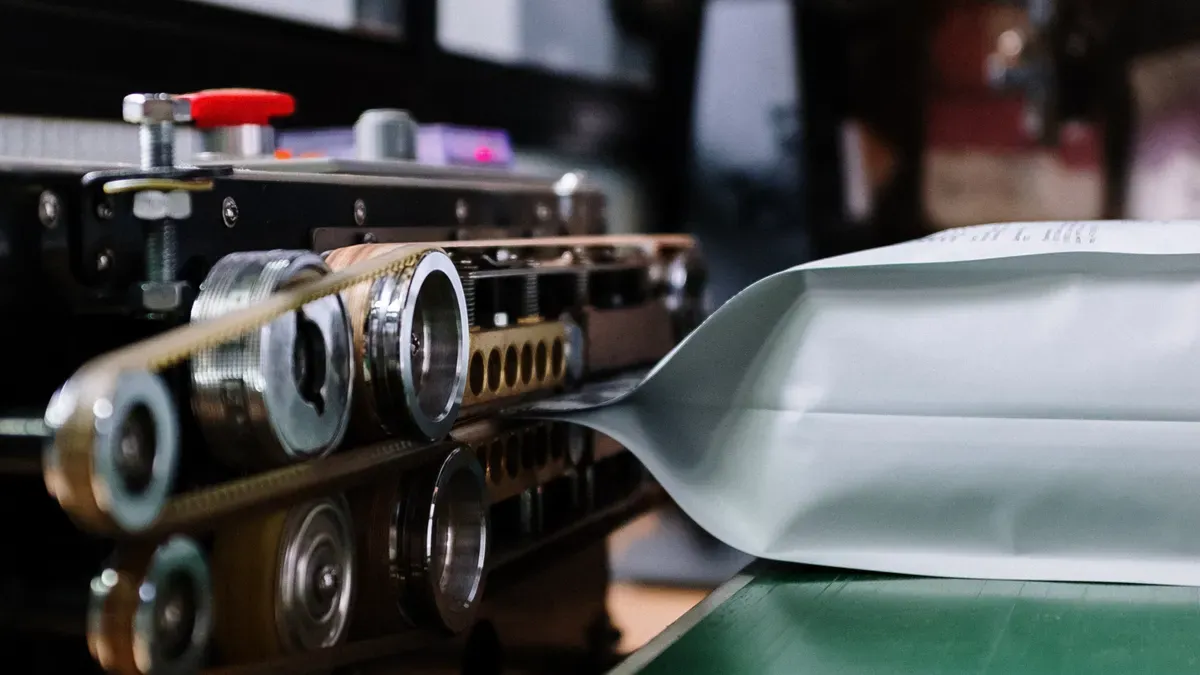
Shopping bag making machines come in many forms. Your choice depends on the material—plastic, paper, or non-woven fabric—and the bag style you need, such as T-shirt, die-cut, or handle bags. Modern equipment reaches speeds up to 120 bags per minute. You can select fully automated or semi-automated setups.
Picking the right bag making machine directly affects how fast you produce, what it costs to run, and how good the final bags are. A bad match wastes materials and slows down your line.
This article looks at ten specific machine types. You will learn what they are used for and key things to think about when buying. You will find out which machine fits your packaging needs. You will see how each machine works with different materials to make various shopping bags. This knowledge helps you choose wisely before spending money.
Key TakeawaysPick a machine depending on what material you use: plastic, paper, or non-woven fabric.
Choose a machine that matches how fast you need to make bags; some can make up to 350 bags each minute.
Fully automated machines reduce labor costs but require a higher initial investment.
Servo motors give exact control and fast changeovers, saving both time and energy.
Ultrasonic sealing makes strong, clean bonds for non-woven bags, and it doesn't need any thread.
For paper bags, choose between fully automated machines for large amounts or semi-automated ones for less expense.
Think about how you want to print. Flexographic is good for short runs, while rotogravure works best for big orders with fine details.
The servo T-shirt bag making machine is a popular choice for making shopping bags. You see these bags everywhere—at grocery checkout lanes, retail stores, and convenience shops. This machine makes the familiar T-shirt bag with its cut-out handles and open top. It works well with HDPE and LDPE. You can also use biodegradable materials like PLA/PBAT with modern units.
Speed is what defines this machine type. A single-line unit can make 250 bags per minute. Multi-line setups push output even higher. The chart below shows the top speeds for popular models.
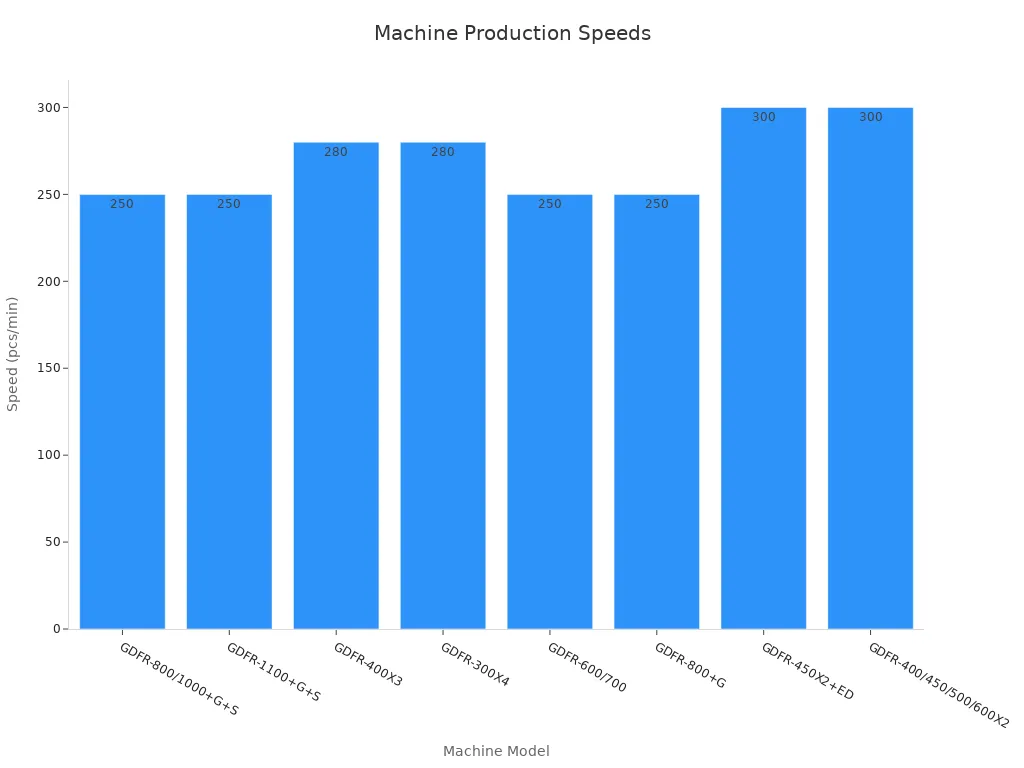
Supermarkets use T-shirt bags for customer purchases. Retail stores pack clothing and goods in them. The design works well for high-volume, low-cost packaging. You need a machine that keeps up with demand during busy times. A servo-driven system delivers steady output without slowdowns.
You can run HDPE for thin, lightweight bags. You can switch to LDPE for stronger, more flexible bags. The machine handles a range of film thicknesses. Biodegradable films like PLA/PBAT also work. This flexibility lets you serve different markets with one machine. The table below shows common model specs.
|
Machine Model |
Max. Speed (pcs/min) |
Supported Materials |
|---|---|---|
|
GDFR-800/1000+G+S |
250 |
HDPE, LDPE, PLA/PBAT |
|
GDFR-1100+G+S |
250 |
HDPE, LDPE, PLA/PBAT |
|
GDFR-400X3 |
280 |
HDPE, LDPE, PLA/PBAT |
|
GDFR-300X4 |
280 |
HDPE, LDPE, PLA/PBAT |
|
GDFR-600/700 |
250 |
HDPE, LDPE, PLA/PBAT |
|
GDFR-800+G |
250 |
HDPE, LDPE, PLA/PBAT |
|
GDFR-450X2+ED |
300 |
HDPE, LDPE, PLA/PBAT |
|
GDFR-400/450/500/600X2 |
300 |
HDPE, LDPE, PLA/PBAT |
Choosing the right bag making machine affects your production speed and costs. You need to look at two main things: the drive system and the automation level.
Servo motors give precise control over sealing, cutting, and indexing. They adjust speed and position instantly. This precision leads to consistent seal quality. Cam-driven systems use mechanical parts. They lack the flexibility of servo drives. Servo motors also use less power. They use less electricity than traditional motors. For multi-line setups, you need stronger servo systems. Advanced servo drives allow recipe storage. You recall settings for different bag sizes. This feature cuts changeover time from 30–60 minutes to under 10 minutes.
The DIPO all-in-one 8-line system can process 1600 pieces per minute and supports raw materials including HDPE and LDPE.
Fully automatic lines reduce manual work. A PLC and servo control system handles most processes. You need fewer operators. This lowers labor costs. Semi-automatic machines need manual feeding. They suit short runs or small businesses. For high-volume production, full automation pays off. A 2-line machine works for startups. A 3-line machine fits growing factories. A 4-line machine supports mass production. Each level needs different investments. Skilled maintenance is important for fully automatic lines. You need technicians who understand servo systems and PLC programming.
The servo T-shirt bag making machine delivers speed, flexibility, and efficiency. You get high output with consistent quality. You can handle different polyethylene bag types and biodegradable films. This machine forms the backbone of plastic bag manufacturing operations. Understanding your production needs helps you choose the right setup.
Bag on Roll MachineThe bag on roll machine produces continuous rolls of bags that dispense one at a time. You find these rolls in grocery stores, bakeries, and produce departments. Customers tear off a single bag from the roll when they need it. This design keeps bags organized and accessible. It also reduces waste compared to loose bags. The machine creates a star seal at the bottom of each bag. It then perforates between bags so users can separate them cleanly.
You can configure a bag on roll machine in several ways. The choice depends on how you plan to dispense the bags. Each configuration serves a different retail environment.
The table below shows the main configuration options and how they affect your retail dispensing needs.
|
Configuration Aspect |
Options / Range |
Impact on Retail Dispensing |
|---|---|---|
|
Roll Core Type |
Coreless or core-wound |
Coreless rolls fit dispensers with a central spindle and reduce waste. Core-wound rolls provide rigidity for high-speed dispensing and neat stacking. |
|
Line Configuration |
Single-line (100–200 bags/min) or Double-line (300+ bags/min) |
Single-line suits mid-size suppliers with moderate volume. Double-line supports 24/7 high-volume operations like large waste bag manufacturers. |
|
Automation Level |
Semi-automatic (manual core change) to Fully automatic (servo tension, auto core insertion, EPC) |
Higher automation reduces labor and downtime. Semi-automatic is cost-effective for lower output under 50 rolls per shift. |
|
Bag Style Modules |
T-shirt, draw tape, garbage, flat bags |
Modular changeover lets one platform serve multiple bag types. Draw tape needs an insertion module. T-shirt needs a punch and cut unit. |
You see bag on roll products most often in produce and bakery sections. Shoppers use them for apples, potatoes, bread, and pastries. The rolls mount on dispensers near the products. Customers pull a bag, open it, and fill it with their items. This packaging method keeps the area tidy and speeds up checkout. For bakeries, the bags protect fresh items while allowing customers to see the product. The star seal at the bottom prevents crumbs and small items from falling out. It also resists leaks from moist produce.
The quality of your seals and perforations determines how well your bags perform. A weak seal can open during use. A poor perforation can tear the bag instead of separating it cleanly. You need both to work reliably.
The machine maintains a constant distance between the perforation line and the sealing line. This alignment stays consistent even when you change bag lengths. You get clean tear-off every time. The perforation does not cut into the seal. This prevents tearing at the seal point. It also keeps the sealed bag intact for product protection. The dual servo motor control system provides precise tension and perforation accuracy. You avoid damaging the roll during separation. Customers can pull a bag without wrestling with the roll.
You can integrate a bag on roll machine into a larger packaging operation. The machine feeds rolls directly to automatic filling lines. This setup works well for high-volume producers. The machine runs at 80–100 meters per minute. This speed balances throughput with tension control. You get consistent roll quality and reliable tear-off at the point of sale. Advanced tension control systems maintain smooth film feeding. They prevent wrinkles and ensure uniform heat seals. These seals directly protect the bag's contents. The star seal design distributes stress evenly across the bottom. It provides a leak-resistant, strong base that holds up during transport and handling.
This bag making machine handles PE film for printed and non-printed bags. You can run HDPE, LDPE, recycled, or co-extruded materials. You get strength and thickness options for different retail uses. Produce bags need lighter film. Heavy-duty garbage bags need thicker material. The machine adapts to both.
Wicket Bag Making Machine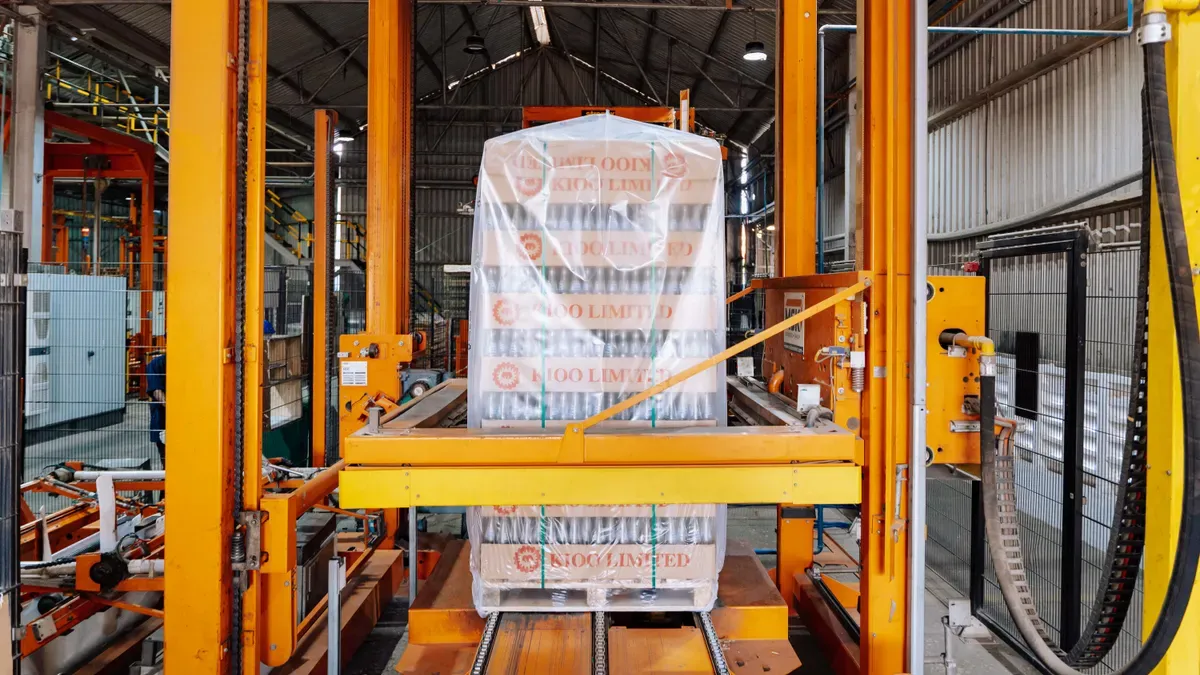
The wicket bag making machine focuses on a simple feature: the wicket hole. This small punched hole lets you stack bags on metal wickets or pegs. You then mount the stack on packing turntables or automatic filling lines. The design makes these bags ideal for produce and bakery items. You see them used for apples, potatoes, bread, and other bulk goods.
Wicketed bags streamline the packaging process. You get a ready-to-use stack that feeds directly into your filling equipment.
The wicket hole punching mechanism drives the machine's speed. You can reach up to 350 bags per minute—that is 6 bags every second. This speed exceeds the typical 250 bags per minute found on standard machines. The patented "Lightning" punch technology creates precision cuts. It ensures consistency across every bag. You reduce downtime and waste because the punch stays sharp and reliable. The "snap-and-change" design lets you install tool-less punches. You complete changeovers in seconds. This improves your overall machine efficiency and keeps operators safe. The mechanism also maintains stack stability. Your downstream automated packing equipment receives neat, aligned stacks. This stability is crucial when handling produce bags on high-speed lines.
Wicketed bags are fully compatible with automated filling systems. You boost speed and efficiency throughout your production line. The polyethylene material works well with these systems. It ensures high-speed throughput and reliability. Plain wicketed bags are the standard choice for automatic wrapping. They work with high-speed filling machines for bulk products. You can pack bread, fresh fruits, and vegetables without slowing down. The bags feed into the filling, sealing, and labeling processes smoothly. You maximize the speed of each operation. The wicket stack design minimizes downtime between bag changes. You keep the line running at full capacity.
You need a bag making machine that adapts to different products. The wicket bag machine offers this flexibility across film thickness and bag length.
The machine handles different film gauges. You can run thin films for lightweight produce like berries. You can switch to thicker films for heavier items like potatoes. The working range for film thickness spans from 0.01 mm to 0.05 mm. This gives you control over bag strength. You match the film thickness to the product weight and durability needs. Thin films reduce material cost. Thicker films provide puncture resistance for sharp-edged items. The machine maintains consistent sealing across the full thickness range. You avoid weak seals that can fail during handling.
Bag length customization is straightforward. You can produce bags from 280 mm up to 700 mm long. This range covers large grocery bags for bulk apples or potatoes. Some configurations also handle shorter bags down to 150 mm for smaller items. You adjust the length easily on the machine controls. This flexibility lets you serve multiple customers from one machine. You produce short bags for one order and long bags for the next. The wicket hole position adjusts with the bag length. You maintain consistent stacking and feeding regardless of size. The machine's control system stores length settings for quick recall. You switch between runs without manual adjustments.
High-Speed Side Seal MachineThe high-speed side seal machine makes handle bags for stores and gifts. You can make loop handles or die-cut handles with this machine. Loop handles are added to the bag separately. Die-cut handles are cut straight from the bag material. The 800ZD model is a good example. It makes loop handle and die-cut hole handle bags.
You pick between two main handle styles. Each style has a different use. Loop handles are strong and work for heavier items. Die-cut handles give a simple, low-cost opening.
Loop handles come in different types. Polyjew handles use twisted polyethylene for a comfy grip. Soft loop handles bend easily and feel smooth. Patch handles add a reinforced part for extra strength. The table below shows how handle types compare.
|
Handle Type |
Method |
|---|---|
|
Loop Handle |
Ultrasonic/Heat Welding |
|
T-Shirt (Die-Cut) Handle |
Direct Die-Cutting |
The handle attachment process follows clear steps. First, the machine unwinds handle film from a separate roll. Next, a die-cutting unit shapes the handle loops with precision. Vacuum suction pads or robotic arms place the handles onto the bag film. Finally, heat and pressure seal the handles to the bag body.
You see these bags in clothing stores and gift shops. Apparel retailers use loop handle bags for clothes. Customers carry multiple items comfortably. Gift shops prefer die-cut handle bags for lighter products. The bags look clean and professional. You can print branding right on the bag surface. This packaging choice boosts your store image.
The sealing method you choose affects bag quality and production speed. Two main technologies lead the market. Each offers different benefits for various situations.
Heat sealing uses temperature, pressure, and time to bond materials. It creates a wider seal area. This method works well for heavy-duty uses. Ultrasonic sealing uses high-frequency vibrations to fuse materials. It needs no cooling phase. The table below compares both methods.
|
Criteria |
Heat Sealing |
Ultrasonic Sealing |
|---|---|---|
|
Seal Strength |
Generally stronger due to wider seal area; robust for heavy-duty applications |
Stronger for compatible materials; narrower seal but consistent |
|
Cycle Speed |
Moderate, includes cooling phase; currently leads in BPM for some machines |
Very fast, no cooling required; faster sealing cycles improve efficiency |
|
Seal Integrity |
Reliable for standard films; prone to issues with contaminants |
Superior consistency; can seal through small contaminants (e.g., leafy greens, crumbs) minimizing leak risks |
|
Precision & Control |
Limited to temperature, pressure, time |
Programmable control over multiple parameters; high precision |
The 800ZD model reaches speeds up to 120 pieces per minute. It uses 8.8 kW of power. The machine makes side sealing loop handle and die-cut hole handle bags. Strong servo drives keep accuracy at these speeds. Servo motors allow faster, stable operation. Material thickness and bag size affect cycle time. Full PLC control and auto-stacking boost uptime.
This bag making machine works with various plastic films. You can run HDPE, LDPE, and LLDPE materials. The machine uses mature manufacturing technology. You get easy operation and maintenance. The production process stays stable during long runs. These qualities make the high-speed side seal machine a reliable choice for your handle bag production needs.
Paper Bag Making Machines: An Overview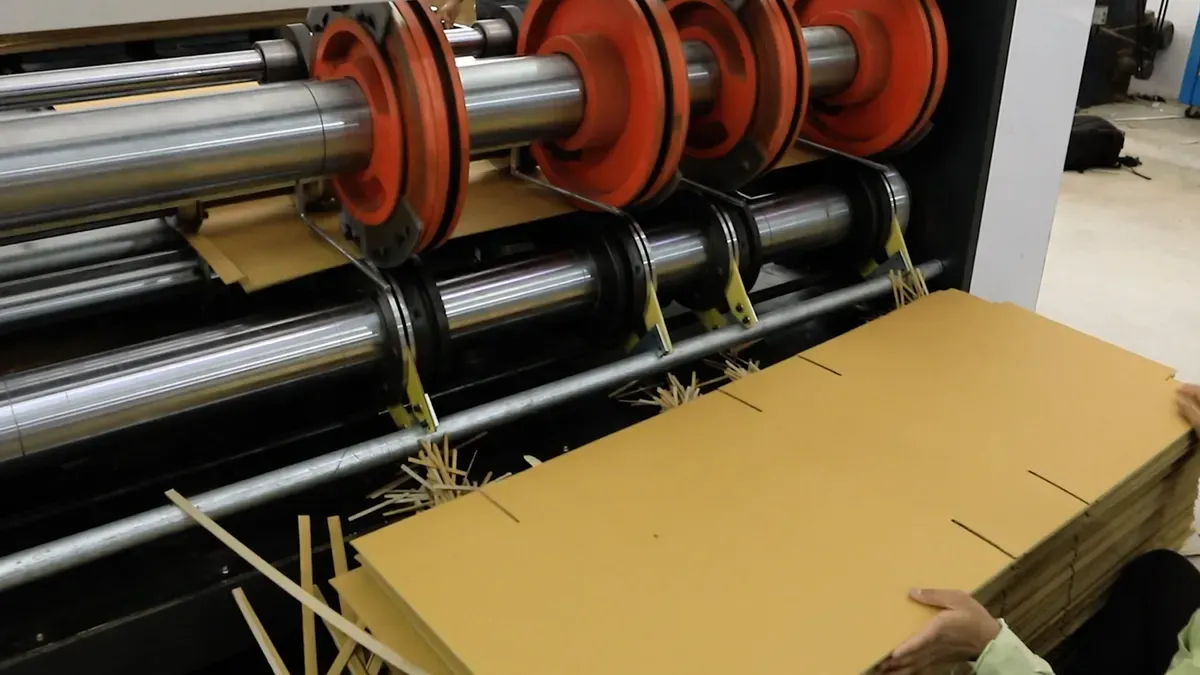
Paper bag machines turn kraft paper and recycled paper into finished bags. You can process unbleached kraft paper, which needs less chemical processing and is better for the environment. You can also use recycled paper fibers, often mixed with new fibers for strength. The need for eco-friendly packaging in retail and fast-food restaurants (QSR) pushes the demand for these machines. You must pick between two main types: a fully automated paper bag machine or a semi-automated paper bag machine. Your choice depends on how much you produce, your budget, and the bag style you need.
A fully automated paper bag machine handles the whole bag-making process from roll to finished stack. You load roll paper into the machine, and it prints, cuts, glues, folds, and delivers the bags. You need very little manual work. This machine works best for high-volume production of standard bag styles.
The square bottom paper bag machine is a common type of fully automated system. It makes bags with a flat, stable base that stands upright on shelves. You see these bags in grocery stores and takeout restaurants. Various models are available to handle different bag sizes and production speeds. The machine processes a range of paper thicknesses suitable for light food bags to heavy-duty grocery bags.
The high-speed gluing and folding system is the core of the fully automated paper bag machine. The machine applies glue exactly to the bottom and side seams. Roll-fed models use roll paper and can handle various paper thicknesses. Sheet-fed models use pre-printed sheets for mid-to-high-end bags. The gluing system ensures steady bond strength. The folding mechanism creases the paper correctly to form the square bottom. These systems keep high speeds without losing quality. You get a reliable bag that keeps its shape during filling and transport.
A semi-automated paper bag machine needs more manual work than a fully automated model. You usually feed paper sheets by hand or load rolls manually. The machine then does the cutting, gluing, and folding steps. This type of machine costs less upfront. It fits lower production volumes and smaller businesses.
The semi-automated paper bag machine is well-suited for making V-cut handle bags. The V-cut shape creates a natural handle in the bag material. You can use twisted paper handles for extra strength. These bags are lighter and cheaper to produce than square-bottom bags. They hold light items like bakery goods and small retail products. The machine ensures accuracy in dimensions, gluing, and folding. You get steady quality across your bag orders.
The semi-automated paper bag machine offers a cost-effective starting point for small businesses. Entry-level machines are available at a lower price point than fully automated systems. High-performance models involve a higher investment. This price range is much lower than a fully automated system. A manual paper bag machine is an even cheaper option. You can start with a manual machine for very low volume. A manual paper bag machine requires you to do most steps by hand. It is ideal for small shops testing the market. The semi-automated paper bag machine provides a balance between cost and productivity. It greatly speeds up production compared to manual methods. You also cut labor costs. The machine offers flexibility for custom bag designs.
V-bottom bags are lighter and more affordable to produce. They are suitable for small businesses with limited budgets. These bags are great for holding lightweight items, such as bakery goods or small retail products.
The common applications of paper bag machines include retail shopping bags, takeaway food bags, and grocery sacks. You can also use a window attached paper bag machine to add a clear window to your paper bags. This feature is popular for bakery and gift packaging. The right machine helps you meet the growing demand for sustainable packaging.
Six Corner Paper Bag MachineThe six corner paper bag machine makes bags with a flat bottom. The name comes from the six corners you see when the bag stands up. This design keeps the bag very stable. You can set these bags on counters and they will not fall over. The shape changes how bags work in daily use. Regular bags fall flat when empty. Six corner bags stay upright.
The flat bottom is key for takeaway food places. Restaurant workers fill bags fast without holding them open. Customers get strong carriers that sit up in car seats or on tables. This stability cuts down on spills and keeps items safe during travel.
Fast food restaurants use these bags every day. The flat bottom holds burgers, fries, and drinks well. Retail stores use them for nicer shopping experiences. The neat shape shows off products well. High-end shops pick six corner bags for their clean look. The bags show off branding nicely. You can print logos and designs on every visible side. This bag making machine handles both food service and retail orders with ease.
The flat bottom allows for clean stacking. You can line up filled bags in tidy rows. This setup makes storage more efficient. Store displays look professional with even bag placement. Customers like the neat look. The bags also stack well before filling. You save valuable floor space in your facility. Empty bags take up little room on shelves.
The six corner machine works with different paper types. You can use standard kraft paper for everyday needs. You can switch to premium coated paper for luxury items. The machine adjusts to your material choices without big changes.
Coated paper has a smooth surface. It blocks moisture and grease. This makes it great for food packaging. Uncoated paper soaks up glue more easily. The machine changes its glue use to match. You get strong bonds with either paper type. The machine handles various paper types in a range of thicknesses suitable for grocery and retail use.
The glue system controls bag strength. The bottom must hold heavy items. The machine puts adhesive exactly on key seams. This accuracy stops weak spots. You avoid bag breaks during transport. The glue dries fast. This allows for quick production speeds. A fully automated paper bag machine handles this process smoothly. You load paper rolls and the machine makes finished bags. A fully automated paper bag machine also adds handles when needed. The square bottom paper bag machine uses similar glue tech. Both systems build strong bottoms.
Paper bag making machines in this group offer great value. You get flexibility across bag sizes and styles. The investment pays off with less waste and steady quality. A window attached paper bag machine adds another choice. This version makes bags with clear windows. Bakery shoppers see products before buying. This feature boosts sales appeal. The six corner paper bag machine is a smart pick for many businesses. You meet the rising need for eco-friendly packaging. You deliver quality products that customers trust.
V-Cut Handle Paper Bag MachineThe V-cut handle paper bag machine creates bags with a natural handle cut into the material. The V-shaped cut forms two flaps. You twist these flaps together to create a sturdy carrying handle. This design eliminates the need for separate handle materials. The bag and the handle come from one piece of paper. This machine type suits small to medium production runs.
The twisted handle design gives the bag extra strength. The V-cut shape distributes the weight across a wider area. The twisting process compresses the paper fibers. This makes the handle less likely to tear during use.
The handle attachment process follows a specific sequence. First, the machine cuts the V-shape into the paper sheet. Next, a folding mechanism creases the flaps. The machine then twists the flaps together. Heat and pressure seal the twisted section. The semi-automated paper bag machine requires an operator to feed paper sheets. The operator watches the handle forming process. The machine handles the cutting and twisting steps. The operator checks each handle for quality. You can adjust the handle length by changing the V-cut depth. Deeper cuts create longer handles for larger bags. Shallower cuts work for smaller bags.
The semi-automated paper bag machine works well for this bag style. You get consistent handle quality. The operator handles feeding and inspection. The machine handles the cutting and twisting. This balance works for production runs of 500 to 10,000 bags. You can start small and scale up as demand grows.
You can customize V-cut bags in several ways. The bag surface provides space for printed logos. You can choose different paper colors to match your brand. The handle itself can carry branding elements. You can print on the handle section before the cutting step. A manual paper bag machine gives you full control over each bag. You can add custom stamps or stickers by hand. The manual paper bag machine requires more time per bag. You get complete flexibility for small batches. This approach works well for boutique shops. You can test different designs without committing to a large print run. The V-cut shape also works with recycled paper. You can market your bags as eco-friendly options.
The V-cut machine produces bags at a moderate speed. You get a balance between output and quality. The machine does not need to run at the highest speeds. You focus on making each bag correctly.
The common applications of paper bag machines include retail packaging and takeaway bags. The V-cut machine fits these uses well. You can produce bags at a speed that allows you to inspect each bag during production. You catch defects early. The operator adjusts the machine settings immediately. This prevents waste. You get a higher percentage of good bags. The handle quality matters most for customer satisfaction. A weak handle can break during use. The moderate speed gives you time to check handle strength. You test a sample from each batch. The machine settings stay consistent. You get uniform handle quality across all bags.
The cutting die is the most important wear part. The die creates the V-shape in the paper. The blade dulls over time. You replace it periodically based on usage. The bag making machine also has a twisting mechanism that wears down. The rollers that grip the paper flaps lose their texture. You replace them as needed. The folding plates need adjustment. They shift out of alignment with heavy use. You check them weekly. The sealing elements require cleaning to remove paper dust. A clean machine runs more smoothly. You keep spare cutting dies on hand. This reduces downtime when a blade needs replacement. The manufacturer provides a maintenance schedule. You follow this schedule to keep the machine running at peak efficiency. Regular upkeep extends the life of your equipment. You avoid costly repairs and production delays.
Fully Automatic Non-Woven Bag Making MachineThe fully automatic non-woven bag making machine creates strong shopping bags from polypropylene fabric. It uses ultrasonic technology instead of regular sewing. You get clean cuts and strong seals in one step. This machine works well for promotional items and retail shopping bags.
Ultrasonic technology changes how non-woven bags are put together. High-frequency vibrations create friction at the welding surface. This friction quickly reaches the melting point of the plastic. The joint becomes almost as strong as the material itself. You get a complete seal when the surfaces match correctly.
Businesses use these bags for trade shows, retail stores, and corporate gifts. The ultrasonic process makes strong, clean, and even seams without needle or thread. You get smooth edges and strong seals. The bags look neat and professional. This technology damages materials less than traditional sewing. You also boost production speed while cutting maintenance costs.
The machine forms D-ring handles and loop handles in one pass. You do not need extra steps to attach handles. The ultrasonic method avoids the broken joints that often happen with stitching. You get clean cuts and seals at the same time. The process gives strong bonding and a waterproof effect. Clear embossing adds a three-dimensional look to the bag surface. The machine also forms gussets for more bag space. You can make bags with side gussets or bottom gussets. This flexibility lets you serve different product sizes.
The fully automatic non-woven bag making machine runs with PLC control. You get high output with very little human help. The machine handles everything from film feeding to finished bag stacking.
Full automation greatly reduces your labor needs. One operator can watch over multiple machines. The machine does automatic punching, ultrasonic sealing, and handle sealing. You remove manual steps that slow down production. The PLC with touch screen makes operation easy. You set the settings once and the machine repeats them every time. This automation lowers human error and material waste. Your labor costs drop while output stays steady.
You can add printing units directly to the production line. This setup prints on the bags before they are formed. You make printed bags in one continuous process. This saves floor space and handling time. You avoid moving materials between separate machines. The printing unit adds designs to the fabric before cutting. You get accurate colors on every bag. This works well for branded shopping bag operations. You produce custom bags efficiently without extra steps.
The production speed varies based on bag complexity and material thickness. Some setups achieve high output. This output handles large orders for retail chains and promotional events. The machine makes soft loop handle bags, standard shopping bags, and other non-woven styles. You pick the speed based on bag complexity and material thickness. The fully automatic machine delivers steady quality over long runs. You meet tight deadlines without losing product standards. This machine is a smart choice for growing packaging businesses.
Non-Woven Bag Printing MachinePrinting turns plain non-woven fabric into branded shopping bags. You have two main technology choices: flexographic and rotogravure printing. Each method fits different production volumes, design complexity, and budget levels. Your choice affects print quality, cost per bag, and how long the finished design lasts.
Flexographic printing uses flexible rubber or polymer plates. You wrap these plates around rotating cylinders. The plates pick up ink and press it directly onto the fabric surface. Rotogravure printing uses engraved metal cylinders. Each cylinder carries the image in tiny cells that hold ink. The cylinder presses the ink onto a film, which then bonds to the fabric.
Rotogravure typically prints on a BOPP film first. The machine then laminates that film onto the non-woven fabric. This process yields beautiful, water-resistant prints. Flexo prints directly on the fabric. It supports water-based inks, making it more environmentally friendly.
Color registration means aligning each ink color precisely on the bag. Rotogravure achieves high registration accuracy. Flexo handles solid colors well. Fine details and gradients may be limited. Drying systems matter for both methods. Flexo uses water-based inks that dry through evaporation. Rotogravure uses solvent-based inks that dry faster. Proper drying prevents smudging during bag handling and stacking.
You can print inline during bag production. The printing unit sits directly on the bag making machine line. Fabric moves from unwinding through printing to bag formation without stopping. This setup saves floor space and handling time. Offline printing happens on pre-made bags. You print first, then feed printed rolls into the bag making machine. Offline gives you flexibility to change designs quickly. You can also send bags to a separate printing facility.
Your production volume and design needs determine the best choice. Flexo suits short to medium runs. Rotogravure excels at large-scale production.
Flexo setup is relatively quick. Rotogravure cylinders are more expensive and require longer lead time. Rotogravure requires a large order volume to justify setup costs. Flexo has a lower minimum. For large quantities, rotogravure becomes cheaper per unit. Setup costs spread across more bags. For small quantities, flexo keeps your initial investment low.
Rotogravure delivers photographic detail and smooth gradients. It supports multiple colors. The laminated film protects the image from scratches and moisture. This durability suits export and retail-facing bags. Flexo prints directly on the fabric surface. The ink sits exposed. It works well for industrial and agricultural sacks. You can add matte or gloss coatings to either method. Your packaging goals guide the final choice.
Non-Woven Bag Handle Welding MachineThis machine attaches handles to pre-made non-woven bags. You use it after the main bag forming process. The welding unit bonds D-rings or loop handles to the bag body. You get a finished shopping bag ready for retail use.
D-ring handles use a rigid plastic ring. You fold the bag material over the ring and weld it in place. Loop handles use a continuous strip of non-woven fabric. You weld both ends to the bag surface. Each style serves a different purpose. D-rings offer a firm grip for heavier loads. Loop handles provide a softer, more flexible carry option.
Weld strength determines how much weight your bag can carry. A weak weld point fails under normal shopping loads. The ultrasonic welding process creates a molecular bond. This bond approaches the strength of the base material itself. You get a joint that holds up during repeated use. Consistency matters just as much as raw strength. The machine must produce identical welds on every bag. Temperature, pressure, and timing all affect the final result. Modern machines control these parameters precisely. You avoid the weak spots that come from manual welding.
You have two main choices for handle welding equipment. Each option fits different production scales and budgets.
Cost and labor: Manual machines cost less upfront. They require skilled operators who can position handles accurately by hand. Semi-automatic machines remove this skilled-labor dependency. You train workers quickly and get consistent results.
Flexibility: Semi-automatic machines allow faster changes between different bag types. You switch from D-rings to loop handles in minutes. Manual machines need more time for changeovers.
Semi-automatic models dominate the market for small to medium enterprises. You get a balance between cost and productivity. The operator loads the bag and positions the handle. The machine performs the weld automatically. This setup reduces fatigue and speeds up production.
You can use the handle welding machine as a separate unit. You can also connect it directly to your production line. The right choice depends on your floor space and workflow.
A standalone machine works on pre-made bags. You stack finished bags and feed them through the welder. This setup gives you flexibility. You can weld handles on bags produced at different times. You can also outsource bag production and weld handles in-house. An inline configuration connects the welder directly to the bag making machine. Bags move from forming to handle attachment without stopping. This setup saves handling time and reduces labor. You produce finished bags in one continuous flow. The inline option works best for high-volume operations. You need more floor space and a larger initial investment.
You must inspect every weld point for defects. A visual check catches misaligned handles and incomplete bonds. You should also perform periodic pull tests. Take a finished bag and apply weight to the handle. The weld should hold without tearing. Document your test results for each production batch. This record helps you track quality over time. You can spot trends before they become problems. Regular maintenance of the welding horn keeps quality consistent. A worn horn produces uneven welds. Replace it according to the manufacturer's schedule. You protect your reputation by delivering bags that perform well.
Your choice of a shopping bag making machine depends on your business needs. The ten machines differ in material handling, automation level, and output speed. Plastic, paper, and non-woven materials each require a specific bag making machine type. Your production volume determines if you need a fully automated line or a semi-automated setup. A manual paper bag machine works well for small operations. Budget constraints also guide your decision. The right packaging equipment saves money and reduces waste. Always consult manufacturers for a tailored solution. They can match the equipment to your production goals. Contact suppliers for quotes or visit a trade show for live demonstrations. See the machines in action before you invest.
FAQYour choice depends on your budget and how you plan to use the bags. Plastic bags are the cheapest and fastest to make. Paper bags attract customers who care about the environment. Non-woven bags last longer and can be reused. Think about your target market and local rules before you decide.
Servo T-shirt machines can make 250-300 bags per minute. Wicket machines can make 350 bags per minute. Paper bag machines run at speeds suitable for their design. Non-woven machines operate at speeds that balance quality and output. Your speed needs depend on how many bags you need and your production hours.
Fully automated machines do the whole job with very little human help. You only need one worker to watch several machines. Semi-automated machines need people to feed materials and check the bags. They cost less at first but need more workers. Choose based on how much you produce and how many workers you have.
Follow the maintenance schedule from the manufacturer. Replace cutting dies periodically based on usage. Clean sealing parts every week to remove dust. Check folding plates to make sure they line up. Keep spare parts that wear out on hand. Regular care stops costly breakdowns and delays.
Yes, most modern machines can change bag sizes. Wicket machines make bags from 280mm to 700mm long. Paper bag machines can adjust width and bottom size. Servo-driven systems save settings so you can recall them quickly. You switch between sizes in minutes without manual changes.
Flexographic printing works well for short runs with solid colors. Rotogravure gives photo-quality detail for large orders. Rotogravure requires a large order volume to justify setup costs. Flexo costs less to start. Your order size and design complexity decide the best option.
Entry-level semi-automated paper machines are available at a lower price point. High-performance models involve a higher investment. Fully automated plastic bag lines cost much more. Non-woven machines vary widely based on features. Ask multiple suppliers for quotes to compare prices for your needs.
"4mmx2mm Disc Magnet" from S****** received 4 quotation(s)